



Potassium Formate Workover Fluid: Benefits, Applications and Field Considerations
By LIN
2026-09-02Related Posts
Индивидуальные упаковочные решения от поставщика безводного ацетата натрия в Китае
2026-09-23
Тенденции применения безводного ацетата натрия для специального химического производства
2026-09-23

Безводный ацетат натрия для дубления кожи: улучшает равномерность окрашивания
2026-09-22
Formic Acid 85% for Animal Feed Preservation: Moisture and Storage Stability Guide
2026-09-21
A potassium formate workover fluid is used during well intervention and maintenance operations when the well still needs reliable pressure control, but the operator also wants to keep solids and formation damage as low as practical.
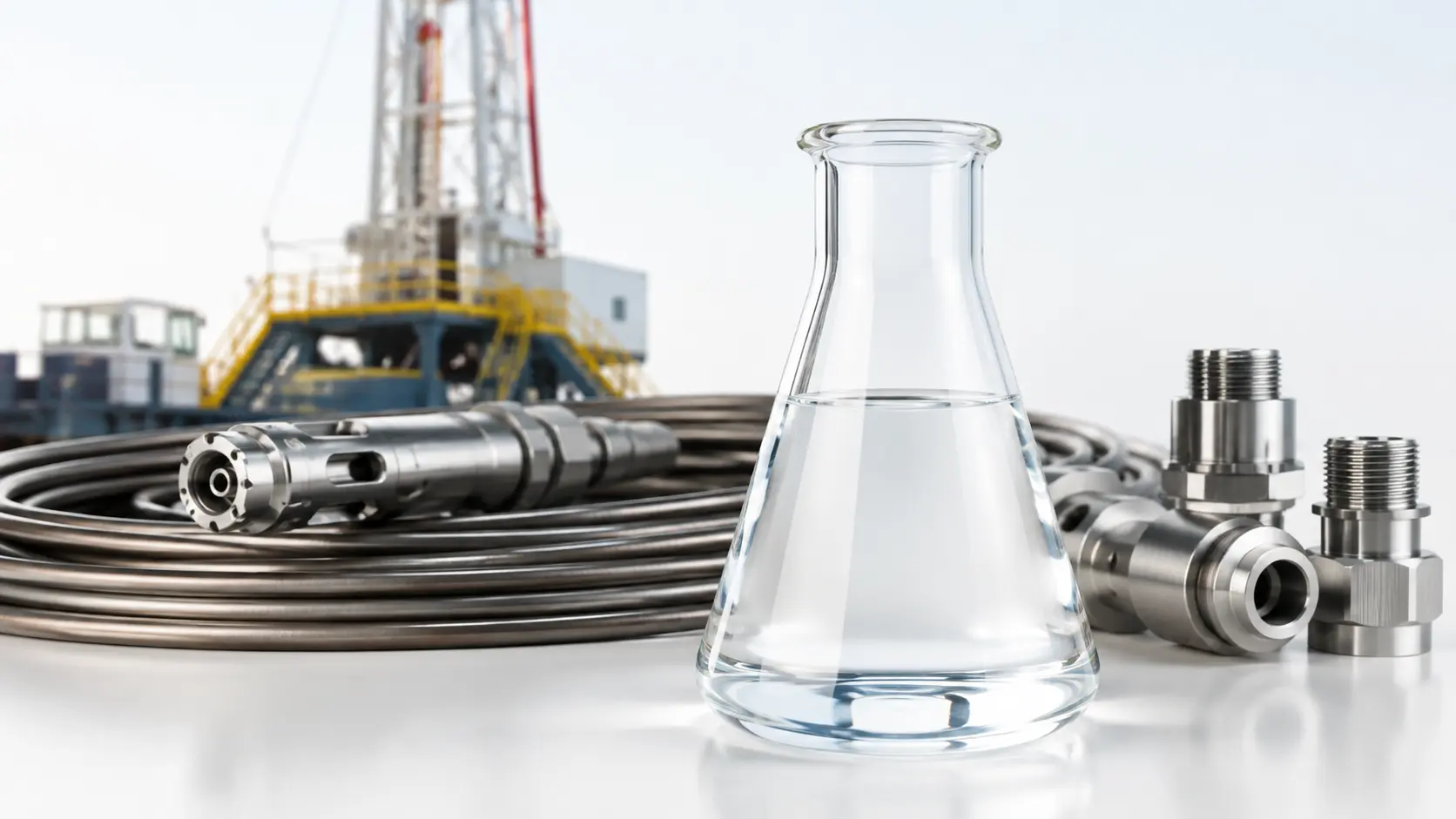
Workover fluids do a different job from normal drilling mud.
The well has already been drilled. In many cases, it has already been completed and may even have produced oil or gas for years. Now something needs to be repaired, replaced, cleaned or adjusted.
That may involve tubing replacement, packer work, pump maintenance, sand-control work, stimulation preparation or other downhole intervention.
During this period, the well still has to remain under control.
This is where clean brine systems become useful.
Potassium formate can provide a clear, solids-free brine with useful density, making it suitable for workover operations where protecting the producing formation is just as important as controlling the well.
What Is Potassium Formate Workover Fluid?
Potassium formate is the potassium salt of formic acid.
Its chemical formula is HCOOK, and its CAS number is 590-29-4.
When dissolved in water, potassium formate forms a clear brine. Depending on concentration, it can provide enough density for many workover and completion operations without depending on suspended weighting solids.
Clear brines are commonly used as well-control fluids during completion and workover operations because they contain few or no suspended solids that could plug a producing formation.
Typical Roles During Workover
| Workover Requirement | Role of Potassium Formate Brine |
|---|---|
| Well control | Provides hydrostatic pressure |
| Formation protection | Low suspended-solids content |
| Tubing replacement | Maintains controlled wellbore conditions |
| Packer work | Provides clean intervention fluid |
| Fluid-loss management | Can serve as base brine for compatible loss-control systems |
| Equipment maintenance | Provides stable workover fluid environment |
| Cleanup | Can be filtered and conditioned |
| Reuse | Potentially recoverable after testing and treatment |
The exact formulation depends on the well.
A potassium formate brine can be used alone as a clear fluid or combined with viscosifiers, fluid-loss additives, corrosion-control chemicals or other workover additives.
Why Clear Brine Matters During Workover
A producing formation is already valuable.
Nobody wants to repair the well and accidentally reduce production at the same time.
Suspended solids can contribute to:
- Pore plugging
- Screen blockage
- Filtercake buildup
- Reduced permeability
- Increased cleanup requirements
This is why workover fluids are usually designed to be cleaner than ordinary drilling muds.
SLB describes completion fluids as highly filtered, solids-free liquids intended to control the well without damaging the producing formation or completion equipment.
The same basic principle applies during many workover operations.
A potassium formate clear brine provides density through dissolved salt rather than solid weighting material.
That can be a big advantage near the reservoir.
Well Control Comes First
A workover fluid still has one very basic job:
Keep the well under control.
The density of the fluid must provide sufficient hydrostatic pressure to balance the formation.
If the fluid is too light, formation fluids may enter the well.
If it is unnecessarily heavy, excessive overbalance may increase fluid loss into the reservoir.
So the target is not simply the highest possible density.
The correct workover-fluid density should be selected according to:
- Formation pressure
- True vertical depth
- Operating margin
- Fluid-loss risk
- Completion condition
Potassium formate can provide a useful density range while remaining a monovalent clear brine.
For wells requiring very high density, another brine or blended system may be needed.
Fluid Loss Can Become a Serious Problem
One of the biggest workover challenges is fluid loss to the formation.
During an overbalanced workover, the hydrostatic pressure in the well is intentionally higher than reservoir pressure.
That helps control the well, but it can also push fluid into the formation.
Too much fluid loss may create:
- Formation damage
- Water blocking
- Scale problems
- Emulsions
- Increased fluid cost
- Well-control concerns
SLB documents a workover application where potassium formate brine was used as the base fluid during a tubing and ESP replacement operation, with fluid-loss control included specifically to reduce formation damage and well-control risk.
This is a good example of how potassium formate is used in real workover fluid design.
It is the base brine.
Then another compatible treatment is added when fluid-loss control is required.
Potassium Formate and Fluid-Loss Control
Potassium formate alone does not automatically stop fluid losses.
Depending on the operation, workover engineers may add:
- Solids-free viscous pills
- Crosslinked fluid-loss systems
- Temporary bridging pills
- Screen-protection treatments
- Other intervention chemicals
SLB specifically markets clear-brine fluid-loss systems for completion and workover operations, while Halliburton also provides solids-free and reversible fluid-loss control technologies for overbalanced workovers.
This is important because the workover fluid needs to balance two things:
Control the well
and
Avoid pumping too much fluid into the reservoir.
A good workover program normally plans both from the beginning.
Potassium Formate vs Conventional Workover Brines
Potassium formate is only one of several brine options.
Traditional workover brines may include:
- NaCl
- KCl
- CaCl₂
- NaBr
- CaBr₂
- Blended halide systems
General Comparison
| Factor | Potassium Formate | Traditional Halide Brines |
|---|---|---|
| Clear-fluid capability | Yes | Yes |
| Suspended weighting solids | Not required | Not required |
| Potassium source | Yes | Only KCl provides potassium |
| Density | Medium-to-high | Wide range |
| Chloride content | Not chloride based | Many systems contain chloride |
| Formation compatibility | Must be tested | Must be tested |
| Cost | Often higher than simple chloride brines | Can be lower |
| Reuse potential | Good when properly managed | Also possible |
There is no reason to claim potassium formate is always better.
Sometimes a simple KCl or CaCl₂ brine is completely adequate and much cheaper.
Potassium formate becomes more interesting where the operator values low-solids performance, monovalent chemistry, density and compatibility with a specific workover-fluid design.
Formation Compatibility Cannot Be Ignored
A fluid can be perfectly clear and still create formation damage.
This is one of the most important lessons in workover-fluid selection.
Potassium formate brine may contact:
- Formation water
- Crude oil
- Reservoir minerals
- Completion chemicals
- Cement
- Existing brine
If those fluids are incompatible, precipitation or other problems can occur.
Halliburton has reported a wellbore cleanout project where both potassium formate and calcium bromide were rejected after compatibility testing showed problems with the shale mineralogy.
That is actually a useful reminder.
Potassium formate should not be selected because it looks good on paper.
It should be selected because the laboratory work says it fits the well.
Filtration and Cleanliness
Even a high-quality potassium formate brine can become contaminated at the rig.
Possible contamination sources include:
- Rust
- Pipe scale
- Mud residue
- Cement particles
- Dirty tanks
- Dirty hoses
This is why filtration matters.
SLB includes filtration equipment and services as part of its completion and workover fluid systems specifically to remove suspended solids and support better well performance.
For sensitive wells, operators may monitor:
- Turbidity
- Suspended solids
- Filter quality
- Fluid appearance
A premium clean brine should not be stored in a tank that still has drilling mud in the bottom.
It sounds obvious, but field contamination happens.
Corrosion and Oxygen Control
Workover brines can remain in contact with tubing and completion equipment for extended periods.
Corrosion control may therefore be necessary.
Dissolved oxygen can contribute to corrosion in brine systems.
For example, SLB offers oxygen scavengers specifically for monovalent completion and workover brines, including formate-compatible systems.
Depending on project conditions, the workover-fluid program may consider:
- Oxygen scavenger
- Corrosion inhibitor
- pH control
- Metal compatibility
- Exposure time
- Temperature
Again, this is why potassium formate should be treated as a brine base, not a complete workover-fluid package.
Can Potassium Formate Workover Fluid Be Reused?
Often, recovery and reuse are worth considering.
Potassium formate is more valuable than simple saltwater, so throwing away clean brine after every operation does not make much commercial sense if the fluid can be recovered safely.
A reuse program may include:
- Recover the brine.
- Measure density.
- Check contamination.
- Filter the fluid.
- Adjust concentration.
- Recheck key chemistry.
- Approve for another operation if suitable.
Halliburton has specifically noted the financial benefit of maximizing brine reuse during wellbore cleanout and completion-related operations.
Of course, recovered fluid should not be reused blindly.
Contamination can completely change the chemistry.
What Should Buyers Check?
For workover applications, procurement should focus on the actual brine requirements.
Workover Fluid Purchasing Checklist
| Parameter | Why It Matters |
|---|---|
| Potassium formate concentration | Confirms brine strength |
| Density | Important for well-control design |
| pH | Relevant to fluid chemistry |
| Chloride | May influence corrosion and compatibility |
| Iron | Useful contamination indicator |
| Insoluble matter | Important for formation protection |
| Turbidity | Indicates fluid cleanliness |
| TCT | Important in cold environments |
| COA | Confirms batch quality |
| TDS / SDS | Supports technical and safety review |
If a fluid-loss treatment or corrosion package will be used, compatibility should be tested in the actual potassium formate brine.
How to Request a Workover Fluid Quote
A useful RFQ might look like:
Product: Potassium Formate
Application: Workover Fluid
Required Brine Density: 1.45 SG
Product Form: 75% Concentrate
Quantity: 40 MT
Packaging: IBC / Bulk
Required Documents: COA, TDS and SDS
Special Requirements: Low insoluble matter and controlled chloride
If the project requires fluid-loss additives or corrosion control, mention that as well.
This helps the supplier understand that the chemical will be used in a real workover program rather than as a general industrial raw material.
Final Thoughts
A potassium formate workover fluid can provide a useful combination of density, clear-brine performance and low suspended-solids content during well intervention.
Its main advantages are especially relevant when the workover needs to:
- Maintain well control
- Protect the producing formation
- Minimize suspended solids
- Support clean filtration
- Work with compatible fluid-loss treatments
- Potentially allow brine recovery and reuse
But potassium formate is still only part of the solution.
Fluid-loss control, corrosion management, formation compatibility and surface cleanliness all matter.
A good workover fluid should help repair the well without creating a new reservoir problem.
That is really the point.
FAQ
What is potassium formate workover fluid?
It is a potassium formate-based clear brine used during well repair and intervention operations to provide hydrostatic pressure while minimizing suspended solids.
Why is potassium formate suitable for workover operations?
It can provide useful density without conventional weighting solids and can support clean, low-damage brine systems.
Does potassium formate prevent fluid loss?
Not by itself. Compatible fluid-loss pills or additives may be required depending on formation permeability and workover conditions.
Does potassium formate workover brine need filtration?
Yes. Filtration helps remove rust, scale, mud residue and other contaminants introduced during field handling.
Can potassium formate workover fluid be reused?
Potentially yes. Recovered brine can be tested, filtered and conditioned for reuse if the chemistry and quality remain suitable.
Is potassium formate always better than calcium chloride or bromide brines?
No. The best workover brine depends on density, reservoir compatibility, corrosion, cost and project conditions.


Contact Us
In This Article
Related Posts
Индивидуальные упаковочные решения от поставщика безводного ацетата натрия в Китае
2026-09-23
Тенденции применения безводного ацетата натрия для специального химического производства
2026-09-23
Безводный ацетат натрия для дубления кожи: улучшает равномерность окрашивания
2026-09-22
Formic Acid 85% for Animal Feed Preservation: Moisture and Storage Stability Guide
2026-09-21


