



Potassium Formate Well Completion Brine: Selection, Preparation and Field Use
By LIN
2026-09-02Related Posts
Индивидуальные упаковочные решения от поставщика безводного ацетата натрия в Китае
2026-09-23
Тенденции применения безводного ацетата натрия для специального химического производства
2026-09-23

Безводный ацетат натрия для дубления кожи: улучшает равномерность окрашивания
2026-09-22
Formic Acid 85% for Animal Feed Preservation: Moisture and Storage Stability Guide
2026-09-21
A potassium formate well completion brine is a clear, low-solids fluid used after drilling when the well is being prepared for production.
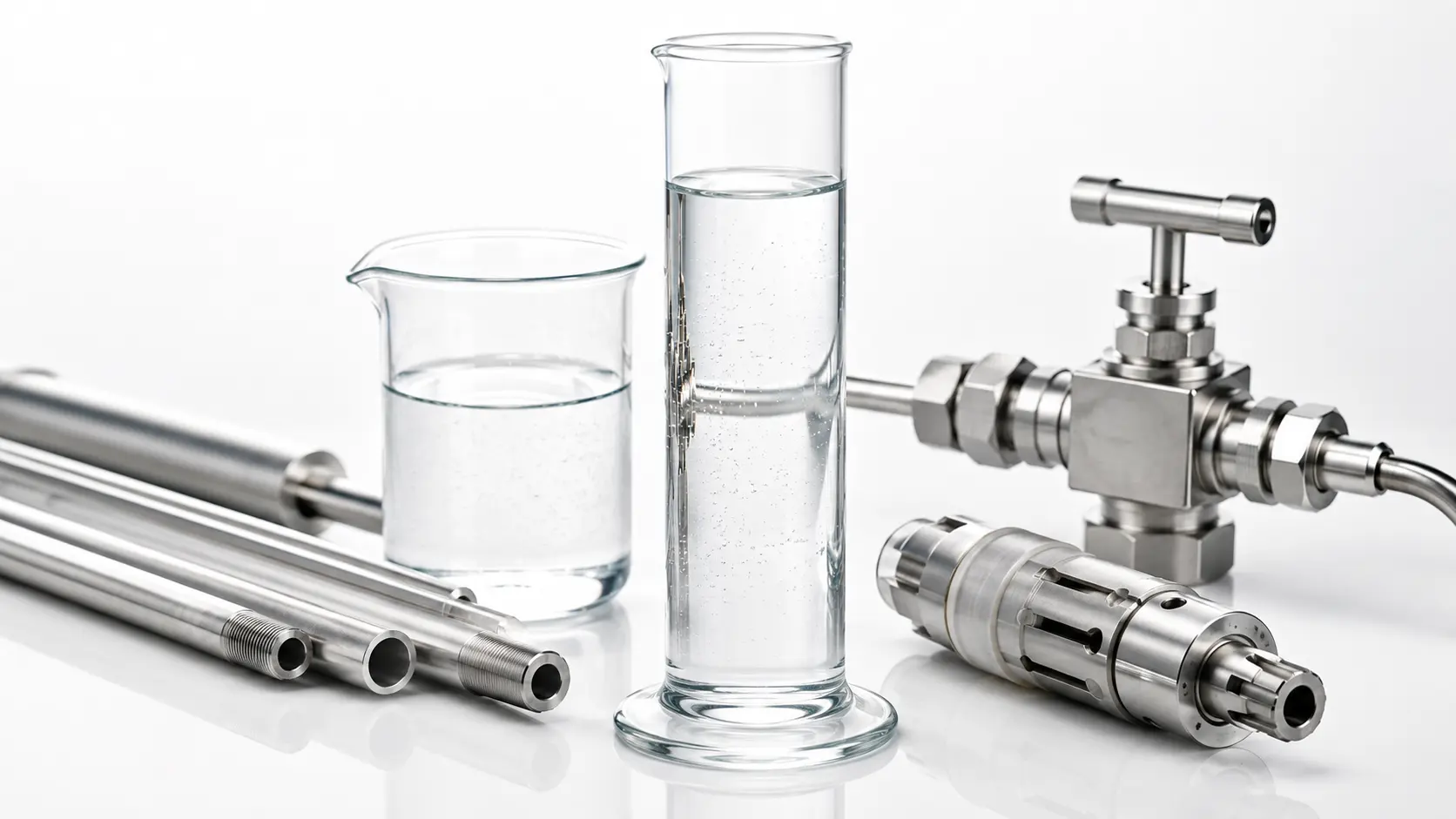
At this stage, the fluid has a different job from ordinary drilling mud.
It still needs enough density to control formation pressure, but it should also avoid introducing unnecessary solids into the reservoir. Screens, packers, production liners and other completion equipment may already be going into the well, so fluid cleanliness becomes much more important.
Potassium formate is useful here because it is highly soluble in water and can form relatively dense clear brines without conventional suspended weighting materials.
Industry definitions describe completion fluids as solids-free liquids used during final well operations and normally filtered to a high degree to avoid damaging the near-wellbore formation.
That sounds simple enough.
In real well completion, though, selecting the salt is only the first step.
What Is Potassium Formate Well Completion Brine?
Potassium formate is the potassium salt of formic acid.
Its chemical formula is HCOOK, and its CAS number is 590-29-4.
When dissolved in water at suitable concentration, it forms a clear potassium formate brine.
Formate salts are extremely soluble in water and are used to produce high-density, solids-free brines for drilling, drill-in and completion applications. A clear potassium formate solution can reach approximately 1.58 g/cm³, depending on concentration and temperature.
Typical completion applications include:
- Running production liners
- Installing screens
- Setting packers
- Installing downhole valves
- Perforating
- Well displacement
- Formation cleanup
- Workover preparation
The completion team normally selects the brine according to the required density, reservoir chemistry and operating conditions.
Why Use Clear Brine During Well Completion?
The productive formation is already exposed.
This is not the best time to pump unnecessary solids into it.
Suspended particles may contribute to:
- Pore plugging
- Screen blockage
- Reduced permeability
- Increased filtercake
- Additional cleanup
- Lower productivity
A clear completion brine obtains density from dissolved salts instead of suspended weighting solids.
That is the main attraction.
Drilling Mud vs Completion Brine
| Factor | Drilling Mud | Potassium Formate Completion Brine |
|---|---|---|
| Main purpose | Drill and clean the hole | Complete and control the well |
| Suspended solids | Usually present | Very low or none |
| Weighting method | Often includes weighting solids | Dissolved salt |
| Formation protection | Important | Very high priority |
| Filtration requirement | Standard mud treatment | High cleanliness often required |
| Typical use period | Drilling phase | Completion / workover phase |
| Fluid clarity | Usually opaque | Normally clear |
A regular drilling fluid is rarely ideal for completion because of its solids content, pH and ionic composition.
So the well normally needs to be displaced to a cleaner fluid before completion operations continue.
Choosing the Correct Brine Density
Density is one of the first things engineers calculate.
The completion brine needs enough hydrostatic pressure to keep the well under control.
Too light, and formation fluids may enter the well.
Too heavy, and excessive overbalance may push more fluid into the reservoir or even contribute to losses.
So “higher density” is not automatically better.
The goal is the correct density for the actual formation pressure.
Concentrated potassium formate can reach approximately 1.58 SG. If substantially higher density is required, engineers may need another formate blend or a different brine system.
For many wells, however, the potassium formate density range is already useful.
TCT Is Just as Important as Density
A completion brine can have exactly the right density and still cause trouble if it starts crystallizing at surface.
This is why engineers look at TCT — True Crystallization Temperature.
Crystallization temperature is the temperature at which crystals begin appearing in a brine as it cools. It also helps define how concentrated a brine can safely be under specific temperature conditions.
This matters particularly during:
- Winter transport
- Offshore operations
- Outdoor storage
- Cold surface circulation
- Long shut-in periods
Imagine a brine designed for a hot reservoir but stored overnight in a cold surface tank.
The downhole temperature is not the only temperature that matters.
Key Completion-Brine Design Parameters
| Parameter | Why It Matters |
|---|---|
| Density | Provides required hydrostatic pressure |
| Potassium formate concentration | Controls brine strength |
| TCT | Helps avoid crystallization |
| Clarity / turbidity | Indicates suspended contamination |
| Insoluble matter | Important for formation protection |
| pH | Influences fluid chemistry |
| Chloride | May affect corrosion or compatibility |
| Iron | Can indicate contamination or corrosion |
| Formation compatibility | Helps prevent precipitation or damage |
| Filtration quality | Controls solids entering the reservoir |
A well completion brine should therefore be selected as a complete fluid package, not just according to one density number.
Displacing the Drilling Fluid
Before potassium formate completion brine can do its job, the drilling fluid has to get out of the way.
This displacement stage deserves more attention than it sometimes gets.
Residual mud can remain on:
- Casing walls
- Tubing
- Tanks
- Flowlines
- Surface equipment
If the well is poorly cleaned, those solids can contaminate the new clear brine.
Suddenly the expensive “solids-free” completion fluid is full of drilling-mud residue.
For this reason, wellbore cleanup and displacement programs may combine mechanical, chemical and hydraulic methods to remove drilling debris before the final completion fluid is installed.
Surface tanks and lines also need to be properly cleaned.
The fluid is only as clean as the equipment it passes through.
Filtration Before Entering the Well
Filtration is another major part of completion-fluid preparation.
Even if potassium formate brine leaves the blending facility clean, it can pick up:
- Rust
- Pipe scale
- Tank residue
- Cement particles
- Dust
- Remaining drilling solids
Clear-brine filtration equipment is used specifically to remove suspended material before the fluid reaches sensitive completion zones.
Depending on the project, engineers may monitor:
- Turbidity
- Total solids
- Particle size
- Filter performance
- Visual clarity
A clean-looking fluid is a useful first check.
It is not always enough for final acceptance.
Formation Water Compatibility
One of the biggest mistakes is assuming that a clear fluid cannot damage a reservoir.
It can.
Potassium formate brine may be perfectly clear at surface but react with formation water or reservoir minerals downhole.
Possible problems include:
- Salt precipitation
- Scale formation
- Clay reactions
- Emulsions
- Wettability changes
- Corrosion products
This is why compatibility testing should be performed before the completion program.
A Halliburton field case, for example, evaluated several candidate brines and rejected potassium formate and calcium bromide because laboratory testing showed incompatibility with the shale mineralogy.
That is actually good engineering.
A chemical should be rejected when the reservoir says no.
Fluid Loss During Completion
Another challenge is completion-brine loss into the formation.
Even a perfectly clean fluid can cause trouble if too much of it enters the reservoir.
Possible effects include:
- Increased water saturation
- Scale
- Emulsion formation
- Fines migration
- Higher fluid cost
- Well-control complications
Depending on the well, a fluid-loss-control system may be added.
Potassium formate has been used as a base brine in completion/workover fluid-loss systems where the fluid needed density, thermal stability and reactive-formation inhibition.
The fluid-loss treatment must be compatible with the brine and should ideally be removable after the operation.
Liquid Concentrate or Solid Potassium Formate?
Completion-fluid companies can prepare brine from either a liquid concentrate or solid potassium formate.
Liquid Potassium Formate
Advantages:
- Easy pumping
- Faster blending
- No dry dissolution stage
- Convenient for field operations
Solid Potassium Formate
Advantages:
- Higher active content per ton
- Better freight efficiency
- Flexible local concentration
- Useful for centralized blending plants
A service company working close to the well may prefer liquid concentrate.
A regional mud plant importing product over a long distance may prefer solid and prepare the brine locally.
Both can work.
Can Completion Brine Be Reused?
Potentially, yes.
Well completion brines can sometimes be recovered, filtered, tested and reused.
This can be economically attractive, particularly for higher-value engineered brines.
A reuse process may include:
- Recover the fluid.
- Check density.
- Analyze contamination.
- Filter suspended solids.
- Adjust concentration.
- Recheck chemistry.
- Confirm suitability for the next operation.
One Halliburton completion-brine project specifically identified maximum brine reuse as financially beneficial while also controlling contamination and waste.
Of course, recovered fluid should never be reused just because it still looks clear.
Test it.
What Should Buyers Request?
For a completion-brine project, a useful RFQ could look like:
Product: Potassium Formate
Application: Well Completion Brine
Required Density: 1.50 SG
Product Form: 75% Liquid Concentrate
Quantity: 40 MT
Packaging: IBC / Bulk
Required Documents: COA, TDS and SDS
Special Requirements: Low insoluble matter, controlled chloride and project-specific TCT
For solid material, specify the required purity and packaging instead.
If the completion company already has an internal brine specification, attach it.
That usually saves a lot of email back and forth.
Final Thoughts
A potassium formate well completion brine is designed to do something fairly simple on paper:
Control the well without unnecessarily damaging the formation.
Actually achieving that takes more work.
The brine needs the correct density.
It needs acceptable TCT.
It has to be chemically compatible with the reservoir.
Surface equipment has to be clean.
The fluid has to be filtered properly.
And if fluid losses are expected, the correct loss-control strategy needs to be built into the program.
Potassium formate provides a useful clear-brine base because of its high solubility, dissolved density and low-solids characteristics.
But the best completion brine is not the one with the most impressive chemical specification.
It is the one that enters the well clean, stays stable throughout the operation and leaves the reservoir ready to produce.
FAQ
What is potassium formate well completion brine?
It is a clear potassium formate solution used during final well-completion operations to provide hydrostatic pressure while minimizing suspended solids near the producing formation.
Why is potassium formate used in completion brines?
Its high water solubility allows relatively dense clear brines to be prepared without relying on conventional suspended weighting solids.
How dense can potassium formate completion brine become?
A clear potassium formate solution can reach approximately 1.58 g/cm³ depending on concentration and temperature.
Why does completion brine need filtration?
Filtration removes rust, drilling-fluid residue and other suspended particles that may otherwise plug or damage the near-wellbore formation.
What is TCT?
TCT means True Crystallization Temperature. It helps engineers determine whether concentrated brine may crystallize under expected surface and operating temperatures.
Should potassium formate brine be tested with formation water?
Yes. Compatibility testing is important because even two clear fluids may react and form precipitates or other damaging products.


Contact Us
In This Article
Related Posts
Индивидуальные упаковочные решения от поставщика безводного ацетата натрия в Китае
2026-09-23
Тенденции применения безводного ацетата натрия для специального химического производства
2026-09-23
Безводный ацетат натрия для дубления кожи: улучшает равномерность окрашивания
2026-09-22
Formic Acid 85% for Animal Feed Preservation: Moisture and Storage Stability Guide
2026-09-21


