



Potassium Formate Reservoir Drilling Fluid: Performance, Formation Protection and Fluid Design
By LIN
2026-09-02Related Posts
Индивидуальные упаковочные решения от поставщика безводного ацетата натрия в Китае
2026-09-23
Тенденции применения безводного ацетата натрия для специального химического производства
2026-09-23

Безводный ацетат натрия для дубления кожи: улучшает равномерность окрашивания
2026-09-22
Formic Acid 85% for Animal Feed Preservation: Moisture and Storage Stability Guide
2026-09-21
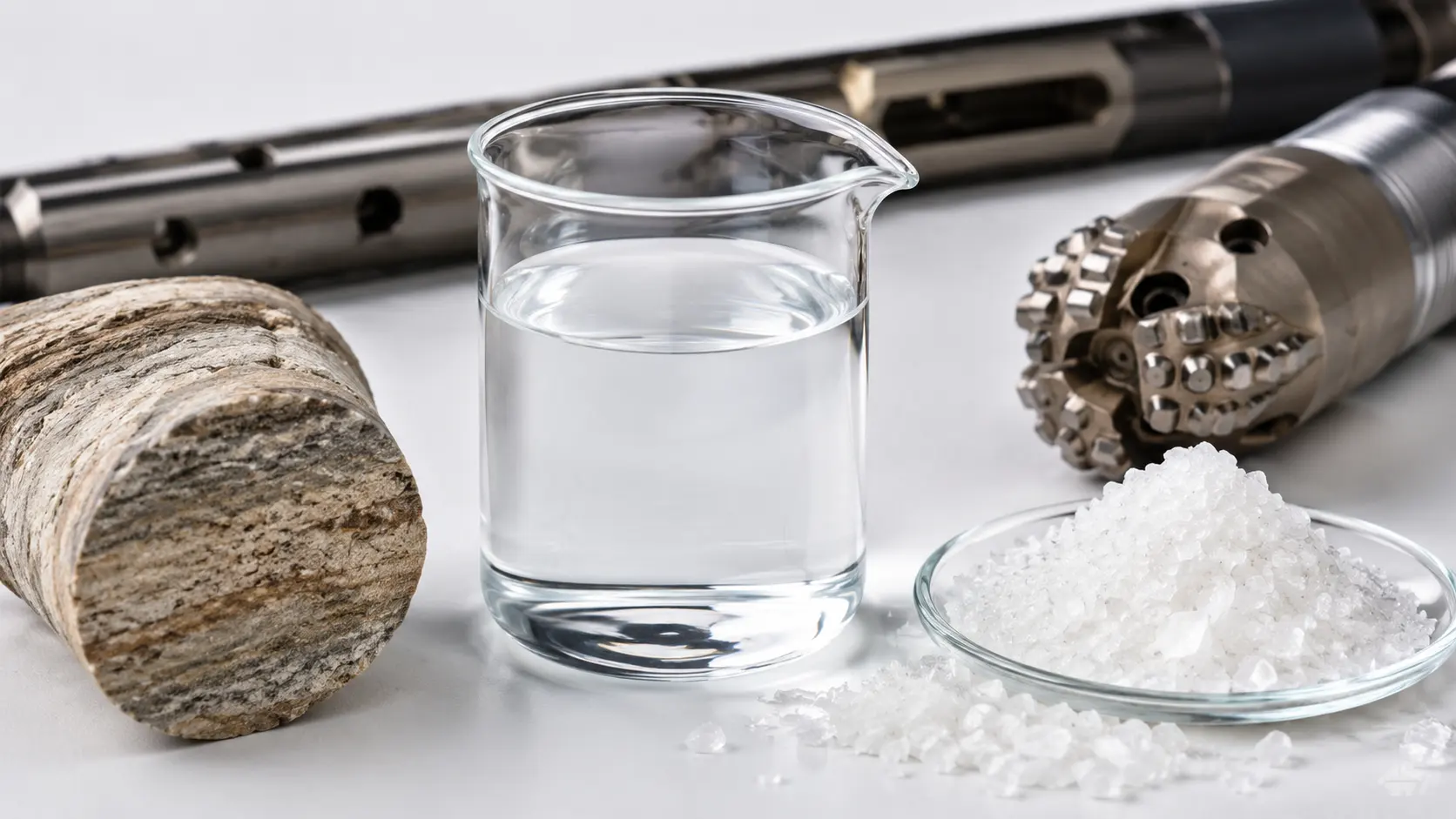
A potassium formate reservoir drilling fluid is designed for one of the most sensitive parts of the well: drilling through the formation that is expected to produce oil or gas later.
At this stage, simply making hole is no longer enough.
The drilling fluid still needs to carry cuttings, maintain wellbore stability and provide enough hydrostatic pressure, but it should also avoid leaving unnecessary damage behind in the reservoir.
That changes the way the fluid is designed.
Potassium formate can be used as the brine phase of a reservoir drill-in fluid because it offers useful dissolved density, low suspended-solids potential and compatibility with properly selected high-performance polymers.
The final fluid, however, is much more than potassium formate and water.
A good reservoir drilling fluid needs the correct brine, filtration-control system, bridging package, rheology and cleanup strategy working together.
What Is a Reservoir Drilling Fluid?
A reservoir drilling fluid, often called a reservoir drill-in fluid or RDF, is specially designed for drilling through the productive interval.
Unlike a general-purpose drilling mud, an RDF has two groups of customers.
The drilling team wants:
- Good hole cleaning
- Stable rheology
- Wellbore stability
- Low torque and drag
- Controlled fluid loss
The reservoir or completion team wants:
- Low formation damage
- Limited filtrate invasion
- A thin filtercake
- Easy filtercake removal
- Good return permeability
Modern reservoir drill-in fluids are therefore engineered to drill effectively while minimizing impairment of the formation and remaining compatible with the later completion.
Why Use Potassium Formate as the Base Brine?
Potassium formate, HCOOK, is highly soluble in water.
This allows fluid engineers to create relatively dense brines without obtaining all of the required mud weight from suspended solids.
For a reservoir section, this can be valuable.
Too many solids may contribute to:
- Pore plugging
- Increased plastic viscosity
- Thick filtercake
- More difficult cleanup
- Reduced permeability
Potassium formate allows part of the density to come from dissolved salt.
This does not mean the finished RDF is completely solids-free. Reservoir drill-in fluids often deliberately contain sized bridging materials to seal pore throats and control fluid invasion.
The difference is that those solids can be selected specifically for formation protection, rather than simply added as weighting material.
What Does Potassium Formate Contribute?
| Fluid Requirement | Potassium Formate Contribution |
|---|---|
| Mud density | Provides density through dissolved salt |
| Low-solids design | Reduces dependence on suspended weighting solids |
| Potassium chemistry | Can support shale-control strategies |
| Brine base | Provides a clear water-based continuous phase |
| HPHT formulation | Compatible with properly designed high-temperature systems |
| Reservoir protection | Supports low-invasion RDF designs |
| Density adjustment | Concentration can be tailored to the project |
These advantages need to be considered as part of the full fluid design.
Potassium formate is the base chemistry, not the complete reservoir drilling system.
Formation Damage Is the Main Concern
When drilling an overburden section, a certain amount of formation interaction may be acceptable.
Inside the reservoir, the economic impact can be much greater.
Damage around the wellbore can reduce the ability of oil or gas to flow toward the well.
Potential mechanisms include:
- Fine-particle plugging
- Excessive filtrate invasion
- Clay swelling
- Scale precipitation
- Emulsion formation
- Poorly removable filtercake
- Incompatible brine chemistry
This is why reservoir drilling-fluid qualification often goes further than ordinary mud testing.
The question is not only:
Can this fluid drill the interval?
It is also:
What condition will the reservoir be in after drilling?
Filtercake Design Matters
A good reservoir drilling fluid normally forms a thin, low-permeability filtercake on the face of the formation.
The purpose is to reduce continued filtrate invasion while the well is being drilled.
Bridging materials are commonly selected according to reservoir pore or fracture characteristics.
Depending on the system, these may include acid-soluble or otherwise removable particles.
SLB describes reservoir drill-in formulations that use acid-soluble bridging materials to create a thin, ultralow-permeability and easy-to-clean filtercake.
That is exactly what a reservoir fluid should try to achieve.
A thick, difficult-to-remove filtercake may help control fluid loss during drilling but create trouble during completion.
Good RDF design thinks about cleanup from the beginning.
Typical Potassium Formate RDF Components
| Component | Main Purpose |
|---|---|
| Potassium formate brine | Base fluid and dissolved density |
| Xanthan or compatible viscosifier | Hole cleaning and suspension |
| Fluid-loss polymer | Reduces filtrate invasion |
| Sized bridging material | Builds controlled filtercake |
| Shale inhibitor | Supports wellbore stability where needed |
| Lubricant | Helps reduce torque and drag |
| pH treatment | Controls fluid chemistry |
| Temperature stabilizer | Supports HPHT polymer performance |
| Filtercake breaker | Helps restore reservoir flow after drilling |
The formulation can look fairly simple on paper.
Getting all those components to behave properly in a concentrated brine is the hard part.
Return Permeability Is a Useful Measure
Reservoir drill-in fluids are often evaluated using return permeability testing.
The basic idea is to expose a representative core sample to the drilling fluid and then measure how much of its original permeability can be recovered after cleanup.
If a rock initially has good permeability and only a small percentage remains after exposure to the fluid, that is obviously not an attractive RDF.
High return permeability suggests the fluid and filtercake can be removed with relatively limited permanent damage.
For example, a recent SLB high-density reservoir-fluid project reported more than 90% return permeability in core testing with a specially engineered low-permeability filtercake system. That particular case used a divalent brine rather than potassium formate, but it illustrates the type of reservoir-protection metric engineers use when qualifying an RDF.
So when evaluating a potassium formate RDF, looking only at mud properties is not enough.
Reservoir-response testing can be just as important.
Potassium Formate for High-Temperature Reservoir Drilling
Reservoir sections can be hot.
High temperature can degrade polymers used for viscosity and filtration control.
A potassium formate brine may remain useful at elevated temperature, but the entire fluid needs to remain stable.
A documented Saudi Arabia application used a mixed sodium/potassium formate reservoir drill-in fluid in directional wells. The system was used at approximately 11.5–11.8 ppg and tested at bottomhole temperatures reaching 340°F (171°C) with a suitable temperature-stabilizing additive package.
This is a good example of how formate fluid should be described.
Not:
Potassium formate is stable at 171°C, therefore the mud is stable.
Instead:
A properly engineered formate-based RDF can be designed for demanding high-temperature conditions.
The polymers are just as important as the brine.
Rheology Still Has to Work
Reservoir protection is important, but the drilling fluid still needs to drill.
If rheology is too low, cuttings may not be transported effectively.
If rheology is too high, pump pressure and ECD may become excessive.
The fluid engineer may monitor:
- Plastic viscosity
- Yield point
- Low-shear rheology
- Gel strengths
- HTHP fluid loss
- Mud weight
- ECD
Potassium formate's high ionic strength can influence polymer hydration.
A polymer that performs beautifully in freshwater may perform very differently in concentrated formate brine.
This is why the actual brine concentration should be used during laboratory formulation.
Extended-Reach Reservoir Wells
Long horizontal reservoir sections introduce another issue: friction.
Water-based reservoir fluids can sometimes require additional lubrication to manage torque and drag.
In one extended-reach reservoir application, a specialized lubricant reduced torque by about 30% without significantly affecting RDF rheology.
This does not mean every potassium formate RDF needs the same lubricant.
It simply shows that reservoir-fluid design has to consider mechanical drilling performance as well as formation damage.
A fluid that protects the reservoir but cannot practically drill the lateral is not much use.
Formation-Water Compatibility
Potassium formate brine should also be tested against formation water.
Mixing two clear liquids does not guarantee that the mixture stays clear.
Incompatible ions may create precipitation.
Potential testing may therefore include:
- Brine / formation-water compatibility
- Scale tendency
- Crude-oil interaction
- Shale mineral compatibility
- Core-flow testing
- Corrosion
- Elastomer compatibility
There are documented operations where potassium formate was considered but rejected because compatibility testing showed it was unsuitable for the particular shale mineralogy.
That is a useful reminder.
There is no truly “reservoir-friendly” chemical without reservoir-specific testing.
Fluid Loss and Filtercake Cleanup
Reservoir drilling-fluid performance does not stop at total depth.
The filtercake eventually has to be removed or broken so the reservoir can produce.
Common cleanup approaches may include:
- Acid treatment
- Enzyme breakers
- Chelating systems
- Oxidizing breakers
- Delayed breaker systems
The correct method depends on the bridging material and polymer system.
This is why RDF and breaker design should ideally be considered together.
A fluid that produces excellent drilling performance but leaves a filtercake that is difficult to remove may simply shift the problem from drilling to completion.
Liquid or Solid Potassium Formate?
Reservoir-fluid plants can source potassium formate as concentrated liquid or solid material.
75% Liquid
Useful when:
- Fast fluid preparation is required
- Pumping infrastructure is already available
- Local dissolution equipment is limited
96% Solid
Useful when:
- Long-distance freight is important
- A centralized mud plant has good dissolution equipment
- Multiple brine concentrations need to be prepared locally
Solid product ships more active potassium formate per ton.
Liquid concentrate saves mixing time.
The choice normally comes down to the blending operation and logistics.
What Should Buyers Check?
For reservoir-drilling applications, chemical qualification should normally go beyond assay.
Purchasing and QC Checklist
| Parameter | Why It Matters |
|---|---|
| Potassium formate content | Confirms active material |
| Density | Important for liquid concentrate |
| pH | Affects fluid chemistry |
| Chloride | May influence corrosion and compatibility |
| Carbonate | Relevant to formulation chemistry |
| Iron | Important for clean-fluid quality |
| Insoluble matter | Helps limit unwanted solids |
| Batch consistency | Important for repeat mud formulations |
| COA | Confirms delivered quality |
| TDS / SDS | Supports technical and safety review |
For a new project, representative potassium formate should also be tested inside the complete planned RDF.
How to Request a Quote
A practical RFQ might look like:
Product: Potassium Formate
Application: Reservoir Drilling Fluid / RDF
Form: 75% Liquid Solution
Target Fluid Density: 11.8 ppg
Bottomhole Temperature: 150°C
Quantity: 40 MT
Packaging: IBC
Required Documents: COA, TDS and SDS
Special Requirements: Low insoluble matter and controlled chloride
If an internal specification already exists, attach it.
That gives the supplier a much clearer picture than simply asking for “oilfield potassium formate.”
Final Thoughts
A potassium formate reservoir drilling fluid is designed around a difficult compromise.
It has to drill the reservoir efficiently without leaving unnecessary damage behind.
Potassium formate can provide a useful brine base because it offers dissolved density, low-solids potential and flexibility for high-performance water-based formulations.
But reservoir protection depends on much more than the salt.
The final system needs:
- Correct rheology
- Low fluid loss
- Proper bridging
- Thin filtercake
- Formation compatibility
- Thermal stability
- Effective cleanup
For reservoir drilling, the best mud is not simply the fluid that reaches TD with good drilling parameters.
It is the fluid that reaches TD and still allows the reservoir to produce properly afterward.
That is the real measure of a successful reservoir drilling fluid.
FAQ
What is potassium formate reservoir drilling fluid?
It is a reservoir drill-in fluid that uses potassium formate brine as part of the water-based fluid phase to provide density and support low-damage fluid design.
Why is potassium formate used in reservoir drilling?
It can provide dissolved density while helping reduce dependence on suspended weighting solids, which is useful when minimizing formation damage.
Is potassium formate RDF solids-free?
The brine itself can be solids-free, but the finished RDF often contains deliberately sized bridging materials for fluid-loss control and filtercake formation.
What is return permeability?
Return permeability measures how much formation permeability is recovered after exposure to the drilling fluid and subsequent cleanup.
Can potassium formate be used in high-temperature reservoir drilling?
Yes, as part of a properly engineered fluid. Mixed sodium/potassium formate RDF systems have been used in high-temperature field applications.
What should be tested before field use?
Rheology, HTHP fluid loss, thermal stability, filtercake quality, formation-water compatibility, return permeability and cleanup performance should be evaluated according to project requirements.


Contact Us
In This Article
Related Posts
Индивидуальные упаковочные решения от поставщика безводного ацетата натрия в Китае
2026-09-23
Тенденции применения безводного ацетата натрия для специального химического производства
2026-09-23
Безводный ацетат натрия для дубления кожи: улучшает равномерность окрашивания
2026-09-22
Formic Acid 85% for Animal Feed Preservation: Moisture and Storage Stability Guide
2026-09-21


