



Potassium Formate Drill-In Fluid: Reservoir Protection, Fluid Design and Field Use
By LIN
2026-09-02Related Posts
Индивидуальные упаковочные решения от поставщика безводного ацетата натрия в Китае
2026-09-23
Тенденции применения безводного ацетата натрия для специального химического производства
2026-09-23

Безводный ацетат натрия для дубления кожи: улучшает равномерность окрашивания
2026-09-22
Formic Acid 85% for Animal Feed Preservation: Moisture and Storage Stability Guide
2026-09-21
A potassium formate drill-in fluid is a specially designed drilling fluid used while drilling through the reservoir section of a well.
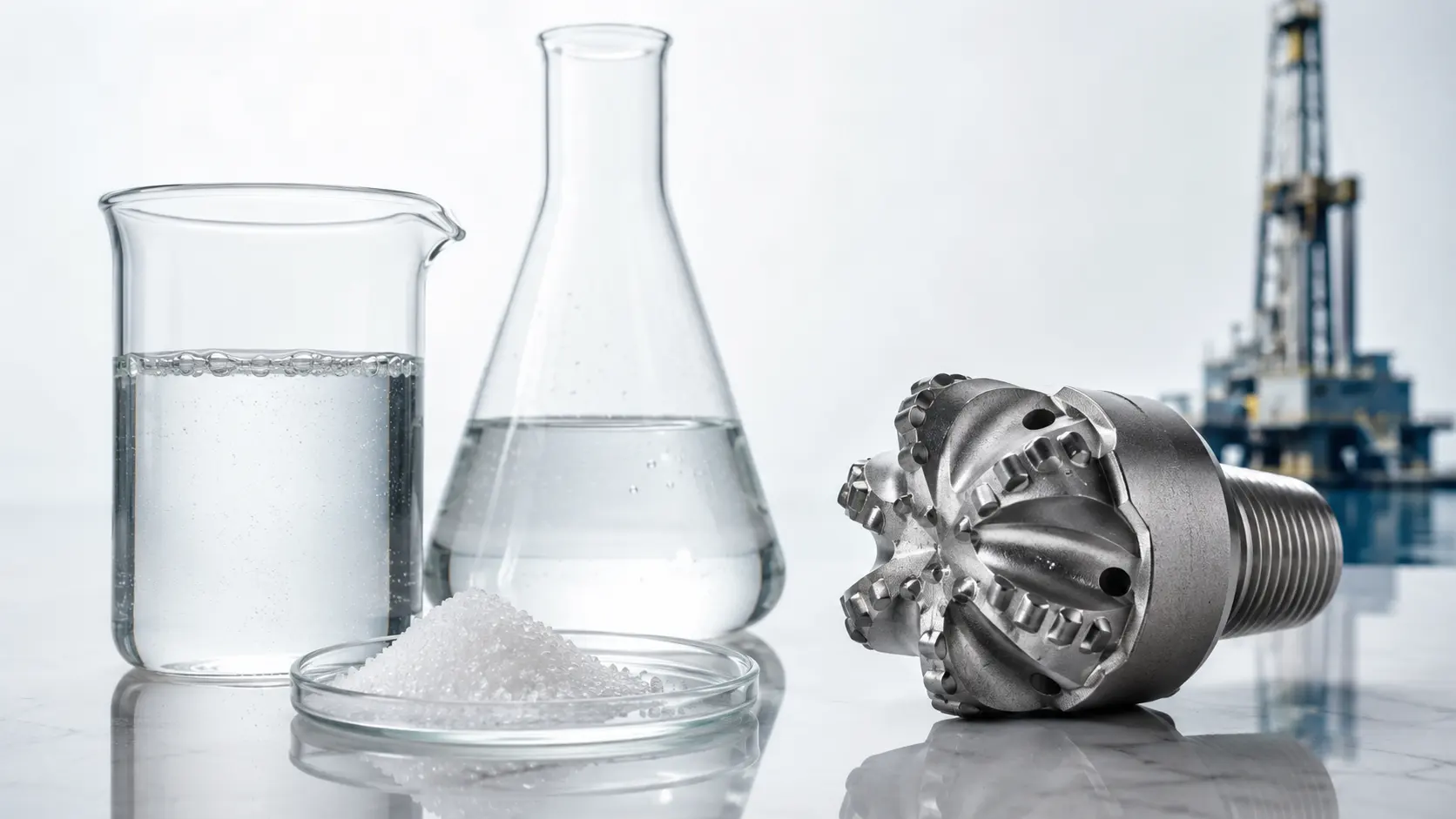
This is different from a general drilling mud.
Before reaching the reservoir, the main concern is usually drilling the hole safely and efficiently. Once the bit enters the productive interval, another question becomes equally important:
Will the fluid make it harder for the reservoir to produce later?
That is why drill-in fluids are designed differently.
A drill-in fluid still needs to carry cuttings, maintain wellbore stability and control formation pressure, but it should also minimize filtrate invasion, avoid unnecessary solids and leave a filtercake that can be removed during completion.
Potassium formate can be a useful base brine for this type of system because it is highly soluble in water and can provide useful density without relying completely on suspended weighting solids.
But potassium formate alone is not a drill-in fluid.
The finished system normally includes carefully selected polymers, bridging particles and other additives.
What Is a Drill-In Fluid?
A drill-in fluid, often shortened to DIF, is specifically designed for drilling through the reservoir.
SLB defines it as a fluid developed exclusively for the reservoir section, particularly where operators need to drill the producing interval successfully, minimize formation damage and make later completion operations easier.
A typical water-based drill-in fluid may contain:
- Brine
- Selected viscosifiers
- Fluid-loss polymers
- Sized bridging particles
- Lubricants
- Shale-control additives
- Filtercake breaker-compatible materials
Unlike a conventional drilling mud, every solid and chemical added to a DIF should have a reason for being there.
There is less room for “just in case” additives.
Main Objectives of a Potassium Formate DIF
| Requirement | Practical Objective |
|---|---|
| Well control | Maintain suitable hydrostatic pressure |
| Hole cleaning | Transport drilled cuttings |
| Low fluid loss | Reduce filtrate invasion |
| Thin filtercake | Seal the formation efficiently |
| Low damaging solids | Protect reservoir permeability |
| Completion compatibility | Avoid problems when screens or other equipment are installed |
| Easy cleanup | Allow filtercake removal before production |
| Thermal stability | Maintain properties at downhole temperature |
This is why drill-in fluid design sits somewhere between drilling-fluid engineering and completion-fluid engineering.
It has to satisfy both sides.
Why Use Potassium Formate as the Base Brine?
Potassium formate, chemical formula HCOOK, is highly soluble in water.
Formate salts including sodium, potassium and cesium formate can produce high-density, solids-free brines, reducing dependence on conventional weighting agents in suitable systems.
For a drill-in fluid, that can be useful.
If more of the required density comes from dissolved salt, less suspended weighting material may be needed.
Potential benefits include:
- Lower solids loading
- More controllable rheology
- Reduced risk of weighting solids entering the formation
- Cleaner reservoir-fluid design
- Flexible brine density
- Potassium-based chemistry
A concentrated potassium formate brine can reach approximately 1.58 g/cm³, or around 13.1 ppg, as a single-salt clear brine.
The final DIF may be lighter or may be engineered differently according to the well.
Low Solids Does Not Mean No Solids
This point is important.
A potassium formate brine itself may be essentially solids-free.
A reservoir drill-in fluid normally is not.
Why?
Because carefully selected solids are often added on purpose to create a protective filtercake.
The key is using the right solids at the right particle size.
Typical bridging materials may include sized calcium carbonate or other removable materials.
These particles bridge across formation pores and help reduce deeper filtrate invasion.
Useful Solids vs Unwanted Solids
| Solids Type | Role in Drill-In Fluid |
|---|---|
| Sized bridging material | Intentionally builds protective filtercake |
| Selected reservoir-safe particles | Helps control invasion |
| Drilled solids | Unwanted contamination |
| Excess weighting solids | May increase formation-damage risk |
| Rust / tank debris | Unwanted contamination |
So when people call an RDF or DIF a “low-solids fluid,” it does not necessarily mean literally zero solids.
It means solids are controlled much more carefully.
Filtercake Is One of the Most Important Parts
A good drill-in fluid should form a filtercake quickly.
Ideally, the cake is:
- Thin
- Low permeability
- Stable while drilling
- Easy to remove later
If the filtercake is too permeable, filtrate continues entering the reservoir.
If it is too thick, the well may experience higher friction and difficult cleanup.
If it is too strong or chemically resistant, production may be impaired after completion.
Current reservoir-drill-in technologies are specifically designed to create thin, ultralow-permeability filtercakes that can later be cleaned effectively. For example, SLB describes high-temperature RDF formulations using acid-soluble bridging particles for this purpose.
This is a useful design principle for potassium formate DIFs as well.
The filtercake should work during drilling and then get out of the way afterward.
Fluid-Loss Control
Filtrate invasion is one of the main ways a reservoir can be damaged during drilling.
Water and dissolved salts can move into the formation and interact with:
- Formation water
- Clay minerals
- Crude oil
- Cementing minerals
- Fine particles
Possible consequences include:
- Water blocking
- Scale precipitation
- Clay reaction
- Fines migration
- Emulsion formation
A potassium formate drill-in fluid therefore normally uses a compatible fluid-loss polymer in addition to bridging material.
The polymer needs to work in concentrated brine.
That sounds obvious, but high salinity can dramatically change polymer hydration and viscosity.
A polymer that performs very well in freshwater may perform poorly in concentrated potassium formate.
Always test the real formulation.
Completion Compatibility
Drill-in fluid design should consider what happens after drilling.
Openhole completions may involve:
- Stand-alone screens
- Gravel packs
- Openhole packers
- Inflow control devices
- Other completion assemblies
Residual solids or a poorly designed filtercake can interfere with these components.
SLB specifically describes reservoir drill-in fluids as being engineered for both reservoir drilling and openhole completion compatibility.
This is one of the biggest differences between a conventional drilling fluid and a good DIF.
The drilling-fluid engineer cannot stop thinking at total depth.
The completion still has to work.
Designing the Bridging Package
Bridging particles should generally be selected according to reservoir pore structure.
If particles are too small, they may invade too deeply.
If they are too large, they may not seal the formation effectively.
An engineered particle-size distribution usually performs better than adding one random calcium carbonate grade.
Modern high-density RDF systems use carefully optimized bridging-particle distributions to produce durable, low-permeability filtercakes while supporting later cleanup.
Typical laboratory work may include:
- Particle-plugging tests
- HTHP filtration
- Core-flow testing
- Filtercake thickness measurement
- Breaker testing
There is no universal bridging recipe.
Reservoir properties should drive the design.
Filtercake Cleanup
A drill-in fluid is only half the story.
Eventually, oil or gas needs to flow through the formation again.
That means the filtercake normally needs to be broken or removed.
Depending on the formulation, cleanup may use:
- Acid breakers
- Chelating agents
- Enzyme systems
- Oxidizing breakers
- Delayed breaker packages
The bridging material and breaker should be designed together.
If acid-soluble calcium carbonate is used, for example, an acid-compatible cleanup route may be possible.
Other polymer systems may require different breaker chemistry.
The best time to think about cleanup is before drilling starts, not after the well fails to flow properly.
Return Permeability Testing
One useful laboratory test for drill-in fluids is return permeability.
A representative core sample is first tested to establish its original permeability.
The drill-in fluid is then exposed to the core under simulated reservoir conditions.
After cleanup, permeability is measured again.
A higher percentage of restored permeability generally indicates lower permanent damage.
This type of testing gives more useful reservoir information than just looking at mud weight and rheology.
A fluid can have beautiful drilling properties and still damage the reservoir.
That is why DIF qualification should include reservoir-focused testing where the project justifies it.
Potassium Formate in High-Temperature DIF Systems
Reservoir sections can also be hot.
At elevated temperature, viscosifiers and fluid-loss additives may degrade.
Potassium formate brine can be incorporated into engineered high-temperature systems, but the complete fluid must be tested.
Current commercial high-temperature water-based systems are compatible with formate brines and can be customized into reservoir drill-in fluids using removable bridging materials.
The important lesson is simple:
Don't qualify the salt alone. Qualify the whole fluid.
A high-temperature test program may evaluate:
- Rheology after aging
- HTHP fluid loss
- Gel strengths
- Filtercake quality
- Polymer degradation
- Solids suspension
- Formation compatibility
Long static periods should also be considered.
Potassium Formate DIF vs Conventional Drilling Mud
| Factor | Potassium Formate Drill-In Fluid | Conventional Drilling Mud |
|---|---|---|
| Main target | Reservoir interval | General wellbore drilling |
| Formation damage | Major design priority | One of several priorities |
| Solids selection | Carefully controlled | Broader solids package |
| Bridging system | Reservoir-specific | May not be reservoir-specific |
| Filtercake cleanup | Planned before completion | Often less critical |
| Completion compatibility | High priority | Not always central |
| Return permeability | Often relevant | Less commonly tested |
| Brine density | Can come from potassium formate | May rely more on weighting solids |
Neither fluid is universally better.
They are designed for different jobs.
75% Liquid or 96% Solid Potassium Formate?
Potassium formate for DIF preparation may be supplied as liquid concentrate or solid raw material.
Vanchor currently offers 75% potassium formate solution for direct liquid handling and ≥96% solid potassium formate for customers that prefer higher active content and local brine preparation.
Product Form Comparison
| Factor | 75% Solution | 96% Solid |
|---|---|---|
| Field pumping | Easy | Requires dissolution |
| Preparation speed | Faster | More mixing required |
| Active material per ton | Lower | Higher |
| Freight efficiency | Lower | Higher |
| Local concentration control | Good by dilution | Very flexible |
| Storage | Tank / IBC | Dry moisture-resistant storage |
The chemical form should be selected according to the mud plant rather than the reservoir alone.
Both can ultimately be used to prepare potassium formate brine.
What Should Buyers Specify?
For a potassium formate drill-in fluid project, the chemical RFQ should contain useful technical information.
For example:
Product: Potassium Formate
Application: Reservoir Drill-In Fluid
Product Form: 75% Solution
Target Fluid Density: 11.5 ppg
Bottomhole Temperature: 150°C
Quantity: 40 MT
Packaging: IBC
Required Documents: TDS, COA and SDS
Special Requirements: Low insoluble matter and controlled chloride
Oilfield customers may also specify limits for:
- Iron
- Carbonate
- Chloride
- Insoluble matter
- Density
- pH
Vanchor supplies both liquid and solid potassium formate for customers preparing drilling and oilfield brine systems. Final concentration and finished-fluid performance should always be confirmed by the drilling-fluid company under actual well conditions.
Final Thoughts
A potassium formate drill-in fluid is not simply a cleaner version of drilling mud.
It is a reservoir-focused fluid designed with production in mind from the beginning.
Potassium formate can provide a useful brine base because it offers:
- Dissolved density
- Low-solids potential
- Potassium chemistry
- Flexibility for water-based RDF formulations
But the real performance comes from the complete system.
Bridging particles need the right size.
Fluid loss needs to remain low.
The filtercake needs to stay thin.
Polymers need to survive temperature and salinity.
And after drilling, the filtercake still needs to come off.
A good drill-in fluid should make drilling easier without making future production harder.
That is really the whole point.
FAQ
What is potassium formate drill-in fluid?
It is a reservoir drill-in fluid that uses potassium formate brine as part of its liquid phase to provide density and support low-damage reservoir drilling.
Is potassium formate itself a complete drill-in fluid?
No. It is normally the base brine. Viscosifiers, fluid-loss additives, bridging materials and other chemicals are added to create the finished DIF.
Why are bridging particles used?
They help form a thin, low-permeability filtercake that limits deeper fluid invasion into the reservoir.
Is potassium formate drill-in fluid solids-free?
The base brine can be solids-free, but the finished DIF usually contains selected bridging solids needed for filtration control.
Why is filtercake cleanup important?
The filtercake protects the reservoir during drilling but may restrict production if it is not removed effectively before the well is brought online.
What tests are important for a potassium formate DIF?
Typical testing includes rheology, HTHP fluid loss, particle-plugging performance, thermal aging, filtercake cleanup, formation compatibility and, where appropriate, return permeability.


Contact Us
In This Article
Related Posts
Индивидуальные упаковочные решения от поставщика безводного ацетата натрия в Китае
2026-09-23
Тенденции применения безводного ацетата натрия для специального химического производства
2026-09-23
Безводный ацетат натрия для дубления кожи: улучшает равномерность окрашивания
2026-09-22
Formic Acid 85% for Animal Feed Preservation: Moisture and Storage Stability Guide
2026-09-21


