



Potassium Formate vs Calcium Chloride Brine: Density, Corrosion, and Oilfield Selection
By Tonmoy
2026-09-08Related Posts
Индивидуальные упаковочные решения от поставщика безводного ацетата натрия в Китае
2026-09-23
Тенденции применения безводного ацетата натрия для специального химического производства
2026-09-23

Безводный ацетат натрия для дубления кожи: улучшает равномерность окрашивания
2026-09-22
Formic Acid 85% for Animal Feed Preservation: Moisture and Storage Stability Guide
2026-09-21
For oilfield completion and workover operations, potassium formate and calcium chloride brines should not be treated as interchangeable choices based on density alone. Potassium formate may be the stronger candidate where the design requires a high-density, low-solids brine with shale-inhibition or formation-compatibility advantages. Calcium chloride may still fit a project when its required density, crystallization behavior, materials compatibility, and formation response have been demonstrated.
The comparison must remain conditional. Available evidence does not support a universal winner, and direct calcium chloride density and corrosion data are not always reported on the same basis as potassium formate data.
Comparison at a Glance: Which Brine Fits Which Oilfield Requirement?

| Selection criterion | Potassium formate brine | Calcium chloride brine | What the reader should verify |
|---|---|---|---|
| Density | TETRA reports saturated potassium formate brine at approximately 13.1 lb/gal | A directly comparable oilfield value was not verified in the available evidence | Concentration, temperature, saturation basis, and crystallization margin |
| Solids | Can support a solids-free clear-brine system and may reduce the need for weighting solids | Requires project-specific evaluation of the selected brine system | Clarity, solids content, and filtration requirements |
| Corrosion | May be less corrosive in some applications, but oilfield alloy-specific evidence is required | Calcium chloride is reported as highly corrosive to metals, especially aluminium, in a cooling-brine context | Alloy, temperature, concentration, pH, oxygen, exposure time, and test method |
| Shale and clay behavior | TETRA describes potassium formate as supporting control of shale hydration, migration, and swelling | A 2024 comparative study reported higher clay swelling for calcium chloride than for most tested brines under its test conditions | Formation mineralogy, formation water, wettability, and compatibility testing |
| Temperature and pressure design | Requires TCT/PCT and crystallization data for the selected concentration | Requires the same data; density alone is insufficient | Operating temperature, pressure, and low-temperature margin |
| Best-fit decision | Candidate for demanding low-solids, formation-sensitive, or high-density applications | Candidate where verified project data support density, compatibility, equipment, and commercial requirements | Current TDS, SDS, COA, and application-specific test data |
For broader product context, see Vanchor’s potassium formate resource. The comparison below focuses specifically on oilfield brine selection rather than general potassium formate chemistry.
Density: Compare the Brine at the Same Concentration and Temperature Basis
Density determines the hydrostatic pressure that a clear brine can provide. It is therefore one of the first screening criteria for completion, workover, and packer-fluid selection.
TETRA reports that saturated potassium formate brine can reach approximately 13.1 lb/gal. This figure applies to a saturated aqueous potassium formate system and should not be interpreted as the density of dry potassium formate or as a universal value for every commercial grade.
A potassium formate brine density chart can be useful when reviewing how concentration and temperature affect a formate-brine design. However, any density table should be read alongside its test basis. A technically useful density value identifies:
- Chemical form and grade
- Solution concentration or saturation basis
- Measurement temperature
- Density units
- Crystallization or thermal limits
- Whether the value is typical, minimum, or guaranteed
A calcium chloride brine should be evaluated using the same information. A dry calcium chloride assay cannot be compared directly with the density of a saturated potassium formate solution. Likewise, two aqueous brines are not directly comparable if one value is measured at room temperature and the other at the planned downhole temperature.
Clear-brine selection also involves more than density. SLB identifies density, clarity, and temperature-related crystallization considerations such as true crystallization temperature and pressure crystallization temperature as important parts of fluid selection. Its clear-brine overview includes both calcium chloride and formate systems as oilfield options: SLB clear-brine fluids.
The practical conclusion is narrow but important: potassium formate has a verified high-density reference point in the available evidence, but a universal density advantage over calcium chloride cannot be stated without comparable calcium chloride data under the same conditions.
Corrosion: Why “Less Corrosive” Is Not a Universal Result
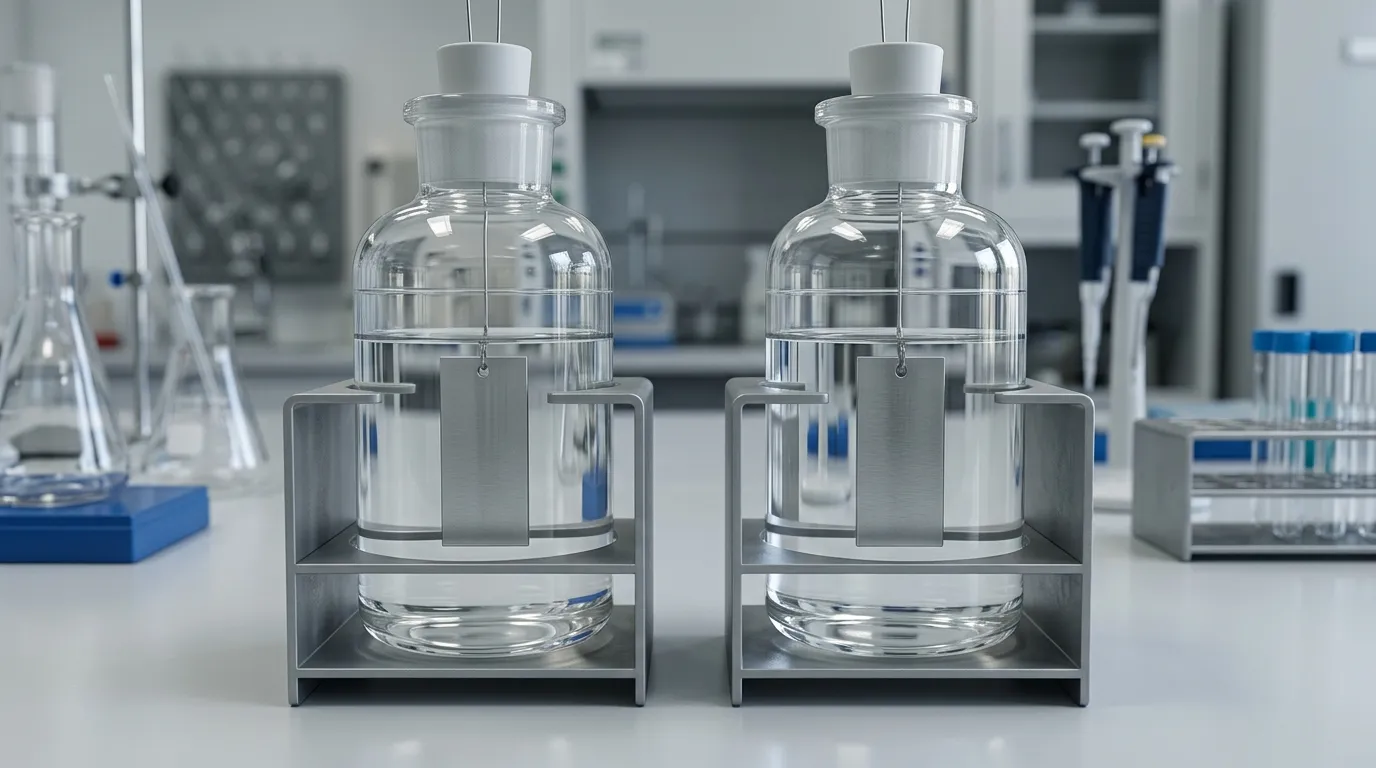
Corrosion performance depends on the complete materials and operating environment, not only on the brine name. Relevant variables include:
- Alloy or equipment material
- Brine concentration
- Temperature and pressure
- pH
- Dissolved oxygen
- Exposure duration
- Flow conditions
- Contaminants
- Corrosion inhibitors
- Presence of dissimilar metals
Hydratech states that calcium chloride brine is highly corrosive to metals, particularly aluminium, in modern chiller designs. The same source describes potassium formate as less corrosive than calcium chloride in that industrial cooling-brine context. This information is relevant as an indication that chloride and formate brines can behave differently toward metals, but it is not direct proof of oilfield corrosion performance.
Completion equipment, tubing, casing, downhole tools, packers, and surface systems may use different alloys and operate under different temperature, pressure, flow, and contamination conditions. A result from an industrial cooling system should not be transferred automatically to those materials.
Vanchor’s product positioning may describe potassium formate as low-corrosivity, but that wording should remain a site-stated product position unless supported by a current, application-specific corrosion test. It should not be expanded into a claim that potassium formate is non-corrosive or safe for every oilfield alloy.
For an oilfield comparison, the most useful corrosion evidence would test potassium formate and calcium chloride under comparable conditions:
- The same alloy or equipment material
- The same brine concentration basis
- The same temperature and exposure period
- The same oxygen and contamination conditions
- The same test method and corrosion-rate units
- The same inhibitor or additive conditions, if used
Without that normalization, the technically defensible conclusion is that corrosion must be qualified by system conditions. Potassium formate may offer a corrosion-related advantage in some applications, but the relevant decision requires materials-specific verification.
Formation and Clay Compatibility: The Reservoir May Decide the Brine
A brine that meets the pressure requirement can still be unsuitable if it causes clay swelling, precipitation, wettability changes, emulsion problems, or other formation-related effects.
TETRA describes potassium formate as supporting control of shale hydration, migration, and swelling. This is a supplier-attributed oilfield statement and should be treated as application guidance rather than a universal formation guarantee.
A 2024 comparative study of brine solutions reported higher clay swelling for calcium chloride than for most of the other brines tested under its experimental conditions. The study also reported favorable potassium formate behavior in sandstone wettability-related testing. These findings help explain why potassium formate may be considered for formation-sensitive applications, but they do not establish that it will perform identically in every reservoir.
Formation compatibility depends on the actual system, including:
- Mineralogy and clay type
- Formation-water composition
- Salinity and ion balance
- Permeability and pore structure
- Wettability
- Temperature and pressure
- Contact time
- Additives and completion chemicals
- Potential precipitation or scale-forming reactions
Formate brines also require compatibility review with other oilfield fluids and materials. The relevant checks can include formation fluids, additives, elastomers, cement, gases, and completion equipment. A potassium formate completion fluid resource may provide additional application context, but it should not replace formation-specific laboratory testing.
The selection implication is conditional:
- Potassium formate may be a stronger candidate where shale inhibition, clay control, or low formation impairment is a priority.
- Calcium chloride should not be rejected solely because it is a chloride brine; its suitability depends on the actual formation and compatibility results.
- Neither brine should be approved for a sensitive formation based only on a generic product description.
Oilfield Selection: When Potassium Formate or Calcium Chloride May Fit
The better choice depends on the well’s fluid-design requirements and the quality of the available qualification data.
When potassium formate may fit
Potassium formate is a candidate for further evaluation when the project requires:
- A high-density clear-brine system
- A low-solids formulation
- Reduced reliance on weighting solids
- Shale or clay inhibition
- Formation-compatibility advantages supported by testing
- A fluid suitable for demanding temperature and pressure conditions
- Compatibility with the planned additives, elastomers, cement, and completion equipment
TETRA describes formate systems as solids-free, high-density fluids with shale-inhibition and hydrate-inhibition applications. These claims should remain within the supplier’s stated scope and should be checked against the selected concentration and well conditions.
When calcium chloride may fit
Calcium chloride remains a candidate when:
- Its verified density meets the required hydrostatic-pressure target.
- Its crystallization and temperature limits are acceptable.
- Relevant equipment and alloy compatibility have been demonstrated.
- Formation-water and additive testing do not show unacceptable swelling, precipitation, wettability, or emulsion behavior.
- The selected grade and concentration are controlled through appropriate quality documents.
- Project-specific commercial and logistical conditions support its use.
The available evidence does not justify claiming that calcium chloride is always unsuitable or that potassium formate is always the preferred option. Calcium chloride may be appropriate in some designs, but its selection should be based on comparable technical data rather than assumptions about density, corrosion, or price.
For a broader oilfield application reference, see potassium formate for oilfield. The final choice should still be made against the well program and the actual brine documentation.
What to Request Before Approving Either Brine

QA, operations, and procurement teams should compare the documentation for the exact chemical form and concentration being considered.
Request or verify:
- Chemical identity and supplied form
- Solid or aqueous-solution status
- Assay or concentration basis
- Density data at relevant temperatures
- Saturation basis, if applicable
- True crystallization temperature and pressure crystallization data
- Typical, minimum, and guaranteed values
- pH and relevant impurity limits where technically required
- Corrosion test method and test conditions
- Alloy or material tested
- Formation-water and additive compatibility data
- Cement, elastomer, and equipment compatibility information
- Current technical data sheet
- Safety data sheet
- Batch certificate of analysis
A certificate of analysis should be treated as evidence for the tested batch and reported parameters; it is not, by itself, proof of universal performance or application approval. Similarly, an SDS provides safety and handling information but does not establish formation compatibility or oilfield performance.
For a sourcing discussion, a potassium formate brine supplier page may be a relevant next step. Any supplier evaluation should still request the exact product form, concentration basis, density target, and technical documents needed for the project.
Final Selection Principle
Potassium formate may be the stronger starting candidate for oilfield applications that prioritize high-density, low-solids fluid design, shale or clay control, or formation compatibility. Calcium chloride may still fit when its density, crystallization, corrosion, formation, and equipment data satisfy the well requirements.
The decision should not be based on a single density number or a general statement that one brine is less corrosive. Compare the same concentration basis, temperature, materials, and test conditions, then confirm the selected brine with TDS, TCT/PCT, corrosion, formation-compatibility, and batch-quality evidence.


Contact Us
Related Posts
Индивидуальные упаковочные решения от поставщика безводного ацетата натрия в Китае
2026-09-23
Тенденции применения безводного ацетата натрия для специального химического производства
2026-09-23
Безводный ацетат натрия для дубления кожи: улучшает равномерность окрашивания
2026-09-22
Formic Acid 85% for Animal Feed Preservation: Moisture and Storage Stability Guide
2026-09-21


