



Potassium Formate Road Deicer: Performance, Applications and Buying Guide
By LIN
2026-09-02Related Posts
Индивидуальные упаковочные решения от поставщика безводного ацетата натрия в Китае
2026-09-23
Тенденции применения безводного ацетата натрия для специального химического производства
2026-09-23

Безводный ацетат натрия для дубления кожи: улучшает равномерность окрашивания
2026-09-22
Formic Acid 85% for Animal Feed Preservation: Moisture and Storage Stability Guide
2026-09-21
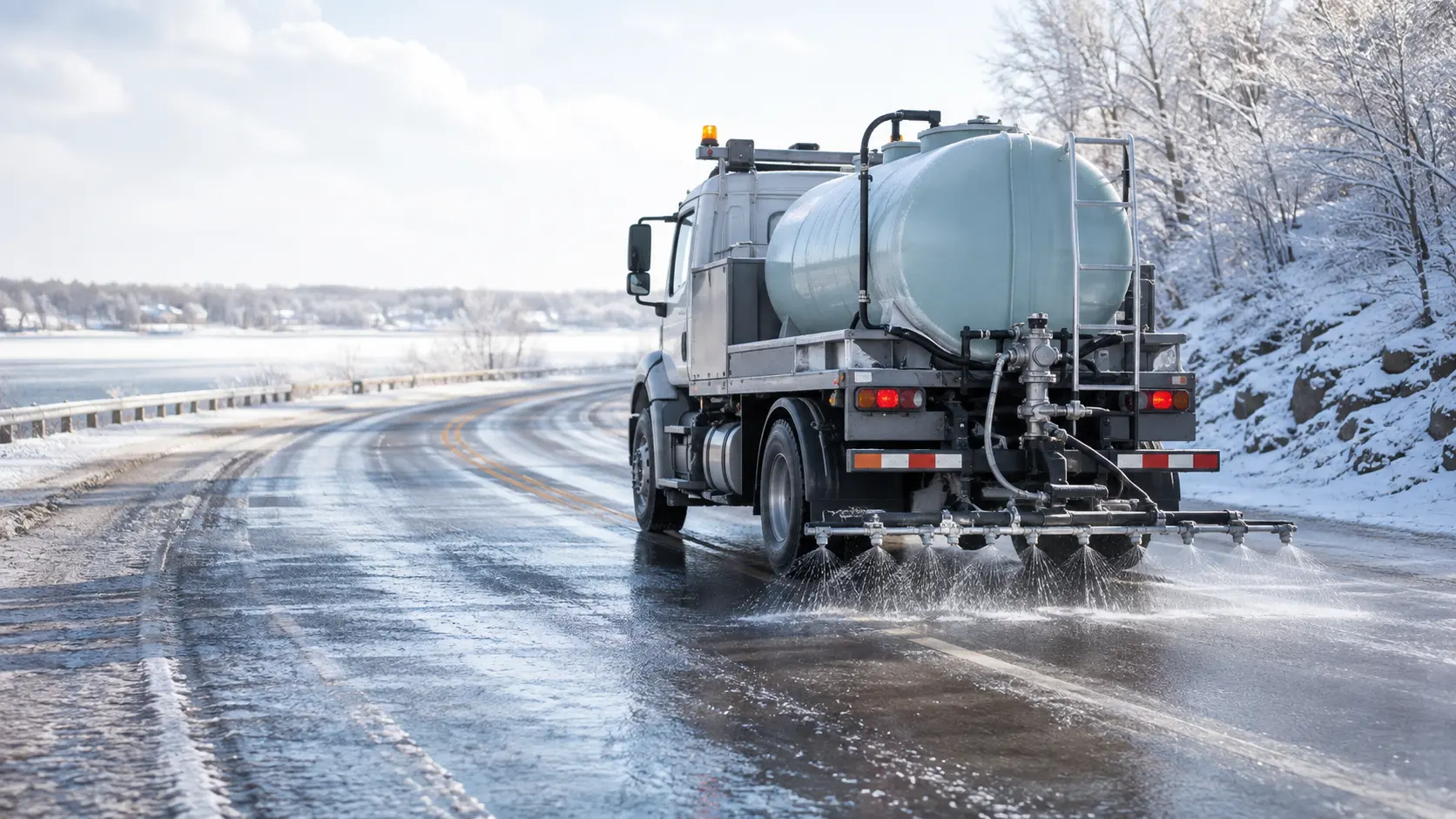
A potassium formate road deicer is a liquid or formulated winter-maintenance product used to melt ice, reduce ice bonding and support safer road conditions during freezing weather.
For most ordinary highways, sodium chloride is still difficult to beat on price. It is cheap, familiar and available almost everywhere.
Potassium formate enters the picture when winter-maintenance requirements become more demanding.
It is highly soluble in water, suitable for liquid spraying and based on formate rather than chloride chemistry. This makes it interesting for bridges, ramps, tunnels, industrial roads and other areas where corrosion, accurate liquid application or infrastructure protection receives more attention.
Vanchor currently supplies potassium formate in both 75% liquid and ≥96% solid forms for formulated road, bridge and industrial deicing products. (vanchorsc.com)
The important word is formulated.
Raw potassium formate is the active chemical. A good road deicer still needs the right concentration, application rate and corrosion-performance profile.
How Does Potassium Formate Deice a Road?
Potassium formate has the chemical formula HCOOK.
When dissolved in water, it lowers the freezing point of the solution.
Applied to icy pavement, the resulting brine can work its way toward the interface between ice and the road surface.
This helps:
- Melt frost and thin ice
- Weaken compacted ice
- Reduce ice-pavement bonding
- Support plowing and brushing
- Slow refreezing under suitable conditions
The chemical does not necessarily need to melt every layer of snow completely.
In many road-maintenance operations, weakening the bond between snow or ice and the pavement is already a major advantage.
Mechanical equipment can then clear the surface more efficiently.
Road Deicing vs Anti-Icing
Potassium formate can be used in both deicing and anti-icing programs.
These approaches are related, but the timing is different.
Deicing
Deicing happens after snow or ice has already bonded to the pavement.
The chemical helps melt or loosen the frozen material.
Anti-Icing
Anti-icing is preventive.
The liquid is sprayed before or during the early stages of a freezing event to reduce the formation of a strong bond between frozen precipitation and the road.
FHWA explains that anti-icing chemicals work by lowering the freezing point of water and preventing a strong pavement-snow or pavement-ice bond from forming. This can leave the road wet or slushy instead of firmly iced and can make subsequent plowing easier. (fhwa.dot.gov)
Practical Comparison
| Factor | Road Deicing | Road Anti-Icing |
|---|---|---|
| Timing | After ice develops | Before strong ice bonding |
| Main purpose | Melt or loosen ice | Prevent adhesion |
| Chemical demand | Often higher | Can be lower |
| Mechanical removal | Usually required | Usually easier afterward |
| Weather forecasting | Helpful | Very important |
| Best approach | Corrective | Preventive |
Where weather monitoring is reliable, anti-icing can often be a more efficient way to use liquid chemicals.
Where Is Potassium Formate Road Deicer Used?
Potassium formate is unlikely to replace inexpensive road salt everywhere.
It is more attractive in targeted areas.
Typical applications may include:
- Bridge decks
- Elevated ramps
- Overpasses
- Mountain roads
- Tunnel entrances
- Intersections
- Logistics roads
- Industrial access roads
- Parking facilities
- Sensitive infrastructure areas
Vanchor's current product information lists road deicers, bridge and tunnel anti-icing fluids, parking-area deicers, logistics-yard products and industrial winter-maintenance fluids among potential applications for 75% potassium formate feedstock. (vanchorsc.com)
Why Bridges Are a Good Anti-Icing Target
Bridge decks can freeze earlier than surrounding ground-level roads.
Cold air circulates around both the upper and lower surfaces of the structure, so the bridge may lose heat more quickly.
That makes bridges useful candidates for preventive treatment.
A liquid potassium formate formulation can be applied before frost or freezing precipitation and may also be integrated into fixed spray systems.
Typical high-risk locations include:
- Bridge approaches
- Elevated curves
- Shaded decks
- Steep ramps
- Accident-prone sections
These targeted applications can make more economic sense than treating an entire highway network with a premium deicing chemical.
Potassium Formate vs Sodium Chloride
Sodium chloride remains the standard benchmark for road winter maintenance.
The two chemicals solve similar problems but have different economics and chemistry.
| Factor | Potassium Formate | Sodium Chloride |
|---|---|---|
| Chemical type | Formate | Chloride |
| Liquid formulation | Well suited | Brine commonly used |
| Raw-material cost | Higher | Low |
| Chloride exposure | No chloride as active salt | High |
| Targeted infrastructure use | Attractive | Common |
| Broad highway use | Less economical | Highly economical |
| Automated liquid spraying | Suitable | Suitable |
| Corrosion testing | Still needed | Particularly important |
If the only requirement is inexpensive general road deicing, sodium chloride usually makes more sense.
Potassium formate becomes interesting when the buyer is willing to spend more for a different corrosion and infrastructure-management profile.
Potassium Formate vs Calcium Chloride
Calcium chloride is also widely used for road deicing and performs well at lower temperatures than ordinary sodium chloride under many conditions.
It can also release heat when dissolving, helping ice-melting performance.
Potassium formate has a different advantage: it is not chloride-based.
General Selection Logic
Choose conventional chloride chemistry when:
- Lowest chemical cost matters
- Infrastructure is not highly sensitive
- Large road networks must be treated
- Existing equipment and procedures are designed around chloride salts
Consider potassium formate when:
- Chloride exposure is a concern
- Liquid anti-icing is preferred
- Treatment is targeted to critical infrastructure
- Automated spray systems are used
- A specialty winter-maintenance formulation is justified
There is no reason to force one product into every application.
Road conditions and total maintenance cost should decide.
Does Potassium Formate Cause Corrosion?
Potassium formate is often attractive because it avoids chloride as its primary active anion.
This can help reduce some chloride-related corrosion concerns.
But saying potassium formate is simply non-corrosive goes too far.
Actual corrosion performance depends on:
- Concentration
- pH
- Chloride impurities
- Metal type
- Exposure time
- Temperature
- Corrosion-inhibitor package
A commercial road deicing product may therefore include corrosion inhibitors or other formulation components.
The finished product should be tested against the materials it will contact.
That includes not only vehicles but also pumps, tanks, spray systems and infrastructure.
Liquid Application Is a Major Advantage
One reason potassium formate fits road anti-icing well is that concentrated liquid can be easily pumped and sprayed.
Liquid spreading equipment may use:
- Spray bars
- Multiple nozzles
- Fixed roadside systems
- Tank trucks
- Automated bridge systems
FHWA describes nozzle bars and liquid spreader systems as standard methods for applying liquid anti-icing chemicals to highway pavement. (fhwa.dot.gov)
Compared with dry granules, a properly calibrated liquid system can provide controlled surface coverage.
The key word there is calibrated.
Too little fluid may not give enough protection.
Too much simply increases cost and runoff.
Concentration Should Match Road Conditions
A deicer manufacturer may purchase a concentrated potassium formate solution and then dilute it to the required working concentration.
The final concentration depends on:
- Pavement temperature
- Expected weather
- Required freezing protection
- Spray equipment
- Product viscosity
- Corrosion performance
- Cost per treated area
The strongest concentrate is not necessarily the best road formulation.
A lower working concentration may already provide the required protection under moderate winter conditions.
The sensible approach is to formulate according to the expected pavement-temperature range and verify performance before full-scale use.
75% Liquid or 96% Solid Potassium Formate?
Road-deicer manufacturers can source potassium formate in two practical forms.
75% Liquid
Advantages include:
- Direct pumping
- Rapid liquid formulation
- No dissolution step
- Easy automated dosing
≥96% Solid
Advantages include:
- More active chemical per ton shipped
- Less water transported
- Flexible local concentration preparation
- Potential freight savings over long distances
Vanchor supplies both formats. Its solid product is positioned for customers who want high active content and local preparation of road, bridge and industrial deicing formulations. (vanchorsc.com)
Supply Form Comparison
| Factor | 75% Liquid | ≥96% Solid |
|---|---|---|
| Direct use in blending | Easy | Requires dissolution |
| Production speed | Faster | More preparation |
| Freight efficiency | Lower | Higher |
| Local concentration control | Good | Very flexible |
| Storage | IBC / tank | Dry warehouse |
| Best fit | Liquid deicer plant | Chemical blending facility |
Environmental Impact Still Needs Management
Formate chemistry is biodegradable, but biodegradable does not mean unlimited environmental impact.
When formate enters surface water, microorganisms can consume dissolved oxygen while breaking it down. EPA environmental assessments identify oxygen consumption during degradation as an environmental consideration for formate-containing deicing products. (epa.gov)
For road applications, good practice therefore includes:
- Correct dosing
- Avoiding unnecessary overspray
- Monitoring runoff
- Protecting nearby water bodies
- Considering drainage
- Following local environmental requirements
A more expensive deicer is still wasted if twice as much is applied as the road actually needs.
What Should Road-Deicer Buyers Check?
For manufacturers buying potassium formate raw material, useful parameters include:
| Parameter | Why It Matters |
|---|---|
| Potassium formate content | Confirms active material |
| Density | Useful for liquid QC |
| pH | Influences formulation |
| Chloride | Relevant to corrosion objectives |
| Iron | Supports product consistency |
| Insoluble matter | Helps protect spray systems |
| Batch consistency | Supports repeatable formulation |
| COA | Confirms actual batch quality |
| TDS | Provides technical properties |
| SDS | Supports handling and storage |
A practical RFQ could state:
Product: Potassium Formate
Application: Road Deicer / Anti-Icing Fluid
Preferred Form: 75% Liquid Solution
Quantity: 80 MT
Packaging: IBC / Flexitank
Required Documents: COA, TDS and SDS
Special Requirements: Controlled chloride and insoluble matter
End Use: Bridge and Highway Winter Maintenance
That gives the supplier enough information to quote the right product and packaging.
Final Thoughts
A potassium formate road deicer makes the most sense when winter maintenance requires more than simply finding the cheapest salt.
Its strengths include:
- High water solubility
- Liquid spray compatibility
- Effective freezing-point depression
- Preventive anti-icing use
- Non-chloride formate chemistry
- Good suitability for targeted infrastructure
For large general highway networks, sodium chloride or calcium chloride may still offer better economics.
For bridges, sensitive road structures, automated systems and industrial access routes, potassium formate can become a much more interesting option.
The best road deicer is not automatically the chemical with the lowest purchase price.
It is the product that provides acceptable winter performance while balancing infrastructure protection, application efficiency and total maintenance cost.
FAQ
Is potassium formate used as a road deicer?
Yes. Potassium formate can be used as an active ingredient in liquid road deicing and anti-icing formulations.
Is potassium formate suitable for bridge anti-icing?
Yes. Liquid formulations can be used for preventive treatment of bridge decks and other high-risk areas when properly formulated and applied.
Is potassium formate better than sodium chloride?
Not for every road. Sodium chloride is much cheaper, while potassium formate may be preferred where non-chloride chemistry and targeted infrastructure protection are more important.
Can 75% potassium formate be used directly on roads?
It is better treated as concentrated feedstock. The optimum working concentration should be determined according to temperature, application equipment and formulation performance.
Is potassium formate non-corrosive?
Not automatically. It avoids chloride as the primary active salt, but corrosion still depends on concentration, impurities, formulation and materials exposed.
What documents should buyers request?
A road-deicer manufacturer should normally request a TDS, SDS and COA together with data on concentration, density, pH, chloride, insoluble matter and batch consistency.


Contact Us
In This Article
Related Posts
Индивидуальные упаковочные решения от поставщика безводного ацетата натрия в Китае
2026-09-23
Тенденции применения безводного ацетата натрия для специального химического производства
2026-09-23
Безводный ацетат натрия для дубления кожи: улучшает равномерность окрашивания
2026-09-22
Formic Acid 85% for Animal Feed Preservation: Moisture and Storage Stability Guide
2026-09-21


