



Potassium Formate MSDS: Safety, Handling, Storage and Document Guide
By LIN
2026-09-02Related Posts
Индивидуальные упаковочные решения от поставщика безводного ацетата натрия в Китае
2026-09-23
Тенденции применения безводного ацетата натрия для специального химического производства
2026-09-23

Безводный ацетат натрия для дубления кожи: улучшает равномерность окрашивания
2026-09-22
Formic Acid 85% for Animal Feed Preservation: Moisture and Storage Stability Guide
2026-09-21
When buyers search for a potassium formate MSDS, what they normally need is the current safety document for potassium formate.
There is just one small terminology issue.
MSDS means Material Safety Data Sheet. It is the older name that many purchasing teams, chemical distributors and factory workers still use.
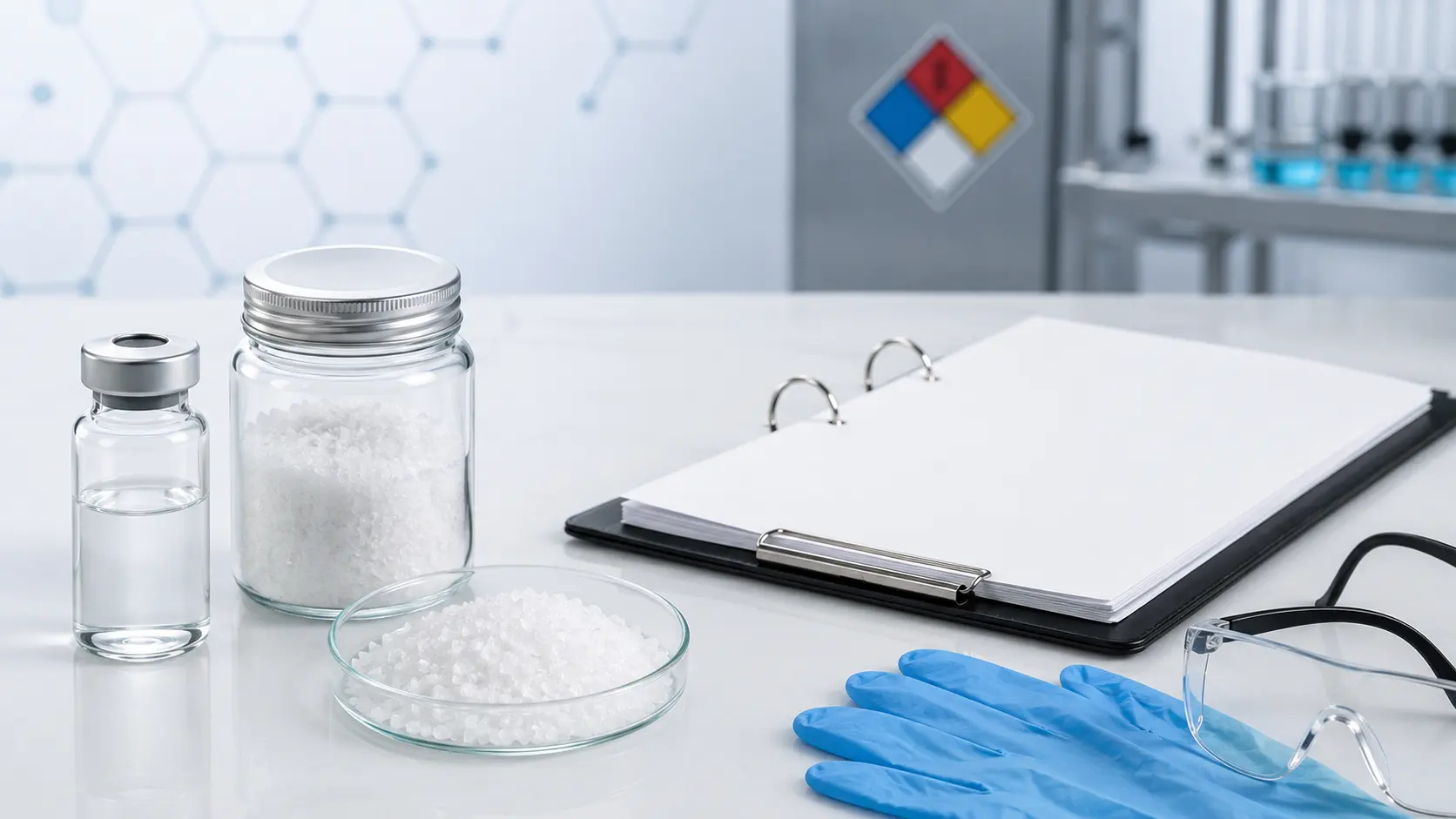
Today, the standardized document is generally called an SDS – Safety Data Sheet. Under OSHA's Hazard Communication Standard, the modern SDS follows a standardized 16-section format.
So if you ask a potassium formate supplier for an MSDS and they send you an SDS, that is normally exactly the document you were looking for.
For industrial purchasing, the more important question is not whether the file says MSDS or SDS on the first page.
It is whether the document is current and actually matches the potassium formate product you are buying.
What Is Potassium Formate?
Potassium formate is the potassium salt of formic acid.
Its chemical formula is HCOOK, and its CAS number is 590-29-4.
It is commonly supplied in industrial markets as:
- Concentrated potassium formate solution
- 70–75% liquid potassium formate
- High-content solid potassium formate
- Technical or industrial grade material
- Oilfield-grade formulations
Common applications include:
- Drilling fluids
- Completion fluids
- Workover brines
- Deicing formulations
- Heat-transfer fluids
- Secondary refrigeration
- Industrial chemical processing
Because the physical form and concentration can differ, the safety document should match the exact commercial product.
A 75% liquid solution and a high-content solid powder should not simply be treated as the same handling situation.
MSDS vs SDS: What Is the Difference?
The difference is mostly terminology and document standardization.
Older chemical documents were commonly called Material Safety Data Sheets.
Modern hazard-communication systems increasingly use the shorter name Safety Data Sheet.
OSHA states that SDSs were formerly known as MSDSs and standardized the modern SDS into a consistent 16-section format.
| Item | MSDS | SDS |
|---|---|---|
| Full name | Material Safety Data Sheet | Safety Data Sheet |
| Common usage | Older terminology | Current standardized terminology |
| Format | Historically less standardized | Standard 16-section structure |
| Main purpose | Chemical safety information | Chemical safety information |
| Still searched online? | Yes, very frequently | Yes |
| Best document to request today | Current supplier document | Current supplier SDS |
So if your procurement department still says:
Please send Potassium Formate MSDS.
There is nothing unusual about that.
The supplier may simply reply with:
Please find attached our latest Potassium Formate SDS.
Both people are basically talking about the same type of safety document.
What Information Is in a Potassium Formate SDS?
The standardized SDS contains 16 sections.
These sections help different departments find the information they need without reading the entire document from beginning to end.
The sections include:
- Identification
- Hazard identification
- Composition / information on ingredients
- First-aid measures
- Fire-fighting measures
- Accidental release measures
- Handling and storage
- Exposure controls / personal protection
- Physical and chemical properties
- Stability and reactivity
- Toxicological information
- Ecological information
- Disposal considerations
- Transport information
- Regulatory information
- Other information, including revision information
This standardized structure is one of the major differences between the modern SDS system and older MSDS formats.
Which SDS Sections Matter Most to Buyers?
Different departments read different sections.
A laboratory technician and a freight forwarder are not looking for the same information.
| Department | Important SDS Sections | Main Question |
|---|---|---|
| Purchasing | 1, 2, 14, 15, 16 | Is this the correct and current product document? |
| Warehouse | 7, 8, 10 | How should we store and handle it? |
| EHS | 2, 4, 6, 8, 11 | What hazards and controls apply? |
| Logistics | 14 | How is the product classified for transport? |
| Production | 7, 8, 9, 10 | How should it be handled in the process? |
| Emergency team | 4, 5, 6 | What should we do during an incident? |
This is why an SDS should be available to more than just the purchasing department.
If the only copy sits inside one person's email inbox, it isn't particularly useful during a real spill or warehouse problem.
Hazard Identification
Section 2 normally explains the hazard classification that applies to the supplied product.
Buyers should be careful here.
Do not assume every potassium formate product from every manufacturer has exactly the same classification.
Differences can come from:
- Concentration
- Product form
- Other ingredients
- Impurities
- Regional regulations
- Supplier classification
That is why it is better to read the current supplier SDS than copy hazard statements from another manufacturer's website.
The actual product being shipped is what matters.
Solid vs Liquid Potassium Formate Handling
The SDS becomes especially useful when comparing different physical forms.
Liquid Potassium Formate
Concentrated liquid potassium formate is normally handled using:
- IBCs
- Chemical pumps
- Hoses
- Storage tanks
- Metering equipment
Operational attention is often focused on:
- Splash prevention
- Correct hose connections
- Tank compatibility
- Spill containment
- Storage temperature
- Product contamination
Solid Potassium Formate
Solid potassium formate is normally handled in bags or larger industrial packaging.
The main considerations can include:
- Powder transfer
- Dust control
- Moisture exposure
- Bag damage
- Dry storage
- Caking
Solid potassium formate is hygroscopic, so moisture protection is particularly important during storage.
Storage Requirements
Section 7 of the SDS is one of the most useful sections for warehouse teams.
The exact storage instructions should always come from the supplier's current document, but industrial storage planning usually considers:
- Keeping containers properly closed
- Using compatible containers
- Preventing contamination
- Protecting solid material from moisture
- Keeping the chemical away from identified incompatible materials
- Following recommended temperature conditions
For solid potassium formate, humidity deserves attention.
If dry material absorbs moisture, it may cake and become more difficult to transfer.
For concentrated liquid potassium formate, very low storage temperatures may require additional attention because concentrated salt solutions can have temperature-dependent crystallization behavior.
This is why storage conditions should be discussed before shipping material into a very cold region.
Personal Protective Equipment
Section 8 covers exposure controls and personal protection.
The exact PPE requirements should come from the product-specific SDS and the user's workplace risk assessment.
Depending on the operation, this may involve suitable:
- Eye protection
- Protective gloves
- Work clothing
- Foot protection
- Ventilation
- Respiratory controls where a dry process generates dust
There is a practical difference between pumping liquid through a closed line and manually charging solid powder into a mixing tank.
So PPE should be based on how workers actually use the product.
Copying a generic chemical PPE list without considering the process is not very helpful.
What Happens if Potassium Formate Is Spilled?
Section 6 covers accidental release measures.
A spill procedure normally considers:
- Personnel protection
- Containment
- Preventing unwanted release
- Collection of spilled material
- Cleaning
- Waste handling
But the response depends on product form.
A leaking liquid IBC and a damaged bag of solid potassium formate require different cleanup methods.
Bulk users should therefore prepare spill-response procedures before receiving large shipments.
This is particularly important when storing several IBCs or multiple tons of material.
Waiting until an IBC valve starts leaking is not the ideal time to decide where the spill kit is.
First-Aid Information
Section 4 contains first-aid measures.
Industrial facilities should follow the instructions given in the current SDS for the supplied grade.
This section normally addresses possible exposure routes such as:
- Eye contact
- Skin contact
- Inhalation
- Ingestion
Workers should have access to the SDS so they do not need to guess about response procedures during an incident.
For workplace safety, current product-specific information is always better than advice copied from a random online chemical page.
Physical and Chemical Properties
Section 9 provides useful technical information that may overlap slightly with a TDS.
Depending on product form, it can include items such as:
- Appearance
- Physical state
- Odor
- pH
- Solubility
- Density
- Melting or freezing information
- Other relevant physical properties
For a potassium formate solution, density can be particularly useful.
For a solid product, appearance, solubility and physical state may receive more attention.
However, the SDS is still primarily a safety document.
For detailed commercial specifications, the TDS is usually the better document.
Stability and Incompatibility
Section 10 provides information about stability and reactivity.
This helps storage and production teams understand whether the material should be kept away from certain incompatible substances or unusual operating conditions.
This section becomes especially important when a warehouse stores many chemicals together.
Chemical storage should not simply be arranged according to which shelf has free space.
Compatibility needs to be considered.
For industrial projects, always follow the incompatibility information on the supplier's actual SDS.
Transport Information
Section 14 is important for export buyers and freight forwarders.
It may provide information relevant to:
- UN number, where applicable
- Proper shipping name
- Transport hazard class
- Packing group
- Environmental hazards
- Special transportation precautions
Do not assume a transport classification from another supplier automatically applies to your shipment.
The product concentration and regulatory situation may be different.
Before shipping potassium formate internationally, the current SDS should be provided to the logistics provider so they can check the applicable route and transport requirements.
Why the Revision Date Matters
An old MSDS found through Google may still contain useful general information, but it should not automatically be used for a new commercial shipment.
The current OSHA system expects standardized SDS information, and modern SDS documents include preparation or revision information in Section 16.
When reviewing a supplier document, check:
- Document revision date
- Supplier name
- Product name
- Concentration
- CAS number
- Language
- Destination-market suitability
If the SDS is ten years old and the supplier cannot explain whether it is still current, asking for an updated document makes sense.
Potassium Formate MSDS vs TDS vs COA
These three documents are often confused.
They should not be.
| Document | Main Purpose | Main Information |
|---|---|---|
| MSDS / SDS | Safety and handling | Hazards, PPE, spills, storage, transport |
| TDS | Technical product data | Concentration, physical properties, specification |
| COA | Batch verification | Actual test results for supplied batch |
If you are qualifying a potassium formate supplier, requesting all three is usually the cleanest approach.
The SDS helps EHS and logistics.
The TDS helps engineering and purchasing.
The COA helps QC confirm what was actually produced.
Don't Download a Random Potassium Formate MSDS
This is probably the most practical recommendation in this article.
Searching Google for:
potassium formate MSDS PDF
can quickly produce documents from many different companies.
They may be useful for early reference, but they should not replace the SDS provided by the actual supplier.
The product you receive may have:
- Different concentration
- Different impurities
- Different physical form
- Different classification
- Different supplier contact information
- Different regulatory information
For purchasing approval, ask for the latest supplier-issued document.
What to Request Before Ordering
A simple request can be:
Please send the latest Potassium Formate SDS/MSDS for the exact grade quoted, together with the TDS and a recent COA.
For liquid product:
Product: Potassium Formate 75% Solution
Quantity: 25 MT
Please provide current SDS, TDS and COA.
For solid material:
Product: Potassium Formate 96% Solid
Please provide current SDS/MSDS, technical specification, COA and storage recommendations.
This is enough for most suppliers to understand exactly what you need.
Final Thoughts
A potassium formate MSDS and a modern potassium formate SDS serve the same basic purpose: communicating safety information about the chemical product.
The big difference is that SDS is now the standardized modern terminology, with information organized into a consistent 16-section structure.
For industrial buyers, the important thing is not the three letters printed at the top of the PDF.
Check that the document:
- Matches the actual grade
- Comes from the actual supplier
- Is current
- Includes the correct concentration
- Provides handling and storage guidance
- Contains relevant transport information
And keep the document available to the people who really need it.
An SDS sitting unread inside a purchasing folder does not improve workplace safety very much.
FAQ
Is MSDS the same as SDS?
They serve the same general safety-information purpose, but SDS is the current standardized term. Modern SDS documents follow a standardized 16-section format.
Can I still ask a supplier for a potassium formate MSDS?
Yes. The term is still widely understood. The supplier will normally provide its current Safety Data Sheet.
Does 75% potassium formate need a different SDS from solid potassium formate?
Potentially yes. Physical form, concentration and product formulation can affect handling and classification, so use the document supplied for the exact grade.
What is included in a potassium formate SDS?
It normally includes identification, hazards, composition, first aid, fire response, spills, handling, PPE, physical properties, stability, toxicology, transport and regulatory information.
Should I use an MSDS downloaded from the internet?
Only as general reference. For commercial purchasing and workplace use, obtain the current SDS from the actual supplier of the material.
What other documents should I request?
Industrial buyers commonly request the SDS, TDS and COA together so safety, technical specifications and batch quality can all be reviewed.


Contact Us
In This Article
Related Posts
Индивидуальные упаковочные решения от поставщика безводного ацетата натрия в Китае
2026-09-23
Тенденции применения безводного ацетата натрия для специального химического производства
2026-09-23
Безводный ацетат натрия для дубления кожи: улучшает равномерность окрашивания
2026-09-22
Formic Acid 85% for Animal Feed Preservation: Moisture and Storage Stability Guide
2026-09-21


