



Potassium Formate Drilling Fluid: Performance, Applications and Formulation Guide
By LIN
2026-09-02Related Posts
Индивидуальные упаковочные решения от поставщика безводного ацетата натрия в Китае
2026-09-23
Тенденции применения безводного ацетата натрия для специального химического производства
2026-09-23

Безводный ацетат натрия для дубления кожи: улучшает равномерность окрашивания
2026-09-22
Formic Acid 85% for Animal Feed Preservation: Moisture and Storage Stability Guide
2026-09-21
Potassium formate drilling fluid is used in demanding well sections where operators need a water-based system with useful density, low solids, good shale-control potential and stable performance under challenging downhole conditions.
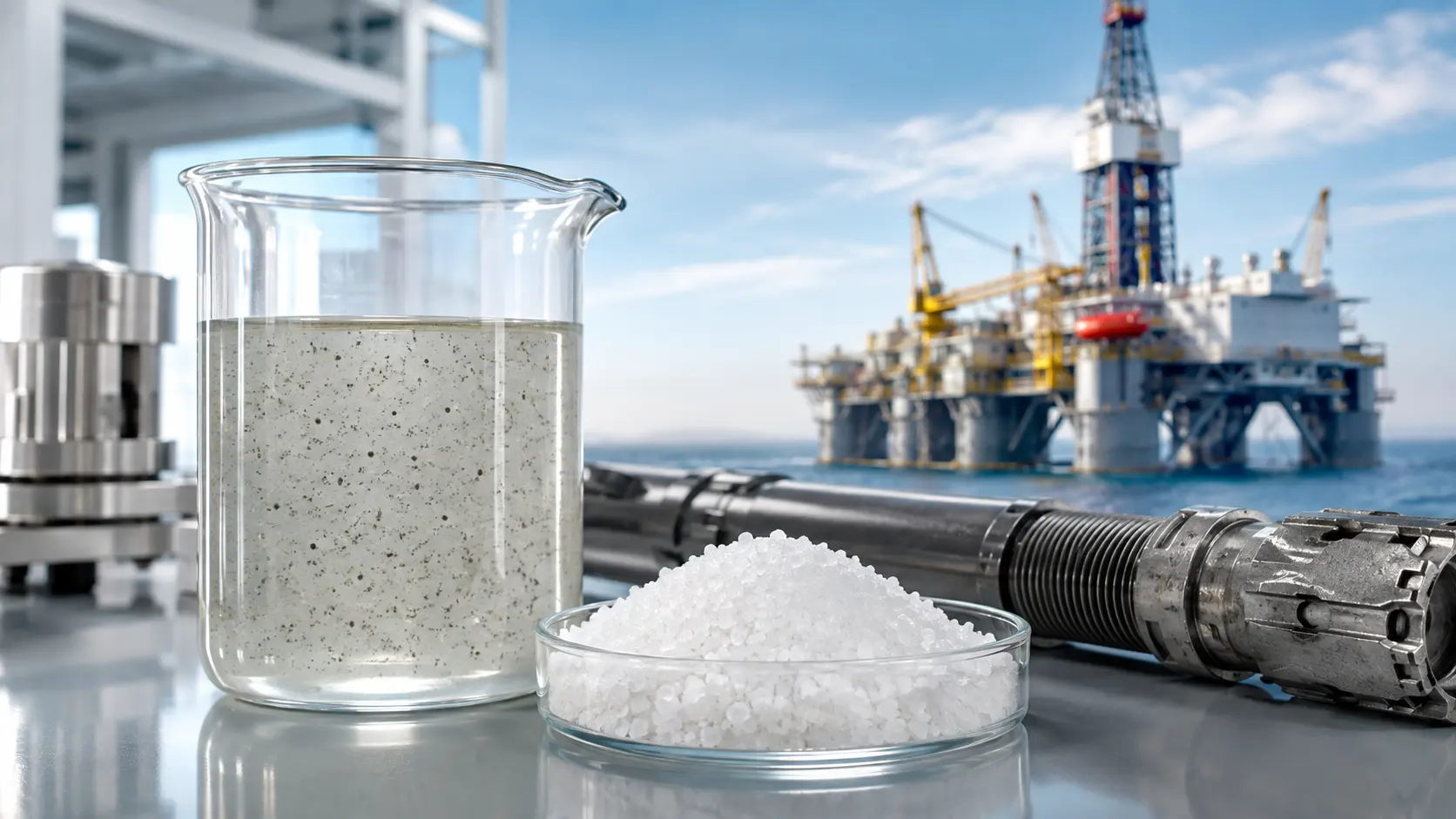
Potassium formate itself is not a complete drilling mud. It is normally used as the brine phase or an important component of a formulated water-based drilling fluid.
That distinction matters.
A complete drilling fluid still needs proper rheology, filtration control, lubrication, solids management and sometimes additional shale inhibitors. Potassium formate provides a strong base chemistry, but the whole system has to be designed around the actual well.
Formate brines are attractive because formate salts are highly soluble in water and can produce relatively dense, solids-free brines, reducing the need for conventional solid weighting materials.
What Is Potassium Formate Drilling Fluid?
Potassium formate has the chemical formula HCOOK and CAS No. 590-29-4.
When dissolved in water at suitable concentrations, it produces a clear potassium formate brine. This brine can then be combined with polymers and other drilling-fluid additives to create a complete water-based system.
Typical applications may include:
- Reactive shale drilling
- Reservoir drilling
- Horizontal wells
- Extended-reach wells
- High-temperature sections
- Low-solids drilling systems
- Drill-in fluids
- Completion-related fluid systems
The concentration used depends on required mud weight, shale characteristics, temperature and the overall fluid design.
Why Use Potassium Formate in Drilling Fluids?
There are several reasons drilling-fluid engineers consider potassium formate.
One is density.
Because potassium formate is highly soluble, significant density can be obtained through dissolved material rather than adding large quantities of suspended weighting solids.
Another is inhibition.
Potassium-containing water-based systems have long been used to help manage reactive clays and shales. Potassium formate can contribute potassium ions while also providing a dense formate brine phase.
There are also benefits related to fluid cleanliness and low-solids formulation.
Main Functions in a Drilling System
| Function | What Potassium Formate Can Contribute |
|---|---|
| Brine density | Provides dissolved-solids density |
| Shale control | Potassium ions can contribute to inhibition strategies |
| Low-solids design | Reduces reliance on solid weighting material |
| Fluid clarity | Concentrated formate brines can remain clear |
| Thermal applications | Can be used as a base brine in high-temperature fluid designs |
| Reservoir drilling | Useful where low solids and formation protection matter |
These benefits are not automatic.
They depend on the rest of the formulation.
Potassium Formate and Shale Inhibition
Shale instability is one of the main reasons operators spend so much time selecting the correct water-based drilling-fluid chemistry.
Some shale formations absorb water easily.
This may contribute to:
- Swelling
- Dispersion
- Sloughing
- Tight hole
- Increased torque and drag
- Bit balling
- Poor hole cleaning
- Excessive dilution
Potassium ions can help reduce hydration of certain clay systems, which is why potassium-based fluids have been used in shale drilling for many years.
Potassium formate provides potassium in a highly soluble brine.
However, it is better not to describe potassium formate as a complete shale inhibitor by itself.
Modern high-performance water-based systems may also use polyamines, encapsulating polymers and other dedicated inhibitors to control clay hydration and cuttings dispersion. SLB, for example, describes dedicated shale-control systems designed specifically to suppress hydration and improve wellbore stability.
So potassium formate should be viewed as part of the inhibition strategy rather than the entire strategy.
Density Without So Much Weighting Solid
Conventional water-based drilling fluids may use barite or other weighting agents when higher mud weight is needed.
There is nothing wrong with that. Barite remains extremely important in drilling.
But suspended weighting solids increase the total solids content of the system.
In reservoir sections, engineers sometimes prefer a lower-solids fluid because excessive solids can contribute to:
- Formation invasion
- Filtercake buildup
- Increased rheology
- Higher plastic viscosity
- Solids-control load
- Potential formation damage
Potassium formate brine creates density through dissolved salt.
This allows engineers to design relatively dense fluids without depending entirely on suspended weighting materials.
Formate salts including sodium, potassium and cesium formate are used as the basis of engineered high-density, solids-free brine systems.
Is Potassium Formate a High-Density Drilling Fluid?
Concentrated potassium formate brine can reach roughly 1.57–1.58 SG, depending on concentration and temperature.
That is useful for many drilling and completion programs.
However, pure potassium formate has a practical density limit.
If a well requires significantly higher density, engineers may need:
- Potassium/cesium formate blends
- Another high-density brine
- Additional weighting strategy
It would be technically incorrect to suggest that simply adding more potassium formate can produce any desired mud weight.
The required hydrostatic pressure should always be established first.
Typical Components in a Potassium Formate Drilling Fluid
A real potassium formate drilling-fluid system normally includes much more than brine.
| Component | Typical Purpose |
|---|---|
| Potassium formate brine | Base fluid and density |
| Viscosifier | Carries cuttings and controls rheology |
| Fluid-loss additive | Reduces filtrate invasion |
| Shale inhibitor | Improves reactive shale stability |
| Lubricant | Reduces torque and drag |
| Corrosion inhibitor | Protects equipment where required |
| Bridging material | Helps build filtercake in reservoir drilling |
| Defoamer | Controls unwanted foam |
| pH control | Maintains desired fluid chemistry |
The actual additives have to be compatible with the high ionic strength of the formate brine.
A polymer that works perfectly in freshwater may behave differently in a concentrated salt system.
Laboratory testing is therefore essential before field deployment.
High-Temperature Drilling
High-temperature wells are another area where formate-based fluids receive attention.
Temperature can affect:
- Polymer stability
- Rheology
- Fluid loss
- Lubrication
- Corrosion
- Shale interaction
The brine itself may remain chemically useful at elevated temperature, but the overall drilling-fluid system depends heavily on the additives selected.
Modern high-temperature water-based drilling fluids use specially designed polymers that maintain rheology and filtration control at elevated bottomhole temperatures, and some are designed to be compatible with formate brines.
This is why saying:
“Potassium formate works at high temperature”
is only half the story.
The complete fluid must work at high temperature.
Potassium Formate vs KCl Drilling Fluid
KCl is one of the most familiar potassium-based salts used in water-based drilling fluids.
So why consider potassium formate?
| Factor | Potassium Formate | KCl |
|---|---|---|
| Potassium source | Yes | Yes |
| Water solubility | Very high | High |
| Brine density capability | Higher | Lower |
| Clear high-density brine | Strong advantage | Limited |
| Chloride content | No chloride in the potassium formate molecule | Chloride-based |
| Cost | Generally higher | Usually lower |
| Low-solids high-density use | Attractive | More limited |
| Shale-control role | Can contribute | Widely established |
KCl is economical and works well in many conventional shale-inhibition programs.
Potassium formate becomes more interesting when the project also values higher dissolved density, low solids or reduced chloride loading.
So this is not really a question of one replacing the other everywhere.
It is a question of what the well needs.
Reservoir Drill-In Fluids
Potassium formate can also be considered in reservoir drill-in fluids.
Here, formation damage becomes a major concern because the drilled interval may later produce oil or gas.
A drill-in fluid may therefore be designed to provide:
- Good wellbore stability
- Low filtrate invasion
- Thin filtercake
- Controlled solids
- Easy cleanup
- Compatibility with formation fluids
Formate brine can provide the liquid phase, while carefully selected bridging particles and polymers control filtration.
SLB notes that reservoir drill-in systems may use acid-soluble bridging materials to build thin, low-permeability filtercakes and reduce formation damage.
This is a good example of why potassium formate is only part of the finished fluid.
Compatibility Testing Is Essential
There is no drilling fluid that works in every formation.
Potassium formate included.
Before field use, laboratory evaluation may consider:
- Shale mineralogy
- Formation water
- Drilled solids
- Temperature
- Required mud weight
- Polymer compatibility
- Corrosion
- Elastomers
- Reservoir fluid compatibility
This is not just theoretical.
Halliburton has reported a project where potassium formate brine was evaluated but excluded after compatibility testing showed concerns with the shale mineralogy.
That's actually an important lesson.
A technically impressive fluid still needs to match the rock.
Monitoring the Fluid in the Field
Once the system is circulating, engineers should monitor more than density.
Important drilling-fluid checks may include:
- Mud weight
- Plastic viscosity
- Yield point
- Low-shear rheology
- Fluid loss
- pH
- Chloride or contamination where relevant
- Solids content
- Shale recovery
- Lubricity
- Thermal stability
Changes in drilled solids and contamination can affect performance as the well gets deeper.
Maintaining the planned fluid chemistry is usually more important than simply building a good initial mud in the mixing tank.
What Should Buyers Check in Potassium Formate?
If potassium formate is being purchased as a drilling-fluid raw material, the specification deserves attention.
Typical parameters may include:
- Potassium formate concentration
- Density for liquid grade
- Potassium formate assay for solid grade
- pH
- Chloride
- Carbonate
- Iron
- Insoluble matter
- Appearance
For a technical oilfield project, request a COA, TDS and SDS before approving the first large order.
A representative sample can also be tested in the intended drilling-fluid formulation.
That tells you much more than the product name on a quotation.
Liquid or Solid Potassium Formate?
Both forms can be used by drilling-fluid companies.
75% liquid potassium formate is convenient because it can be pumped directly into a blending system.
96% solid potassium formate provides more active material per ton transported but needs to be dissolved locally.
A mud plant with good dry-chemical handling and dissolution equipment may prefer solid product.
An offshore supply base preparing liquid brine quickly may prefer concentrate.
The choice is operational as much as chemical.
Requesting a Potassium Formate Drilling Fluid Quote
A useful RFQ may look like this:
Product: Potassium Formate
Grade: Oilfield / Technical
Form: 75% Solution
Application: Water-Based Drilling Fluid
Target Mud Weight: Project specific
Quantity: 40 MT
Packaging: IBC
Required Documents: COA, SDS and TDS
Special Requirements: Controlled chloride and insoluble matter
If the technical team already has impurity limits, include them.
Vanchor supplies potassium formate in liquid and solid forms for drilling, completion and other industrial fluid applications. Buyers can request specifications, technical documentation, packaging options and bulk quotations based on project requirements.
Final Thoughts
A potassium formate drilling fluid can offer an interesting combination of brine density, low-solids formulation and potassium-based shale-control potential.
It is particularly useful when engineers want a high-performance water-based fluid without relying entirely on conventional solid weighting agents.
But potassium formate is not a ready-made drilling mud.
The system still needs the right polymers, filtration-control additives, lubricants and inhibition package.
More importantly, the fluid has to fit the formation.
The right approach is therefore not:
“Potassium formate is better than KCl.”
It is:
“Does a potassium formate-based system solve the actual drilling problems in this well?”
If laboratory testing says yes, it can be a very capable base chemistry.
FAQ
What is potassium formate used for in drilling fluid?
It can provide dissolved brine density, contribute potassium ions to shale-control strategies and support low-solids water-based drilling-fluid designs.
Is potassium formate a shale inhibitor?
Potassium formate can contribute to shale inhibition through its potassium-containing brine chemistry, but complete drilling systems often use additional dedicated shale inhibitors.
How dense can potassium formate brine become?
Concentrated potassium formate brine can reach roughly 1.57–1.58 SG depending on concentration and temperature.
Can potassium formate replace barite?
Not in every system. It can reduce the need for solid weighting materials within its practical density range, but higher mud weights may still require another strategy.
Is potassium formate better than KCl for drilling?
Not always. KCl is economical and well established, while potassium formate offers higher dissolved density and low-solids advantages. Selection depends on well conditions and economics.
What should be tested before using potassium formate drilling fluid?
Shale compatibility, rheology, fluid loss, thermal stability, formation-water compatibility, corrosion and the complete additive package should be evaluated before field use.


Contact Us
In This Article
Related Posts
Индивидуальные упаковочные решения от поставщика безводного ацетата натрия в Китае
2026-09-23
Тенденции применения безводного ацетата натрия для специального химического производства
2026-09-23
Безводный ацетат натрия для дубления кожи: улучшает равномерность окрашивания
2026-09-22
Formic Acid 85% for Animal Feed Preservation: Moisture and Storage Stability Guide
2026-09-21


