



Potassium Formate SDS: Safety, Handling, Storage and Transport Guide
By LIN
2026-09-02Related Posts
Индивидуальные упаковочные решения от поставщика безводного ацетата натрия в Китае
2026-09-23
Тенденции применения безводного ацетата натрия для специального химического производства
2026-09-23

Безводный ацетат натрия для дубления кожи: улучшает равномерность окрашивания
2026-09-22
Formic Acid 85% for Animal Feed Preservation: Moisture and Storage Stability Guide
2026-09-21
A potassium formate SDS is one of the basic documents industrial buyers should request before purchasing potassium formate, whether the product is supplied as a concentrated liquid solution or as a solid crystalline powder.
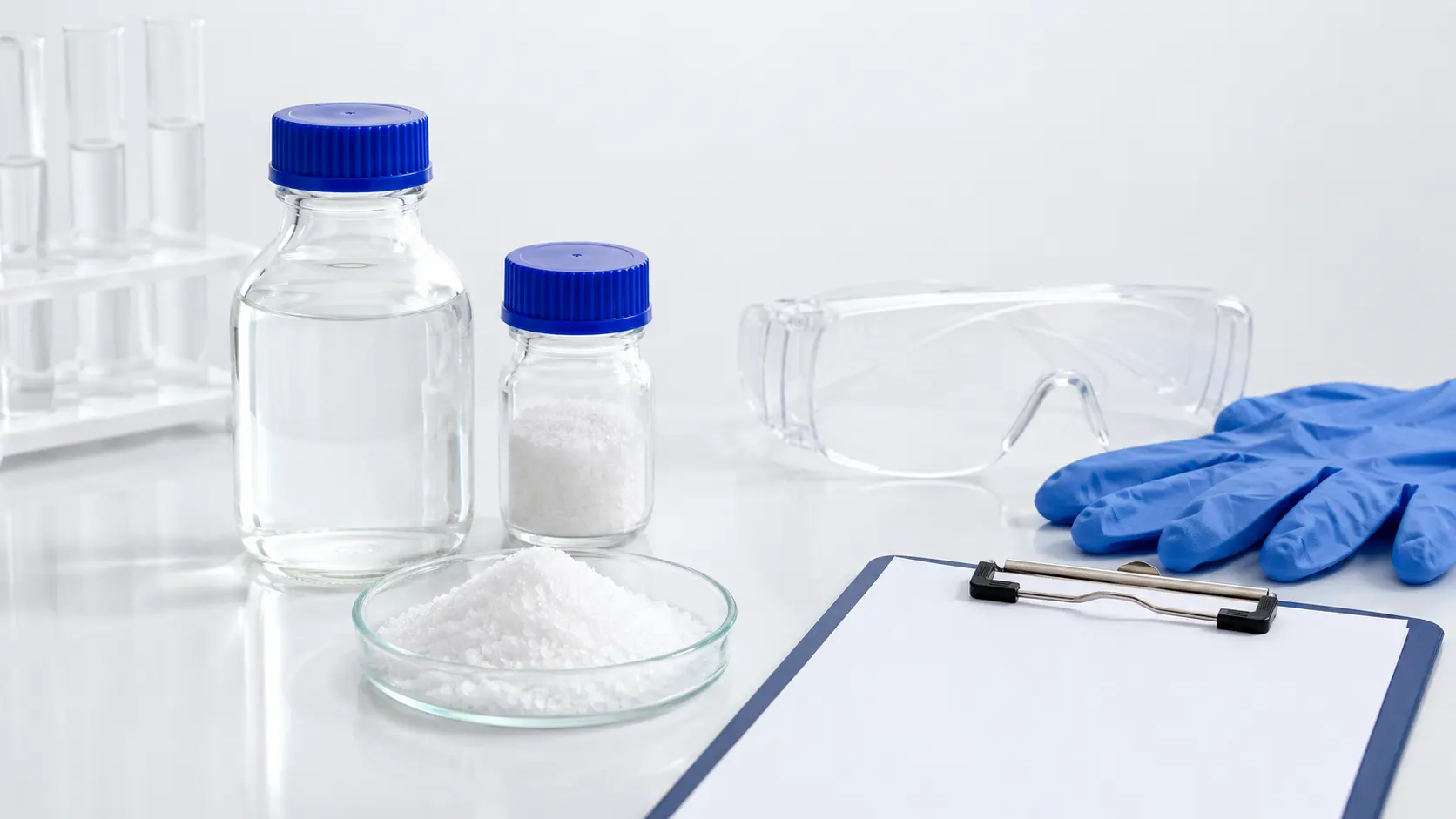
For purchasing teams, the SDS may initially look like another document to put into the supplier file.
For the warehouse, EHS team and logistics company, though, it has a much more practical purpose.
It explains how the material should be handled, what hazards may apply to the specific supplied product, what protective equipment may be appropriate, what to do after accidental exposure, how spills should be managed and what transport information needs to be reviewed.
One important detail is that potassium formate SDS documents are not always identical.
Classification can vary with product concentration, impurities, formulation, supplier and regional regulation. That is why downloading a random SDS from the internet is not the best way to approve an industrial shipment.
The SDS should match the product you are actually buying.
Basic Potassium Formate Identification
Potassium formate is the potassium salt of formic acid.
Its basic identification information includes:
| Item | Information |
|---|---|
| Chemical name | Potassium Formate |
| Molecular formula | HCOOK |
| CAS No. | 590-29-4 |
| Molecular weight | Approx. 84.12 g/mol |
| Common forms | Solid crystalline material / aqueous solution |
| Typical liquid grade | Around 75% solution |
| Typical solid grade | Around 96% or higher |
| Water solubility | Very high |
| Common industrial uses | Oilfield fluids, deicing, heat transfer, chemical processing |
PubChem identifies potassium formate under CAS No. 590-29-4 and molecular weight approximately 84.116 g/mol.
Vanchor currently supplies both Potassium Formate 75% Solution and Potassium Formate 96% Solid, with COA, SDS and TDS available for the respective products.
What Does an SDS Actually Tell You?
A standard Safety Data Sheet is normally divided into 16 sections.
For potassium formate buyers, several sections deserve particular attention.
They generally cover:
- Product identification
- Hazard identification
- Composition
- First-aid measures
- Fire-fighting information
- Accidental release measures
- Handling and storage
- Exposure controls and personal protection
- Physical and chemical properties
- Stability and reactivity
- Toxicological information
- Ecological information
- Disposal considerations
- Transport information
- Regulatory information
- Other document information
You don't necessarily need to memorize all 16 sections.
But procurement, logistics and warehouse teams should know where to look when they need specific information.
Is Potassium Formate Dangerous?
This question does not always have one universal yes-or-no answer.
A current Sigma-Aldrich SDS for potassium formate states that its supplied laboratory product is not classified as a hazardous substance or mixture under the U.S. OSHA Hazard Communication Standard.
However, aggregated GHS information collected by PubChem shows that some company notifications classify potassium formate for serious eye irritation, while many other notifications report that it does not meet GHS hazard criteria.
Why the difference?
Possible reasons include:
- Different product specifications
- Different impurities
- Different concentrations
- Different regulatory jurisdictions
- Different classification submissions
For an industrial buyer, the practical rule is easy:
Use the SDS supplied for the exact commercial grade being purchased.
Do not take the hazard classification from one manufacturer's laboratory-grade powder and automatically apply it to another supplier's 75% industrial solution.
Personal Protective Equipment
The required PPE should always follow the current product SDS and the user's workplace risk assessment.
For routine industrial handling, this commonly means considering:
- Suitable protective gloves
- Safety glasses or chemical splash protection
- Work clothing
- Suitable footwear
- Additional protection where splashing or dust generation is possible
Solid potassium formate can create more dry-material handling exposure than an enclosed liquid-transfer system.
Liquid potassium formate, on the other hand, can create splash exposure during:
- IBC connection
- Hose disconnection
- Pump maintenance
- Sampling
- Tank filling
So the PPE decision should consider how the chemical is actually being handled, not only its name.
Solid and Liquid Handling Are Different
A potassium formate SDS may need to address different practical risks depending on product form.
| Handling Issue | 75% Liquid Solution | 96% Solid |
|---|---|---|
| Main transfer method | Pump / hose | Bags / dry feeding |
| Splash potential | Higher | Lower |
| Dust potential | Very low | Possible |
| Moisture sensitivity | Less important | High |
| Spill form | Liquid pooling | Dry solid |
| Storage | IBC / tank | Dry sealed packaging |
| Main storage concern | Contamination and temperature | Humidity and caking |
| Typical workplace control | Closed transfer where practical | Dust and moisture control |
This is another reason the SDS should match the actual supplied grade.
Eye and Skin Contact
Although classifications differ between SDS documents, good industrial hygiene is still sensible.
Workers should avoid unnecessary eye and skin contact with potassium formate products.
If accidental eye exposure occurs, follow the first-aid instructions in the current SDS. This commonly involves carefully rinsing with water and obtaining medical advice when irritation continues or when required by the product-specific instructions.
For skin exposure, contaminated clothing should be removed where appropriate and the affected area cleaned according to the SDS and workplace procedure.
The important thing is not to invent your own emergency procedure after an accident.
The plant should already have the supplier SDS available before the chemical enters production.
What About Inhalation?
For liquid potassium formate under normal closed handling, inhalation exposure is generally different from handling a dusty solid.
Solid powder can create airborne particulate if bags are opened carelessly, poured from height or handled in poorly controlled equipment.
Good industrial practice includes minimizing unnecessary dust generation.
Local ventilation, enclosed feeding or appropriate respiratory protection may be required if the workplace risk assessment identifies an inhalation issue.
Again, the actual control should follow the specific SDS and occupational safety program.
Potassium Formate Storage
Storage requirements depend partly on whether the material is liquid or solid.
Solid Potassium Formate
Solid potassium formate is hygroscopic.
That means it readily absorbs moisture from the surrounding environment.
It should normally be kept:
- In sealed packaging
- In a dry area
- Protected from rain
- Away from unnecessary humidity
- Protected from incompatible materials
- In accordance with the supplier SDS
Vanchor describes its 96% solid potassium formate as hygroscopic and recommends storage in sealed packaging in a cool, dry, ventilated area away from moisture, sunlight and strong oxidizing agents.
If bags remain open in a humid warehouse, the material can absorb water and begin to cake.
That makes handling much less pleasant.
Liquid Potassium Formate
Liquid potassium formate should normally be kept in sealed and chemically compatible tanks or containers.
The main concerns include:
- Contamination
- Storage temperature
- Container compatibility
- Crystallization under unsuitable conditions
- Contact with incompatible chemicals
Vanchor's current 75% product information recommends sealed compatible containers and specifically notes that concentrated potassium formate solutions may crystallize at lower storage temperatures.
For cold-climate deliveries, this is worth discussing before the shipment leaves the factory.
What Should You Do With a Spill?
The answer depends on whether the spill involves powder or liquid and how much material has been released.
The current SDS should always provide accidental-release guidance.
In general, industrial spill planning considers:
- Keeping unnecessary personnel away
- Using appropriate PPE
- Preventing uncontrolled discharge where required
- Containing the material
- Collecting it with suitable equipment or absorbent material
- Cleaning the affected area
- Disposing of recovered material according to applicable requirements
A small leak from an IBC is obviously not managed in exactly the same way as a torn 25 kg bag.
Facilities receiving potassium formate in bulk should have suitable spill procedures and equipment before delivery.
Fire and Reactivity Information
Potassium formate is not generally handled like a highly flammable organic solvent.
Still, fire-response information should always come from the current SDS because surrounding packaging, mixtures and process conditions can change the situation.
The SDS should also identify incompatible materials and stability considerations.
Vanchor's product information recommends keeping both liquid and solid potassium formate away from strong oxidizing agents.
Warehouse teams should therefore avoid looking at chemical storage only by available floor space.
Compatibility matters too.
Is Potassium Formate a Dangerous Good for Transport?
This is an important question for international purchasing.
Vanchor currently states that both its 75% liquid and 96% solid potassium formate are generally not regulated as dangerous goods for transport, while also advising buyers to check the applicable SDS and route-specific regulations before shipping.
That last part matters.
International chemical logistics can involve:
- Road transport rules
- Ocean freight requirements
- Airline restrictions
- Destination-country regulations
- Carrier-specific documentation
So procurement teams should not make shipping decisions based only on a website sentence.
Give the current SDS to the freight forwarder and confirm the route before dispatch.
SDS vs TDS vs COA
These documents are often requested together, but they are not interchangeable.
| Document | Main Purpose | Main User |
|---|---|---|
| SDS | Safety, handling, storage and emergency information | EHS, warehouse, logistics |
| TDS | Technical product characteristics | Engineering, R&D, purchasing |
| COA | Actual batch test results | QC, purchasing, laboratory |
The SDS tells you how to work with the product safely.
The TDS tells you what the product is technically designed to be.
The COA tells you the measured quality of a production batch.
For professional industrial purchasing, requesting all three makes sense.
Why the SDS Revision Date Matters
Do not keep using the same SDS forever without checking it.
Supplier information, classification rules and document formats can change.
For example, the Sigma-Aldrich potassium formate SDS currently available online shows a revision date of February 25, 2026.
Before a new bulk shipment, procurement or EHS teams should confirm that they have the latest version supplied for that product.
This is especially useful if:
- The supplier changed
- Product concentration changed
- The destination country changed
- Several years have passed
- A regulatory review is being conducted
Document control isn't exciting, but it prevents problems.
What Should Buyers Check on a Potassium Formate SDS?
Before approving a new supplier, review at least the following:
SDS Review Checklist
- Correct product name
- CAS No. 590-29-4
- Correct concentration or product form
- Supplier name and contact details
- Revision date
- Hazard classification
- First-aid measures
- PPE recommendations
- Handling requirements
- Storage requirements
- Incompatible materials
- Spill-response guidance
- Transport classification
- Disposal information
- Applicable regulatory information
For a 75% solution, make sure the SDS really covers the liquid grade.
For 96% solid, make sure it covers the solid product.
Don't assume one sheet automatically covers both.
Requesting an SDS From a Supplier
A simple request might be:
Please provide the latest Potassium Formate SDS for the 75% solution, together with the current TDS and a recent COA. The material will be imported for industrial completion-fluid production.
For solid material:
Please provide the latest SDS for Potassium Formate 96% Solid, including current handling, storage and transport information.
This also gives you a useful way to evaluate the supplier.
A professional industrial chemical supplier should normally be able to provide current safety documentation without a lot of confusion.
Vanchor provides SDS, TDS and COA documentation for its potassium formate liquid and solid grades and recommends checking the applicable SDS and destination-specific transport rules before shipment.
Final Thoughts
A potassium formate SDS is more than a document requested by the shipping department.
It connects purchasing, warehouse operations, worker safety, storage and international logistics.
The most important rule is to use the SDS for the exact potassium formate product being purchased.
A 75% solution and a 96% solid grade have different handling considerations.
Supplier classifications may also vary depending on formulation, specification and jurisdiction.
Before receiving a bulk shipment, review the current SDS, make sure warehouse and EHS teams can access it, and confirm transport requirements with the appropriate logistics provider.
The TDS helps you choose the chemical.
The COA helps you accept the batch.
The SDS helps you handle it properly.
You really need all three.
FAQ
What is a potassium formate SDS?
It is a Safety Data Sheet providing information about hazards, handling, storage, first aid, accidental release, transport and other safety-related topics for a specific potassium formate product.
Is potassium formate classified as hazardous?
Classification can differ by supplier, product form and jurisdiction. Some current SDS documents do not classify potassium formate as hazardous, while other GHS notifications identify eye irritation. Always use the SDS for the exact supplied grade.
Is potassium formate a dangerous good for transport?
Commercial potassium formate products are often described as not regulated as dangerous goods, but the current supplier SDS, shipping route and applicable transport regulations must be checked before shipment.
Does solid potassium formate need special storage?
Yes. Solid potassium formate is hygroscopic and should be kept sealed and dry to limit moisture absorption and caking.
Does liquid potassium formate have storage-temperature requirements?
Concentrated liquid solutions can have crystallization considerations at low temperatures. Buyers should follow the supplier's specific storage recommendations.
What is the difference between SDS, TDS and COA?
The SDS covers safety and handling, the TDS covers technical product properties, and the COA reports actual batch analytical results.


Contact Us
In This Article
Related Posts
Индивидуальные упаковочные решения от поставщика безводного ацетата натрия в Китае
2026-09-23
Тенденции применения безводного ацетата натрия для специального химического производства
2026-09-23
Безводный ацетат натрия для дубления кожи: улучшает равномерность окрашивания
2026-09-22
Formic Acid 85% for Animal Feed Preservation: Moisture and Storage Stability Guide
2026-09-21


