



Potassium Formate Environmental Impact: Biodegradability, Water Quality, and Deicing Runoff
By LIN
2026-09-01Related Posts
Индивидуальные упаковочные решения от поставщика безводного ацетата натрия в Китае
2026-09-23
Тенденции применения безводного ацетата натрия для специального химического производства
2026-09-23

Безводный ацетат натрия для дубления кожи: улучшает равномерность окрашивания
2026-09-22
Formic Acid 85% for Animal Feed Preservation: Moisture and Storage Stability Guide
2026-09-21
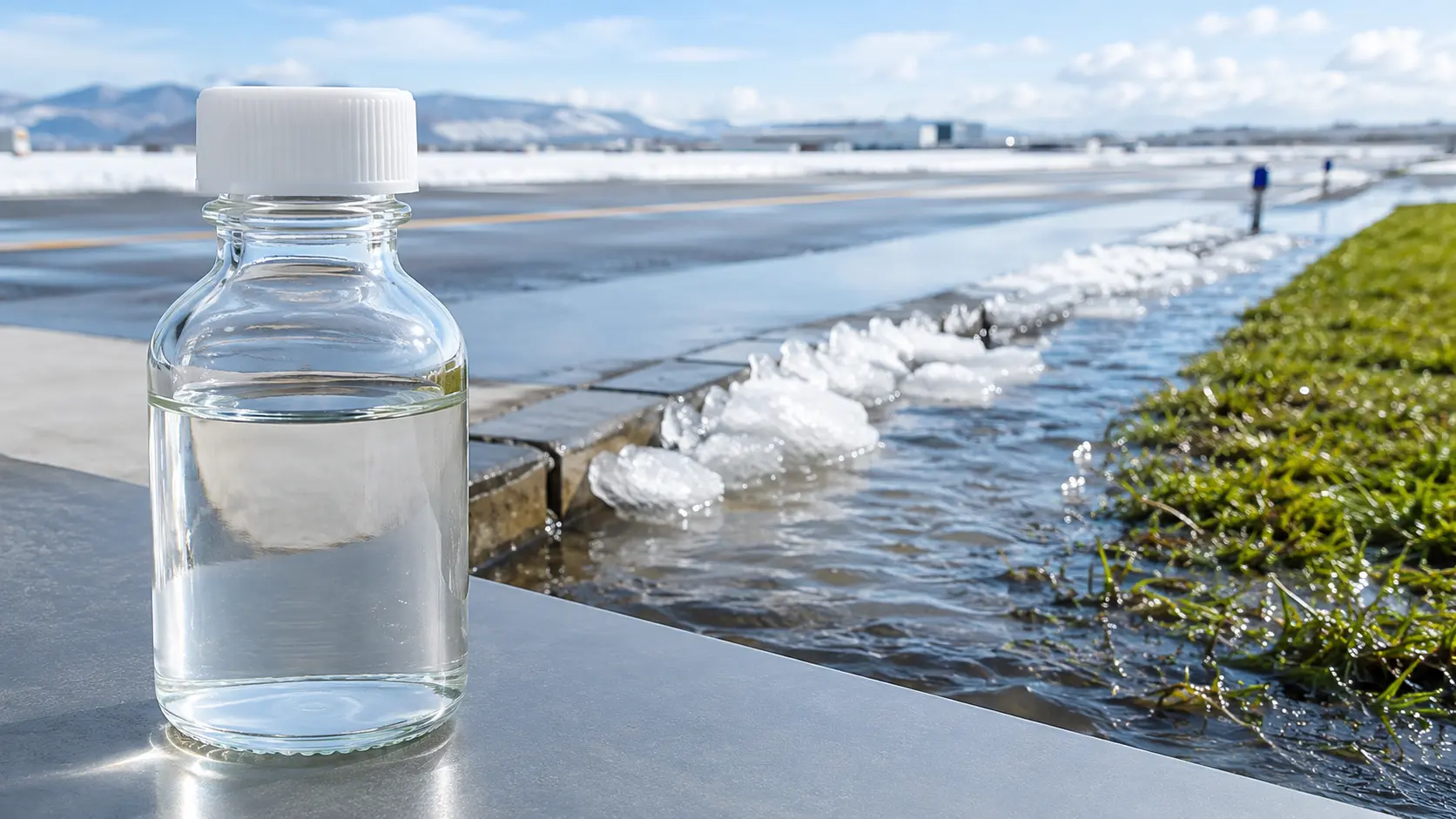
The environmental impact of potassium formate is generally considered favorable in some applications compared with conventional chloride salts or higher-oxygen-demand organic deicers, but potassium formate should not be described as environmentally harmless.
Its environmental behavior depends on:
- Application concentration
- Quantity released
- Soil conditions
- Water temperature
- Runoff management
- Drainage
- Microbial activity
- Finished-product additives
Potassium formate is highly soluble in water. After entering the environment, it dissociates into potassium ions and formate ions.
The formate portion can be biodegraded, but this degradation consumes oxygen. At sufficiently high concentrations, runoff can therefore affect aquatic environments.
Potassium Formate Environmental Impact at a Glance
| Environmental Factor | Potassium Formate |
|---|---|
| Water solubility | Very high |
| Volatility | Very low / not expected to volatilize significantly |
| Biodegradation | Formate can biodegrade aerobically and anaerobically |
| Oxygen demand | Present |
| Chloride loading | Does not use chloride as primary chemistry |
| Groundwater mobility | Site-dependent |
| Aquatic impact | Possible at high concentrations |
| Vegetation impact | Possible at sufficient exposure |
| Runoff management | Still required |
| “Environmentally harmless”? | No |
EPA notes that formates are highly water-soluble and may remain dissolved in surface water or groundwater depending on soil and site conditions.
Is Potassium Formate Biodegradable?
The formate ion is biologically degradable under suitable environmental conditions.
EPA reports that formate can undergo rapid aerobic degradation and can also be degraded anaerobically by methanogenic microorganisms. Aerobic degradation produces mainly carbon dioxide and bicarbonate.
A Finnish lysimeter study investigating potassium formate used as a road deicer found that approximately 98% of the applied formate degraded while passing through a 1.7-meter unsaturated sandy soil layer.
Another field-scale highway study reported substantial biodegradation in soil and concluded that potassium formate had the potential to reduce groundwater impacts associated with conventional road deicing at that particular site.
However:
Biodegradable does not mean environmentally impact-free.
The degradation process itself can affect surrounding water chemistry.
Oxygen Demand Is the Main Aquatic Concern
When microorganisms degrade organic compounds, they consume oxygen.
This is commonly evaluated using:
- BOD — Biochemical Oxygen Demand
- COD — Chemical Oxygen Demand
EPA identifies oxygen demand as one of the main environmental concerns associated with formate deicers.
If a large amount of formate-containing runoff enters a small water body, microbial degradation can reduce dissolved oxygen available to:
- Fish
- Aquatic invertebrates
- Other organisms
EPA specifically notes that formates can affect aquatic environments through oxygen consumption during degradation.
Therefore, potassium formate should not simply be marketed as “safe for waterways.”
Potassium Formate vs Glycol Environmental Impact
One potential advantage of formate chemistry is lower oxygen demand compared with some traditional organic deicers.
EPA reports that formate has somewhat lower BOD and COD than acetate and lower BOD/COD than ethylene glycol and propylene glycol.
This can be important at:
- Airports
- Logistics terminals
- Industrial yards
where large quantities of deicing fluid can enter drainage systems.
However, lower oxygen demand does not mean zero oxygen demand.
A more accurate statement is:
Potassium formate may reduce oxygen-demand loading relative to some organic deicer chemistries, but runoff should still be managed.
Potassium Formate vs Chloride Deicers
Potassium formate differs fundamentally from:
- Sodium chloride
- Calcium chloride
- Magnesium chloride
because formate, rather than chloride, is the principal anion.
This means potassium formate does not introduce large quantities of chloride as its active deicing chemistry.
Long-term chloride use can contribute to:
- Elevated groundwater chloride
- Soil salinity
- Infrastructure corrosion
- Changes in freshwater chemistry
A Finnish road study comparing historical chloride exposure with potassium-formate application found that potassium formate was biodegraded in upper soil layers and did not produce the groundwater changes associated with long-term chloride use at that particular test site.
Earlier research comparing alternative deicers also reported fewer changes in infiltrated-water quality from potassium formate than from the tested chloride and acetate deicers.
These findings are promising, but they are site-specific and should not be generalized to every soil or aquifer.
Groundwater Impact
Potassium formate is highly soluble, so uncontrolled releases can potentially move with water.
Its environmental fate depends on the balance between:
Transport through soil vs microbial degradation
In one highway study, formate degradation in upper soil prevented measurable formate from reaching the saturated groundwater zone.
In the related lysimeter experiment:
- About 98% of applied formate degraded.
- About 99% of applied potassium was retained within the experimental soil system.
- Changes in some soil-ion chemistry were observed.
This indicates that potassium formate can degrade effectively, but its behavior depends strongly on:
- Soil depth
- Soil texture
- Temperature
- Nutrient availability
- Microbial population
- Application load
- Groundwater depth
Does Potassium Formate Affect Vegetation?
It can.
One of the strongest reasons to avoid absolute “eco-friendly” claims is that potassium formate exposure can negatively affect vegetation at sufficiently high concentrations.
The Finnish lysimeter study that demonstrated effective formate degradation also reported a detrimental effect on vegetation in the experimental system.
Another study examining tree saplings found that increasing potassium-formate deicer concentrations negatively affected some plant growth parameters, and the organic deicers tested were not universally less harmful to vegetation than sodium chloride when compared on a similar anion basis.
Therefore:
Low groundwater impact does not automatically mean zero vegetation impact.
Application rate and roadside exposure still matter.
Potassium Formate in Airport Runoff
Airport deicing can create concentrated seasonal runoff.
Research analyzing airport stormwater after surface deicing detected potassium formate concentrations ranging from approximately 15 to 229 mg/L in the sampled runoff, showing that deicing chemicals can enter drainage systems after application.
Potential environmental management measures therefore include:
- Controlled application rates
- Dedicated drainage
- Runoff collection
- Wastewater treatment
- Surface-water monitoring
- Avoidance of unnecessary over-application
Vanchor's current airport deicing guidance likewise identifies biodegradability, oxygen demand, aquatic impact, soil exposure, runoff concentration, wastewater treatment and drainage design as important environmental considerations.
Is Potassium Formate an Environmentally Friendly Deicer?
It is better to use precise wording.
Avoid:
“Potassium formate is environmentally harmless.”
A more defensible statement is:
“Potassium formate can offer environmental advantages over some conventional chloride and high-COD deicer chemistries when properly formulated, applied and managed.”
This reflects both sides of the evidence.
Potential advantages include:
- No chloride salt as the primary active chemistry
- Biodegradable formate ion
- Lower oxygen demand than glycol deicers reported by EPA
- Potentially reduced long-term chloride groundwater loading
Potential concerns include:
- Oxygen depletion during biodegradation
- Aquatic exposure at high concentration
- Vegetation effects
- Changes in soil ion chemistry
- Runoff loading
Finished Formulation Matters
Environmental performance should not be assessed from potassium formate alone.
A finished deicer may contain:
- Corrosion inhibitors
- Surfactants
- Dyes
- Stabilizers
- Other performance additives
These ingredients can alter:
- Aquatic toxicity
- BOD/COD
- Biodegradability
- Pavement compatibility
- Wastewater-treatment requirements
Therefore, environmental assessment should use data from the finished formulation, not only the raw potassium formate.
Airport Deicing Requirements
Potassium-formate-based fluids can be used in airport pavement deicing formulations.
Current FAA Engineering Brief 108 identifies potassium-formate-based liquid products meeting SAE AMS 1435 among recommended airfield deicing/anti-icing product categories.
However:
Raw potassium formate ≠ automatically an approved airport deicer.
Airport operators must consider both technical qualification and applicable environmental/discharge requirements.
Environmental Impact in Refrigeration Systems
The environmental exposure pathway is different when potassium formate is used as a secondary refrigeration fluid.
These systems are normally closed loops.
Environmental risk is therefore more strongly associated with:
- Leaks
- Maintenance discharge
- Tank spills
- Disposal of used coolant
rather than continuous outdoor application.
Facilities should maintain:
- Leak detection
- Secondary containment
- Spill procedures
- Controlled disposal
- Fluid-condition monitoring
A biodegradable fluid should still not be intentionally discharged without checking local wastewater and environmental requirements.
Environmental Impact in Oilfield Applications
Potassium formate is also used in drilling and completion fluids.
Environmental performance in oilfield applications depends on:
- Discharge route
- Additive package
- Contamination during use
- Formation fluids
- Oil content
- Local offshore/onshore regulations
- Recovery and reuse practices
Used drilling or completion fluid is no longer simply pure potassium formate solution.
Its environmental classification and disposal method must be based on the actual spent fluid.
How to Reduce Environmental Impact
For deicing applications, good environmental management includes:
- Apply only the required quantity.
- Use weather and pavement-temperature data.
- Prefer anti-icing before heavy ice formation where appropriate.
- Prevent uncontrolled bulk spills.
- Manage drainage and runoff.
- Monitor receiving-water conditions at sensitive sites.
- Use qualified finished formulations.
- Follow local wastewater and discharge regulations.
The environmental benefit of changing chemistry can be lost if the product is excessively applied.
What Environmental Data Should Buyers Request?
When evaluating potassium formate or a finished formulation, request:
- SDS
- Biodegradability information
- COD
- BOD where available
- Aquatic toxicity information
- pH
- Product composition
- Spill-response guidance
- Disposal recommendations
For airport deicers, also request environmental data for the finished SAE-qualified formulation.
Frequently Asked Questions
Is potassium formate biodegradable?
Formate can biodegrade under aerobic and anaerobic conditions. Field and lysimeter studies have demonstrated substantial degradation in soil.
Is potassium formate environmentally safe?
It should not be described as completely environmentally safe. High concentrations can create oxygen demand in receiving waters and may affect vegetation or aquatic organisms.
Is potassium formate better for the environment than sodium chloride?
It can reduce chloride loading and has shown groundwater advantages in some field studies, but environmental performance remains site- and application-specific.
Does potassium formate reduce oxygen in water?
Its microbial degradation consumes dissolved oxygen. Large runoff loads can therefore stress aquatic environments.
Is potassium formate better than glycol deicer environmentally?
EPA reports lower BOD/COD for formate than ethylene and propylene glycol, which may reduce oxygen-demand loading. This does not eliminate the need for runoff control.
Can potassium formate damage plants?
Yes, sufficiently high exposure can affect vegetation. Experimental studies have reported adverse effects under some conditions.
Conclusion
The environmental impact of potassium formate is best described as a balance of advantages and limitations.
Potential advantages include:
Biodegradable formate chemistry
Reduced reliance on chloride salts
Lower BOD/COD than some glycol deicers
Potentially lower groundwater chloride impact
But important environmental considerations remain:
Oxygen consumption during biodegradation
Aquatic exposure
Vegetation effects
Runoff concentration
Soil chemistry
Finished-formulation additives
Potassium formate can therefore be a useful environmental alternative in selected applications, but its performance depends on dose, formulation, site conditions and responsible runoff or spill management.
The most accurate description is not “environmentally harmless,” but:
a biodegradable non-chloride chemistry with potential environmental advantages when properly formulated, applied and managed.


Contact Us
In This Article
Related Posts
Индивидуальные упаковочные решения от поставщика безводного ацетата натрия в Китае
2026-09-23
Тенденции применения безводного ацетата натрия для специального химического производства
2026-09-23
Безводный ацетат натрия для дубления кожи: улучшает равномерность окрашивания
2026-09-22
Formic Acid 85% for Animal Feed Preservation: Moisture and Storage Stability Guide
2026-09-21


