



Potassium Formate Corrosion Properties: Metals, pH, Inhibitors, and Material Compatibility
By LIN
2026-09-01Related Posts
Индивидуальные упаковочные решения от поставщика безводного ацетата натрия в Китае
2026-09-23
Тенденции применения безводного ацетата натрия для специального химического производства
2026-09-23

Безводный ацетат натрия для дубления кожи: улучшает равномерность окрашивания
2026-09-22
Formic Acid 85% for Animal Feed Preservation: Moisture and Storage Stability Guide
2026-09-21
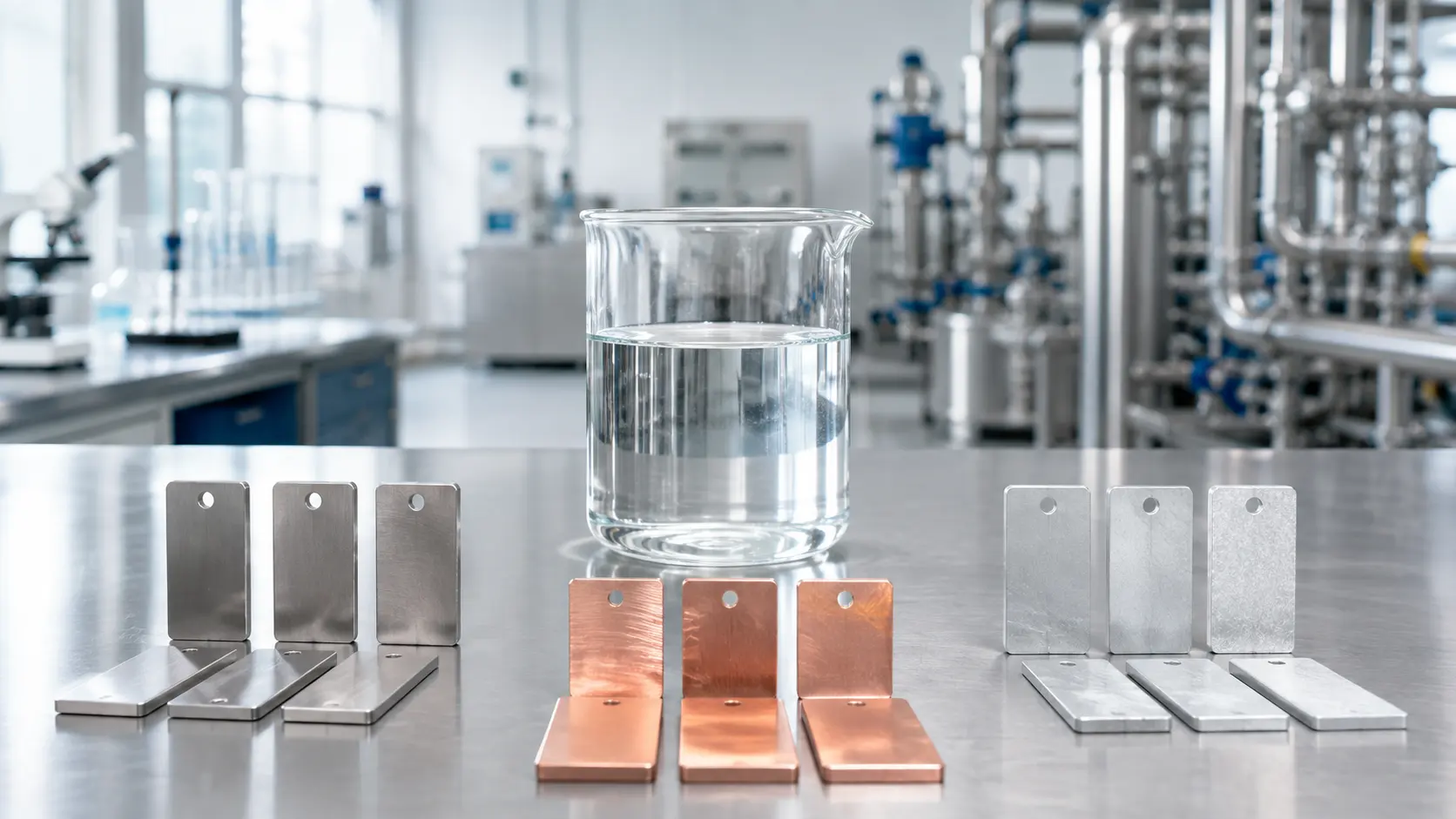
Understanding potassium formate corrosion properties is important when the chemical is used in:
- Oilfield drilling and completion fluids
- Secondary refrigeration systems
- Heat-transfer fluids
- Airport deicers
- Industrial cooling systems
Potassium formate is often described as a low-corrosion or non-chloride fluid, but this description needs qualification.
Potassium formate does not use chloride as its primary anion, which can reduce some chloride-related corrosion risks. However, potassium formate solutions can still corrode metals under certain conditions.
Corrosion depends on:
- pH
- Concentration
- Temperature
- Dissolved oxygen
- CO₂ or other acidic gases
- Chloride contamination
- Metal type
- Exposure time
- Corrosion inhibitors
- Galvanic contact between different metals
Therefore:
Potassium formate should not be described as universally non-corrosive.
Potassium Formate Corrosion Properties at a Glance
| Factor | General Effect |
|---|---|
| Chloride chemistry | Potassium formate is not a chloride salt |
| Typical pH | Generally alkaline |
| Carbon steel | Can show relatively low corrosion in properly controlled systems |
| Stainless steel | Grade-dependent |
| Copper | Requires compatibility evaluation |
| Aluminum | Finished formulation should be tested |
| CO₂ contamination | Can reduce pH and increase corrosion |
| Oxygen | May accelerate electrochemical corrosion |
| Chloride impurities | Can increase corrosion risk |
| Corrosion inhibitors | Often important in finished fluids |
| Mixed metals | Galvanic corrosion should be considered |
Why Is Potassium Formate Often Considered Low-Corrosion?
Potassium formate solutions are generally alkaline.
Vanchor currently lists Potassium Formate 75% at approximately:
pH 9–10 at 25°C.
Oilfield corrosion research also attributes the relatively low corrosivity of formate brines partly to:
- High pH
- Lack of strong oxidizing power
- Controlled carbonate/bicarbonate buffering.
This can make formate brines less aggressive than some conventional halide brines under suitable operating conditions.
However, that does not mean the raw solution is chemically inert.
Potassium Formate and Carbon Steel Corrosion
Carbon steel is widely used in:
- Oilfield tubulars
- Tanks
- Pumps
- Pipelines
- Industrial cooling systems
Buffered potassium formate brines have demonstrated relatively low corrosion toward carbon steel under certain well conditions.
A NACE study evaluating CO₂-contaminated formate brines reported that potassium formate initially produced elevated corrosion after acidification, but protective iron-carbonate layers subsequently developed on carbon steel. Long-term measured corrosion rates under the tested high-temperature conditions decreased substantially after this protective layer formed.
This shows an important principle:
Short-term corrosion behavior may differ from long-term corrosion behavior.
A single short immersion test should not always be used to predict years of service.
What Happens When CO₂ Enters Potassium Formate Brine?
CO₂ can be especially important in oilfield systems.
When CO₂ dissolves in water, carbonic acid forms and can lower the pH.
In potassium formate brine:
CO₂ ingress → lower pH → increased corrosivity
The NACE research found that CO₂ could reduce the brine pH substantially and initially accelerate corrosion of carbon steel and some chromium steels.
This is why formate-based drilling and completion fluids often use:
carbonate/bicarbonate buffering
to maintain chemical stability and corrosion control.
Potassium Formate vs Bromide Brine Corrosion
One of the most useful comparisons comes from oilfield completion-fluid testing.
In CO₂-acidified tests comparing potassium formate with calcium bromide:
- Carbon steel and standard 13Cr steel suffered severe localized attack in the bromide system.
- The potassium formate system showed mainly limited general corrosion under the tested conditions.
This supports the view that potassium formate can offer corrosion advantages over certain halide brines.
But it should not be converted into the claim:
“Potassium formate never corrodes steel.”
The result depends on the exact fluid, material and test environment.
Stainless Steel Compatibility
Not all stainless steels behave the same.
In high-temperature CO₂-contaminated potassium formate testing:
- Standard 13Cr steel showed more corrosion than higher-alloy grades.
- Super 13Cr and higher-grade stainless steels showed very low corrosion in the reported tests.
Therefore, specifying only:
“stainless steel compatible”
is not precise enough.
Engineers should identify the actual metallurgy, such as:
- 304
- 316
- 13Cr
- Super 13Cr
- Duplex stainless steel
and test under actual temperature and chemical conditions.
Copper Corrosion
Copper is commonly present in:
- Heat exchangers
- HVAC systems
- Refrigeration equipment
- Brass components
Potassium formate should not automatically be assumed compatible with copper.
A published study specifically investigated corrosion occurrence in copper tubing exposed to potassium formate heat-transfer solution, demonstrating that copper corrosion is a real engineering issue requiring appropriate fluid formulation and inhibitor selection.
Commercial heat-transfer-fluid formulations may therefore include inhibitors designed for copper and copper alloys.
Aluminum Compatibility
Aluminum is especially relevant in:
- Aircraft
- Heat exchangers
- Pumps
- Cooling equipment
Research comparing runway deicing chemicals on aircraft materials found that potassium-formate-based commercial deicers caused less pronounced corrosion on tested aluminum alloy than urea under the specific experimental conditions.
However, aviation history also shows why caution is necessary.
Transport Canada documents earlier concerns involving corrosion of some Boeing 737 electrical connectors exposed to potassium-formate-containing runway deicers. Although the earlier restriction was later cancelled after corrective actions, the case demonstrates that specific components can behave differently from bulk aluminum structures.
Why Finished Formulation Matters
Raw potassium formate is not the same as a finished:
- Runway deicer
- Refrigeration fluid
- HVAC coolant
- Completion brine
Finished formulations may contain:
- Corrosion inhibitors
- pH buffers
- Copper inhibitors
- Stabilizers
- Other additives
A patent describing potassium-formate heat-transfer fluids demonstrated that corrosion behavior toward copper, brass, steel, cast iron and aluminum changed significantly depending on the inhibitor and buffer package.
Therefore:
Evaluate the finished fluid, not only the potassium formate raw material.
Role of Chloride Impurities
Potassium formate is chemically:
HCOOK
not a chloride salt.
But commercial potassium formate can still contain trace chloride introduced through:
- Raw materials
- Production processes
- Water
- Cross-contamination
For corrosion-sensitive applications, buyers should specify a measurable:
Maximum chloride content
rather than relying on the marketing phrase:
“chloride-free.”
Vanchor currently lists chloride control as an important specification consideration for deicing and industrial-fluid applications.
Temperature Effect on Corrosion
Higher temperature generally accelerates many corrosion reactions.
This is particularly important for:
- HPHT oilfield systems
- Heat-transfer circuits
- Process cooling
- Industrial equipment
Temperature can affect:
- Reaction kinetics
- Protective-film formation
- pH
- Gas solubility
- inhibitor effectiveness
A corrosion test conducted at 25°C therefore may not predict behavior at:
100°C, 150°C or 180°C.
Oilfield corrosion tests should simulate the expected downhole environment whenever possible.
Dissolved Oxygen
Oxygen can act as an oxidizing agent in aqueous corrosion systems.
Potential oxygen sources include:
- Open tanks
- Poorly sealed circulation systems
- Makeup water
- Pump suction
- Fluid transfer
Good system management may therefore involve:
- Sealed storage
- Controlled makeup water
- Proper fluid circulation
- Oxygen management
The importance of oxygen depends on the application and metallurgy.
Potassium Formate Corrosion in Refrigeration Systems
A refrigeration or HVAC loop may contain several different metals simultaneously:
Steel + stainless steel + copper + brass + aluminum
This creates a more complicated corrosion environment.
In addition to individual-metal corrosion, engineers should consider:
Galvanic Corrosion
When dissimilar metals are electrically connected through an electrolyte, galvanic current may develop.
Water Quality
Dilution water may introduce:
- Chloride
- Calcium
- Magnesium
- Iron
pH Stability
The fluid may change chemically during years of circulation.
Inhibitor Depletion
Corrosion inhibitors can degrade or become depleted over time.
For this reason, refrigeration systems should monitor the finished coolant, not only the original concentrate.
Potassium Formate Corrosion in Airport Deicers
Airport applications require special attention because deicers can contact:
- Aluminum alloys
- Cadmium plating
- Carbon brakes
- Electrical connectors
- Ground-support equipment
- Steel infrastructure
SAE AMS 1435-qualified liquid runway deicers undergo corrosion-related testing. Transport Canada notes that AMS 1435 includes cyclic cadmium-plate corrosion testing requirements.
Therefore:
Raw potassium formate ≠ automatically aviation-compatible deicer
The finished formulation must be tested.
Potassium Formate vs Chloride Corrosion
Compared with chloride salts such as:
- NaCl
- CaCl₂
- MgCl₂
- KCl
potassium formate avoids chloride as the principal active ion.
This can reduce risks associated with chloride-induced:
- Pitting
- Reinforcement corrosion
- Stress-corrosion cracking in susceptible alloys
However, potassium formate introduces its own chemical environment.
A technically accurate comparison is:
Reduced chloride-related corrosion risk ≠ zero corrosion risk
Should Corrosion Inhibitors Be Used?
It depends on the application.
Some buffered oilfield formate systems have shown sufficiently low corrosion that additional inhibitors may not always be required.
Other systems clearly benefit from inhibitor packages.
Testing of potassium formate drilling fluids has shown that suitable corrosion inhibitors can substantially reduce corrosion of carbon and chromium steels under specific conditions.
Refrigeration fluids commonly require formulation around all system metals.
Airport deicers typically use controlled finished formulations rather than untreated potassium formate solution.
What Should Buyers Ask a Supplier?
For corrosion-sensitive applications, request:
- Potassium formate concentration
- pH
- Chloride limit
- Iron
- Insoluble matter
- COA
- TDS
- SDS
- Corrosion data if available
Also provide:
Application
Operating temperature
Metal types
Expected CO₂/H₂S exposure
Water quality
Required concentration
Expected service life
Frequently Asked Questions
Is potassium formate corrosive?
It can be. Potassium formate often shows relatively low corrosivity under alkaline, properly controlled conditions, but corrosion depends on metal, temperature, pH, oxygen, contaminants and formulation.
Is potassium formate non-corrosive to steel?
No universal claim should be made. Carbon steel can perform well in buffered formate systems, but acidification by CO₂ can initially increase corrosion.
Is potassium formate less corrosive than calcium bromide?
In specific CO₂-acidified oilfield tests, potassium formate produced substantially less localized attack than calcium bromide.
Is potassium formate safe for copper?
Not automatically. Copper corrosion has been documented in potassium formate heat-transfer systems, so inhibitor and material compatibility should be evaluated.
Does potassium formate need corrosion inhibitors?
Sometimes. Requirements depend on the metal system, temperature and application.
Is potassium formate chloride-free?
It is a formate salt rather than a chloride salt, but commercial products can contain trace chloride. Buyers should specify a maximum analytical chloride limit.
Conclusion
The most accurate description of potassium formate corrosion properties is:
relatively low corrosivity under suitable alkaline and controlled conditions, but strongly dependent on formulation and material compatibility.
Important factors include:
pH
Temperature
CO₂
Oxygen
Chloride impurities
Metal grade
Corrosion inhibitors
Exposure time
Potassium formate can provide advantages over some chloride and bromide systems, particularly where reducing halide-related corrosion is important.
But professional users should avoid the claim:
“Potassium formate is non-corrosive.”
The safer engineering conclusion is:
Potassium formate can support low-corrosion fluid systems when concentration, buffering, impurities, metallurgy and inhibitors are properly controlled and verified by testing.


Contact Us
Related Posts
Индивидуальные упаковочные решения от поставщика безводного ацетата натрия в Китае
2026-09-23
Тенденции применения безводного ацетата натрия для специального химического производства
2026-09-23
Безводный ацетат натрия для дубления кожи: улучшает равномерность окрашивания
2026-09-22
Formic Acid 85% for Animal Feed Preservation: Moisture and Storage Stability Guide
2026-09-21


