



Potassium Formate Brine System: Design, Components and Oilfield Applications
By LIN
2026-09-02Related Posts
Индивидуальные упаковочные решения от поставщика безводного ацетата натрия в Китае
2026-09-23
Тенденции применения безводного ацетата натрия для специального химического производства
2026-09-23

Безводный ацетат натрия для дубления кожи: улучшает равномерность окрашивания
2026-09-22
Formic Acid 85% for Animal Feed Preservation: Moisture and Storage Stability Guide
2026-09-21
A potassium formate brine system is more than a concentrated potassium formate solution.
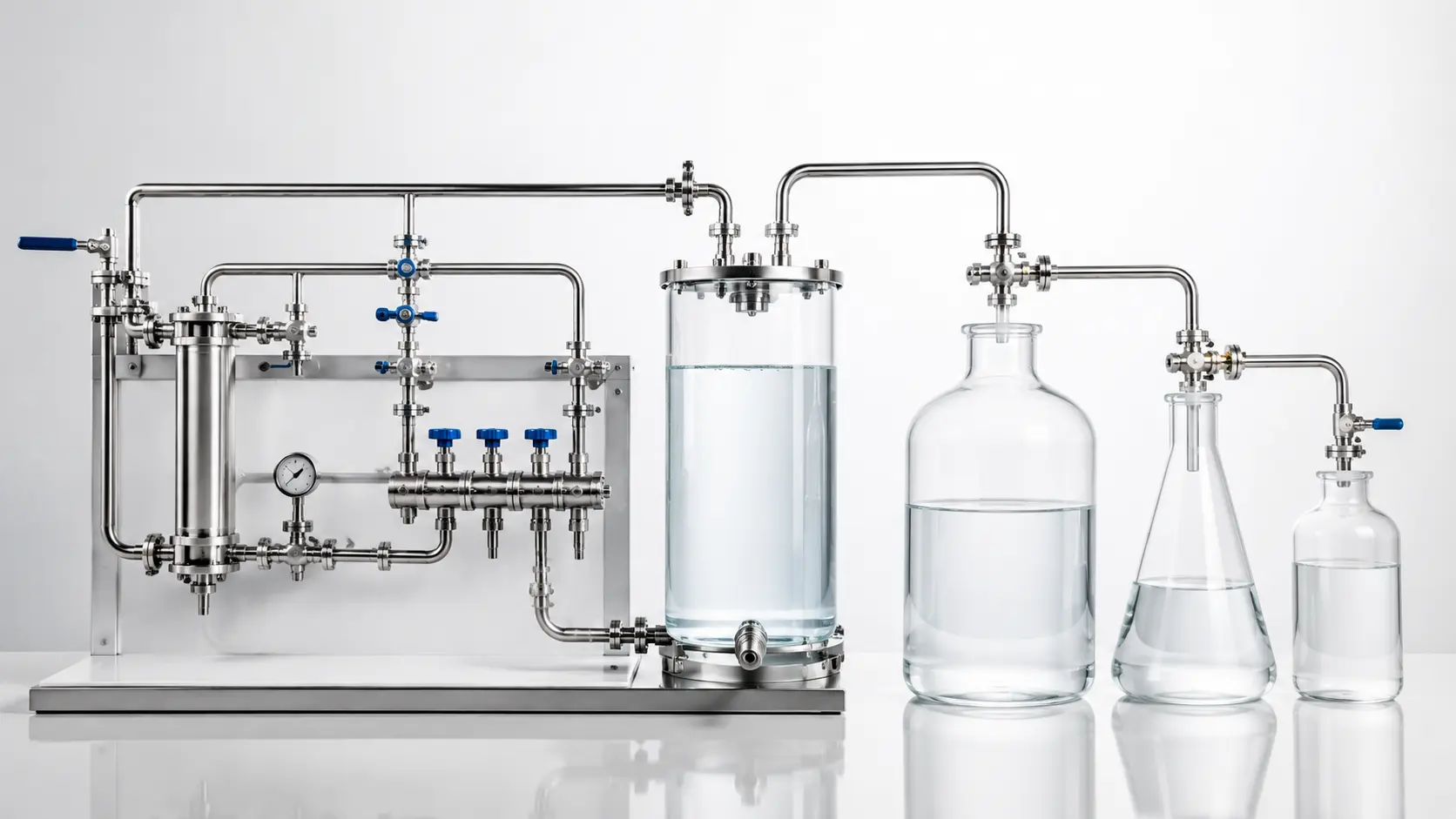
In oilfield applications, the brine is normally the base fluid. Around that base, engineers may need to control density, crystallization temperature, suspended solids, corrosion, fluid loss and formation compatibility before the fluid is actually ready for the well.
This is why two potassium formate brines with exactly the same concentration may perform very differently in the field.
One may be clean, filtered and properly conditioned.
The other may contain rust, incompatible additives or contaminants from a previous drilling fluid.
Chemically, both started as potassium formate brine.
Operationally, they are not the same system.
Clear-brine systems are typically engineered around required density, True Crystallization Temperature (TCT), pressure-temperature crystallization behavior and fluid clarity rather than salt concentration alone. Formate brines are one of the major clear-brine families used for this purpose.
What Is a Potassium Formate Brine System?
Potassium formate has the chemical formula HCOOK and is highly soluble in water.
When dissolved at suitable concentration, it creates a clear brine that can be used as the fluid base for:
- Completion fluids
- Workover fluids
- Reservoir drill-in fluids
- Packer fluids
- Intervention fluids
- Specialized drilling systems
Clear brines contain few or no suspended solids, making them useful near producing formations where solid particles can contribute to formation damage.
But a field-ready potassium formate system may contain several additional treatment components.
Main Parts of a Potassium Formate Brine System
| System Component | Main Function |
|---|---|
| Potassium formate brine | Base fluid and dissolved density |
| Clean process water | Concentration and density adjustment |
| Filtration system | Removes suspended contamination |
| Fluid-loss treatment | Reduces brine invasion into formation |
| Corrosion-control package | Protects tubing and casing |
| Oxygen / H₂S scavenger | Controls selected corrosive contaminants |
| Shale-control additive | Added when further inhibition is required |
| Lubricant | Reduces friction in specific operations |
| Breaker / cleanup chemistry | Used with reservoir or completion systems |
Not every job needs every component.
Actually, adding unnecessary chemicals can make a brine system worse.
The treatment package should be built around the well conditions.
Density Is the Starting Point
One of the first design parameters is fluid density.
A completion or workover brine needs enough hydrostatic pressure to keep the well under control.
Potassium formate is useful because much of this density comes from dissolved salt rather than suspended weighting material.
This gives engineers a clean liquid phase with relatively high density.
But the correct question is not:
What is the highest potassium formate concentration available?
It is:
What brine density does this well require?
An unnecessarily heavy brine can increase overbalance and promote fluid invasion or losses.
A brine that is too light may not provide adequate well control.
So target density should come from the well design first, and potassium formate concentration should be adjusted afterward.
A Brine System Must Also Consider TCT
Density alone is not enough.
Highly concentrated brines may crystallize when exposed to low temperatures.
For this reason, clear-brine systems are commonly designed around True Crystallization Temperature, or TCT, as well as density and clarity.
This becomes important during:
- Winter transportation
- Offshore deck storage
- Cold-weather mixing
- Surface circulation
- Long shutdown periods
A reservoir may be very hot.
The storage tank at surface may not be.
If crystals form in hoses, pumps or tanks, the fluid becomes difficult to handle and its composition may no longer be uniform.
This is why a good potassium formate brine system needs a suitable temperature margin, not just a target density.
Filtration Is Part of the System
Fresh potassium formate brine can be extremely clean.
Then it gets transferred through an old tank.
Now it contains rust, drilling-mud residue and pipe scale.
This happens more easily than people expect.
Potential contaminants include:
- Cement particles
- Rust
- Pipe scale
- Drilled solids
- Old mud residue
- Dust
- Dirty transfer hoses
Completion-fluid systems commonly include filtration specifically to remove suspended solids and improve well performance.
For formation-sensitive operations, fluid cleanliness may be monitored using turbidity, suspended-solids measurements or project-specific filtration criteria.
Typical Brine-System Quality Checks
| Parameter | Why It Is Checked |
|---|---|
| Density | Confirms hydrostatic requirement |
| Potassium formate concentration | Confirms brine strength |
| TCT | Checks low-temperature stability |
| Turbidity | Indicates suspended contamination |
| Insoluble matter | Important near productive formations |
| pH | Influences fluid chemistry |
| Chloride | May affect corrosion and compatibility |
| Iron | Can indicate contamination or corrosion |
| Filtration quality | Controls solids entering the well |
| Formation compatibility | Helps avoid precipitation or damage |
A clear appearance is useful.
It is not a complete QC program.
Fluid Loss Can Still Occur
A solids-free brine can still invade a permeable reservoir.
If hydrostatic pressure is higher than formation pressure, the fluid naturally has a driving force to enter the rock.
Excessive completion-fluid loss can contribute to increased water saturation, scaling, emulsions, fines migration and higher project cost.
So some potassium formate brine systems also need a fluid-loss-control treatment.
Depending on the completion, this may include:
- Solids-free viscous pills
- Crosslinked polymer systems
- Temporary bridging systems
- Screen-protection treatments
Potassium formate has been used as the base brine in workover fluid-loss systems where density, thermal stability and reactive-formation inhibition were required.
Again, the important idea is that potassium formate provides the base fluid.
Fluid-loss control is a separate engineering function.
Corrosion Control Needs Its Own Attention
Clear brines can remain in contact with steel completion equipment for significant periods.
This means corrosion cannot simply be ignored.
Potential corrosion drivers include:
- Dissolved oxygen
- Temperature
- pH
- Contamination
- CO₂
- H₂S
- Metallurgy
- Exposure time
Oilfield suppliers offer oxygen and H₂S scavengers specifically designed for clear-brine systems. SLB, for example, lists an oxygen scavenger intended for sodium- and potassium-based completion, packer and drilling brines.
But this does not mean any scavenger or corrosion inhibitor can be added to potassium formate.
Additive compatibility should be verified.
A treatment that works in calcium bromide or chloride brine may behave differently in a potassium formate system.
Formation Compatibility Can Decide Whether the Brine Is Used
Potassium formate has many useful properties.
That still does not mean it fits every reservoir.
The brine may interact with:
- Formation water
- Shale minerals
- Crude oil
- Cement
- Scale-forming ions
- Completion chemicals
Laboratory compatibility testing is therefore an important part of system design.
A Halliburton wellbore-cleanout case evaluated several high-density brines and rejected potassium formate after tests showed incompatibility with the specific shale mineralogy.
This is actually a good example of how brine selection should work.
Test first.
Use it only if the result makes sense.
Potassium Formate Brine in Reservoir Drill-In Systems
The same brine-system concept can be extended into reservoir drilling.
A reservoir drill-in fluid may use potassium formate as the continuous liquid phase, then add:
- Viscosifier
- Fluid-loss polymer
- Sized bridging particles
- Lubricant
- Shale-control chemistry
The finished fluid is no longer a simple clear brine, but potassium formate remains the base.
Reservoir drill-in systems are specifically engineered to drill the productive interval while minimizing formation damage and maintaining compatibility with the planned completion.
High-temperature water-based systems can also be formulated around formate brines when compatible polymers are selected.
Displacement Is Part of Brine-System Performance
There is another practical issue that receives less attention: how the potassium formate brine gets into the well.
Before completion, the well may still contain drilling mud.
If displacement is poor, residual mud remains behind and contaminates the new clear brine.
This can affect:
- Turbidity
- Solids content
- Completion equipment
- Formation cleanliness
Completion programs therefore treat wellbore cleaning and displacement as part of the fluid system rather than as unrelated operations.
A premium brine pumped into a dirty wellbore does not stay premium for very long.
Can a Potassium Formate Brine System Be Reused?
In some operations, yes.
Higher-value brines may be recovered, conditioned and reused if testing confirms they remain suitable.
A simple recovery sequence may involve:
- Recover the brine into clean tanks.
- Measure density.
- Check contamination and solids.
- Filter the fluid.
- Adjust concentration if required.
- Recheck critical chemistry.
- Confirm TCT and compatibility for the next operation.
Brine reuse can have a meaningful economic benefit, although contaminated fluid should never be recycled blindly. A Halliburton completion-fluid project specifically identified maximizing brine reuse as one of its commercial objectives.
Simple Brine vs Engineered Brine System
| Simple Potassium Formate Brine | Engineered Potassium Formate Brine System |
|---|---|
| Potassium formate + water | Base brine + project-specific treatments |
| Concentration is main focus | Density, TCT and compatibility all considered |
| May be sold as bulk chemical | Designed for specific well conditions |
| Limited contamination control | Filtration included where required |
| No fluid-loss strategy | Fluid-loss treatment can be integrated |
| Corrosion not necessarily evaluated | Metallurgy and corrosion considered |
| General industrial liquid | Field-qualified oilfield fluid |
This difference matters when purchasing.
A chemical supplier may provide the potassium formate.
The drilling or completion-fluid company normally turns it into the final engineered system.
What Should Buyers Specify?
A useful RFQ might look like:
Product: Potassium Formate
Application: Completion Brine System
Target Density: 1.48 SG
Product Form: Concentrated Liquid
Quantity: 40 MT
Packaging: IBC / Bulk
Required Documents: COA, TDS and SDS
Special Requirements: Low insoluble matter and controlled chloride
Additional Information: TCT and formation compatibility to be evaluated by fluid service company
For a reservoir drill-in system, the buyer may also provide bottomhole temperature and target finished-fluid density.
The more specific the project information, the easier it is to select the right raw-material grade.
Final Thoughts
A potassium formate brine system should be viewed as a complete fluid-management package rather than a tank of concentrated salt solution.
Potassium formate provides the foundation.
Then the system may need:
- Correct density
- TCT control
- Filtration
- Fluid-loss management
- Corrosion protection
- Formation compatibility
- Proper displacement
- Recovery and reuse planning
Not every application requires all of them.
That is the point of engineering the system.
A good potassium formate brine is not simply one that meets its concentration specification when it leaves the factory.
It is one that stays clean, stable and compatible from the blending plant all the way into the well.
FAQ
What is a potassium formate brine system?
It is an engineered fluid system using potassium formate brine as the base, with density, filtration, compatibility and other treatments adjusted for a specific drilling or completion operation.
Where are potassium formate brine systems used?
Typical applications include completion, workover, reservoir drill-in, intervention and packer-fluid operations.
Does a potassium formate brine system need filtration?
For formation-sensitive completion and workover applications, filtration is commonly used to remove suspended contamination.
Why is TCT important?
TCT helps determine whether a concentrated brine may crystallize at low operating or storage temperatures.
Does potassium formate brine need corrosion treatment?
It may, depending on temperature, metallurgy, dissolved gases and exposure time. The actual treatment package should be tested for brine compatibility.
Can potassium formate brine be reused?
Potentially yes. Recovered brine can sometimes be filtered, tested and reconditioned if its chemistry and quality remain suitable.


Contact Us
In This Article
Related Posts
Индивидуальные упаковочные решения от поставщика безводного ацетата натрия в Китае
2026-09-23
Тенденции применения безводного ацетата натрия для специального химического производства
2026-09-23
Безводный ацетат натрия для дубления кожи: улучшает равномерность окрашивания
2026-09-22
Formic Acid 85% for Animal Feed Preservation: Moisture and Storage Stability Guide
2026-09-21


