



Potassium Formate Completion Brine Supplier: How to Choose the Right Oilfield Chemical Partner
By LIN
2026-09-02Related Posts
Индивидуальные упаковочные решения от поставщика безводного ацетата натрия в Китае
2026-09-23
Тенденции применения безводного ацетата натрия для специального химического производства
2026-09-23

Безводный ацетат натрия для дубления кожи: улучшает равномерность окрашивания
2026-09-22
Formic Acid 85% for Animal Feed Preservation: Moisture and Storage Stability Guide
2026-09-21
Finding a reliable potassium formate completion brine supplier involves more than comparing price per metric ton.
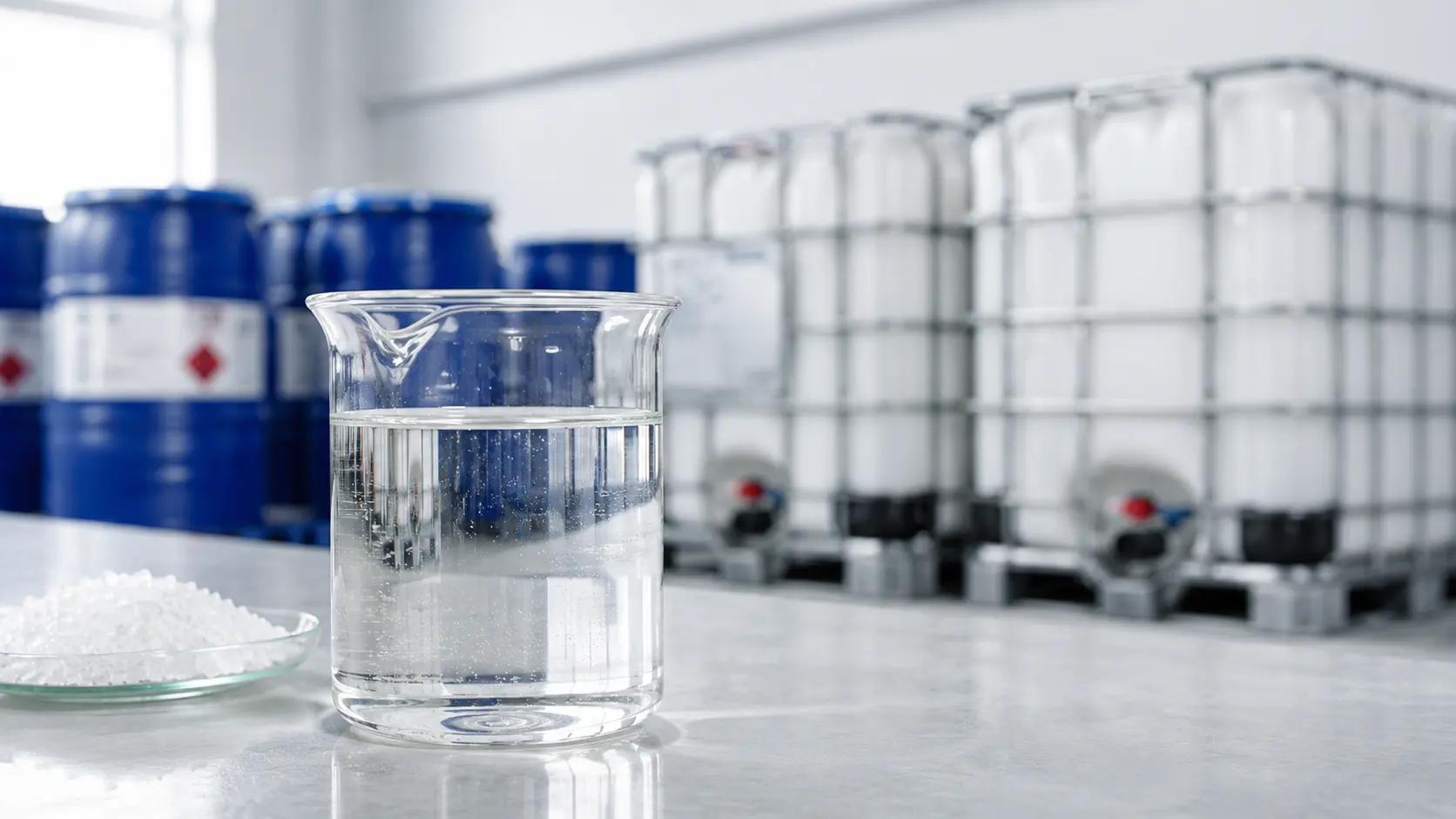
For oilfield service companies, completion-fluid blenders and drilling-chemical distributors, potassium formate is normally purchased as a raw material for preparing clear or low-solids completion brines.
That means the supplier has to provide more than potassium formate with the correct chemical name.
Buyers need consistent concentration, controlled impurities, reliable batch documentation, suitable packaging and enough supply capacity to support field operations.
Potassium formate is especially useful in completion-fluid systems because it is highly soluble in water and can provide relatively high density through dissolved salt rather than suspended weighting materials. Formate salts are used in engineered clear-brine systems designed around density, crystallization behavior and fluid cleanliness.
The challenge is finding a supplier that can consistently provide material suitable for that type of formulation.
What Does a Potassium Formate Completion Brine Supplier Actually Supply?
There are two slightly different products that buyers sometimes confuse.
The first is potassium formate raw material or concentrate.
The second is a finished completion-brine system.
A chemical manufacturer may supply concentrated potassium formate, while an oilfield fluid company uses that material to formulate the final brine according to the well's required density, TCT, formation compatibility and additive package.
This distinction matters.
The potassium formate supplier should not claim that one standard concentration automatically fits every completion well.
Typical Supply Options
| Supply Form | Typical Buyer | Main Advantage |
|---|---|---|
| 75% potassium formate solution | Oilfield fluid plants | Direct pumping and rapid blending |
| ≥96% solid potassium formate | Central brine plants | High active content and flexible dissolution |
| Customized bulk concentrate | Large fluid users | Easier integration into local blending |
| Finished engineered brine | Oilfield service operations | Project-specific fluid design |
Vanchor currently supplies both 75% liquid potassium formate and ≥96% solid potassium formate for customers preparing drilling and completion-fluid systems. The liquid is positioned for direct pumping and metering, while the solid grade is suitable for flexible local brine preparation.
Why Completion-Brine Buyers Care About Product Consistency
Completion fluids operate close to the producing formation.
Small variations in chemical quality can therefore matter more than they would in a less sensitive industrial application.
For example, a completion-fluid blender may have already qualified a specific potassium formate concentration with:
- Fluid-loss polymers
- Corrosion inhibitors
- Shale-control additives
- Formation water
- Elastomers
- Completion equipment
If the next batch arrives with noticeably different impurity levels or concentration, the formulation may not behave exactly the same way.
This is why oilfield buyers should evaluate batch-to-batch consistency, not only minimum assay.
A cheaper product that needs repeated reformulation can become expensive quite quickly.
Which Specifications Should a Buyer Check?
The exact specification depends on the completion-fluid company and reservoir.
There is no single global specification called “completion-grade potassium formate.”
The buyer should therefore compare actual technical parameters rather than relying only on labels such as:
- Oilfield grade
- Technical grade
- Premium grade
- Completion grade
Important Purchasing Parameters
| Parameter | Why It Matters |
|---|---|
| Potassium formate content | Confirms active material |
| Density | Critical for liquid concentrate |
| pH | Influences fluid chemistry |
| Chloride | May affect corrosion and compatibility limits |
| Carbonate / alkalinity | Can influence formulation chemistry |
| Iron | Important in clean-brine applications |
| Insoluble matter | Relevant to formation cleanliness |
| Appearance / clarity | Useful for liquid QC |
| Moisture | Important for solid grade |
| Batch consistency | Supports repeatable formulations |
For a 75% liquid product, Vanchor currently lists typical density around 1.57–1.58 g/cm³ at 25°C. The final working-brine density still needs to be checked after dilution and addition of other fluid components.
TDS, COA and SDS Are Not the Same Document
A professional potassium formate completion brine supplier should normally be able to provide three basic technical documents.
TDS – Technical Data Sheet
This describes standard or typical product properties.
COA – Certificate of Analysis
This shows analytical results for the supplied or representative production batch.
SDS – Safety Data Sheet
This provides handling, storage, exposure and transport information.
For purchasing decisions, the COA deserves particular attention.
The TDS tells you what the product is supposed to look like.
The COA helps tell you what you are actually receiving.
For a new supplier, asking for a recent representative COA before placing a full-container order is a sensible step.
75% Liquid or 96% Solid?
The choice normally comes down to logistics and blending capability.
75% Potassium Formate Solution
A liquid concentrate may be preferable when the customer wants:
- Direct pumping
- Fast field preparation
- Metered dosing
- Less dry-chemical handling
- No dissolution stage
Oilfield operations can be time-sensitive, so removing the dissolution step can be valuable.
96% Solid Potassium Formate
Solid potassium formate may be preferable when:
- Freight efficiency matters
- The customer has dissolution equipment
- Several different brine concentrations are prepared
- Long-distance shipment is required
Vanchor describes its ≥96% solid grade as a white crystalline material intended for customers requiring higher active content and flexible on-site dilution.
There isn't a universal winner.
A Gulf Coast completion-fluid plant with large blending tanks may make a different choice from a remote offshore supply base.
Can the Supplier Guarantee the Final Completion-Brine Density?
Usually, the raw-material supplier should guarantee the potassium formate product specification, not the final performance of a fluid formulated by somebody else.
This is an important commercial boundary.
Final completion-brine density depends on:
- Potassium formate concentration
- Added water
- Other dissolved chemicals
- Temperature
- Fluid contamination
- Final formulation
Clear-brine systems are normally designed around required density, TCT/PCT and clarity.
So a serious supplier should ask about the target density and application, but the final fluid should still be qualified by the completion-fluid engineer.
Ask About TCT and Operating Temperature
Completion-brine buyers should not focus only on density.
Concentrated brines can crystallize under unsuitable low-temperature conditions.
A supplier does not necessarily need to design the final TCT for the well, but they should understand why the information matters.
For example, the buyer may need to consider:
- Winter warehouse temperatures
- Offshore deck conditions
- Transportation temperature
- Surface circulation temperature
A supplier familiar with oilfield potassium formate should recognize the difference between simply selling concentrated solution and supporting a completion-brine formulation.
Packaging and Supply Logistics
Completion-brine projects can consume substantial quantities.
That means packaging and delivery can affect total project cost almost as much as product price.
Common supply formats may include:
- Drums
- IBC totes
- Flexitanks
- Bulk liquid shipment
- 25 kg solid bags
- Jumbo bags
Liquid buyers should consider local tank capacity and unloading equipment.
Solid buyers should consider humidity protection and dissolution capacity because potassium formate solid is hygroscopic.
For larger projects, buyers should also ask about:
- Monthly capacity
- Lead time
- Production schedule
- Export documentation
- Port availability
- Emergency replenishment
A technically good product that cannot arrive before the fluid-blending window is not very useful.
Supplier Evaluation Checklist
Before approving a new potassium formate supplier, a purchasing team can ask:
- Do you manufacture potassium formate or trade it?
- Which liquid and solid grades are regularly produced?
- Can you provide recent COA, TDS and SDS documents?
- Can you control chloride, iron and insoluble matter?
- How is liquid density tested?
- What packaging is available?
- What is the normal lead time for 20–100 MT?
- Can you maintain batch consistency across repeat shipments?
- Can you provide samples before bulk supply?
- Do you already supply drilling or completion-fluid customers?
The last question is useful, but it should not replace technical evaluation.
Actual product quality matters more than a long customer list.
Why Samples Matter Before a Large Order
For a new completion project, testing a representative sample before bulk purchase is usually worthwhile.
The fluid company can use the sample to evaluate:
- Density
- pH
- Compatibility with polymers
- Formation-water mixing
- Precipitation tendency
- Corrosion behavior
- TCT
- Filtration performance
Clear-brine suppliers such as SLB emphasize that completion brines are engineered around formation protection, reservoir-pressure control, density and crystallization behavior.
The raw material therefore needs to work inside the complete system, not just pass an assay test.
How to Send a Better RFQ
Instead of writing:
Please quote potassium formate.
Send something closer to:
Product: Potassium Formate
Application: Completion Brine
Preferred Form: 75% Liquid Solution
Quantity: 80 MT
Target Finished Brine Density: 1.48 SG
Packaging: IBC or Flexitank
Required Documents: COA, TDS and SDS
Special Requirements: Controlled chloride, iron and insoluble matter
Destination: Houston, USA
This allows the supplier to quote the correct grade and logistics arrangement.
It also makes supplier comparison much easier.
Choosing a Potassium Formate Completion Brine Supplier
Vanchor supplies potassium formate for oilfield customers in both 75% liquid and ≥96% solid forms. The liquid grade is suitable for direct transfer, metering and blending, while the solid grade provides higher active content for customers preparing customized brines locally.
For completion-fluid buyers, however, selecting a supplier should still involve technical qualification.
Ask for the documents.
Check the batch data.
Test the material.
Confirm the logistics.
Then compare price.
That order is usually safer than doing it the other way around.
FAQ
What should I look for in a potassium formate completion brine supplier?
Look at product consistency, assay, density, impurity control, COA/TDS/SDS availability, packaging, production capacity and experience supplying oilfield customers.
Should I buy 75% liquid or 96% solid potassium formate?
Choose liquid when rapid pumping and blending are important. Solid may be better when freight efficiency and flexible local brine preparation are priorities.
Can potassium formate suppliers provide finished completion brine?
Some fluid companies can, but a chemical supplier may only provide the potassium formate raw material. Confirm the scope before ordering.
What documents should I request?
At minimum, request a current TDS, SDS and representative or batch-specific COA.
Should I test a sample before ordering in bulk?
Yes, particularly for formation-sensitive completion applications. Testing can verify compatibility with the planned fluid formulation and reservoir conditions.
Is the lowest-priced potassium formate supplier always the best choice?
No. Batch consistency, impurity control, logistics reliability and formulation performance can have a much larger impact on the total completion-fluid cost.


Contact Us
In This Article
Related Posts
Индивидуальные упаковочные решения от поставщика безводного ацетата натрия в Китае
2026-09-23
Тенденции применения безводного ацетата натрия для специального химического производства
2026-09-23
Безводный ацетат натрия для дубления кожи: улучшает равномерность окрашивания
2026-09-22
Formic Acid 85% for Animal Feed Preservation: Moisture and Storage Stability Guide
2026-09-21


