



Buy Potassium Formate: A Practical Guide for Industrial Buyers
By LIN
2026-09-01Related Posts
Индивидуальные упаковочные решения от поставщика безводного ацетата натрия в Китае
2026-09-23
Тенденции применения безводного ацетата натрия для специального химического производства
2026-09-23

Безводный ацетат натрия для дубления кожи: улучшает равномерность окрашивания
2026-09-22
Formic Acid 85% for Animal Feed Preservation: Moisture and Storage Stability Guide
2026-09-21
If you are planning to buy potassium formate, the first question is usually not difficult: where can I find a supplier?
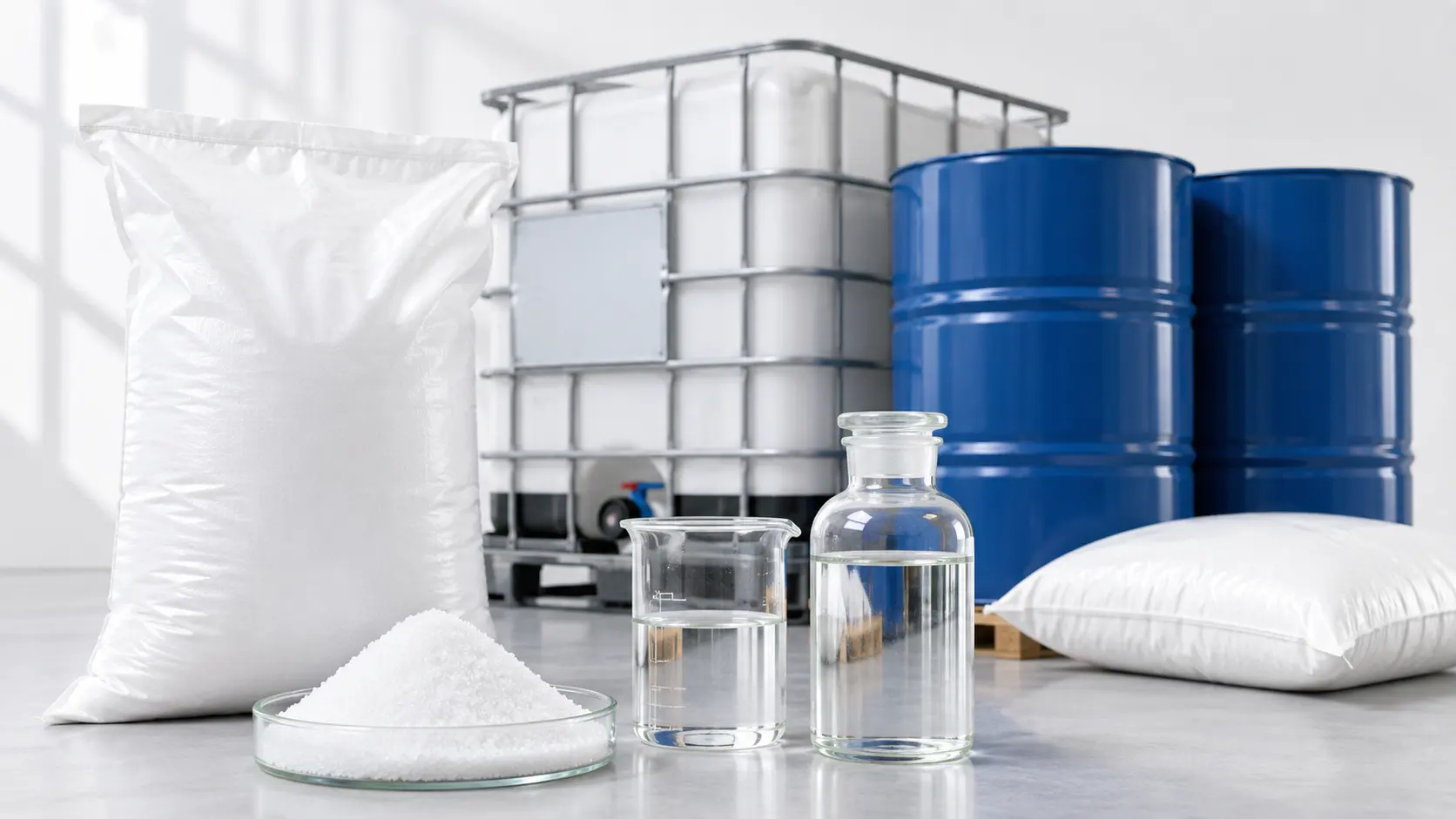
The harder question is this:
How do I know the potassium formate I am buying is actually suitable for my application?
For industrial chemicals, purchasing only by price can create problems later. Two products may both be called potassium formate, but the concentration, impurity level, physical form, packaging and intended application may be quite different.
This matters especially in oilfield drilling fluids, completion brines, deicing systems and industrial formulations where stable quality is important.
So before sending a purchase order, it makes sense to spend a little time checking the product specification, supplier capability and total delivery cost.
What Is Potassium Formate?
Potassium formate is the potassium salt of formic acid, with the chemical formula HCOOK and CAS No. 590-29-4.
Commercial potassium formate is mainly available as:
- Potassium Formate 75% Solution
- Potassium Formate 96% Solid
It is widely used in applications such as:
- Drilling fluids
- Completion and workover fluids
- High-density brines
- Airport runway deicing
- Road deicing
- Heat transfer systems
- Chemical manufacturing
The right grade depends on what you are trying to do with it.
A drilling fluid company, for example, may care much more about density, chloride and insoluble matter than a general industrial chemical distributor.
That is why the buying process should start with the application, not just the price.
What Should You Decide Before Buying Potassium Formate?
Before contacting suppliers, confirm a few basic requirements internally.
You don't need a 20-page technical document. Even a simple purchasing specification makes the discussion much easier.
Basic Potassium Formate Buying Checklist
| Requirement | Example |
|---|---|
| Product form | 75% solution / 96% solid |
| Application | Completion fluid |
| Order quantity | 20 MT |
| Required purity | According to specification |
| Packaging | IBC / industrial bags |
| Destination | Rotterdam, Netherlands |
| Trade term | FOB / CFR / CIF |
| Documents | COA, SDS, TDS |
| Purchase frequency | Trial / monthly / annual |
If you send this information with your first inquiry, suppliers can normally provide a more meaningful quotation.
Simply writing:
“Please quote potassium formate.”
usually leads to several extra emails.
Should You Buy 75% Liquid or 96% Solid Potassium Formate?
This is one of the first decisions buyers need to make.
Potassium formate solution is convenient for companies that are already working with liquid formulations. It can be pumped, transferred and blended without first dissolving solid material.
The 96% solid grade, however, provides more active potassium formate per metric ton transported.
That can be useful when freight cost or storage efficiency is important.
75% Solution vs 96% Solid
| Item | 75% Solution | 96% Solid |
|---|---|---|
| Physical form | Clear liquid | White solid |
| Active content | About 75% | About 96% |
| Handling | Pump and liquid transfer | Bag handling |
| Preparation | Convenient for liquid systems | May require dissolution |
| Freight efficiency | Lower active content per ton | Higher active content per ton |
| Typical buyers | Oilfield fluid users, formulators | Distributors, blenders, industrial plants |
There isn't a universally better grade.
If your facility already has tanks, pumps and liquid storage, buying solution may be simpler.
If you're shipping long distances and can dissolve material locally, solid potassium formate might be more economical.
The best choice depends on your process.
Where Can You Buy Potassium Formate?
Industrial buyers normally purchase potassium formate from one of three sources:
Manufacturers,
chemical distributors, or
international trading companies.
Each option has advantages.
A manufacturer may provide stronger technical control and more competitive pricing for larger quantities.
A distributor may offer smaller quantities, local inventory and faster delivery.
A trading company can sometimes provide flexible sourcing, especially when a buyer needs several chemicals in one shipment.
For large or repeat purchases, however, it is worth understanding where the material actually comes from.
Ask the supplier directly:
- Are you the manufacturer or distributor?
- Where is the production location?
- What grades do you regularly supply?
- What is your normal monthly capacity?
- Can you provide recent COA data?
- What export markets do you serve?
These questions are very normal in B2B chemical purchasing.
A serious supplier should not have difficulty answering them.
Always Check the Specification Before You Buy
The product name alone is not enough.
When you buy potassium formate for industrial use, review the technical specification carefully.
Important parameters may include:
- Potassium formate content
- Density
- pH
- Water content
- Chloride
- Carbonate
- Iron
- Insoluble matter
- Appearance
Not every parameter is equally important for every application.
For oilfield fluids, impurity control can be especially important because unwanted ions or solids may influence fluid performance.
For deicing applications, requirements may focus on corrosion behavior, low-temperature performance and environmental considerations.
The supplier should understand the intended application instead of only sending a generic specification sheet.
Request a COA, SDS and TDS
Before placing a commercial order, buyers should normally request three basic documents.
COA – Certificate of Analysis
The COA shows actual or typical test results for a production batch.
It helps you compare the supplied product with your required specification.
SDS – Safety Data Sheet
The SDS provides information about:
- Hazards
- Handling
- Storage
- Personal protection
- Transport
- Emergency response
This document is important for logistics, warehouse and safety teams.
TDS – Technical Data Sheet
The TDS usually gives the product's major technical characteristics and recommended application information.
These documents are pretty basic for chemical purchasing, but they are still worth checking.
A supplier that cannot provide clear technical documentation may create more problems once the order becomes larger.
Should You Request a Sample First?
For a new supplier, yes, in many cases this is a smart move.
A sample gives your technical team a chance to test the material before committing to a full container.
Depending on your application, you may test:
- Concentration
- Density
- pH
- Solubility
- Impurity levels
- Compatibility with your formulation
- Low-temperature behavior
A sample does not guarantee every future batch will be identical, of course.
But it gives you a useful starting point.
For large oilfield or industrial projects, approving a sample or technical specification before bulk purchasing can reduce unnecessary risk.
How Much Potassium Formate Should You Buy?
Your first order doesn't necessarily need to be huge.
For a new supplier, some buyers start with:
- A sample
- One pallet
- Several tons
- One full container
Then increase purchasing volume after the product and delivery process have been confirmed.
For established requirements, full-container purchasing is usually more economical than small LCL shipments.
This is because freight, handling and export costs are spread over a larger amount of material.
If you already know your annual demand, tell the supplier.
For example:
First order: 20 MT
Estimated annual requirement: 250 MT
That information can help the supplier plan production and may also improve commercial terms.
Compare the Total Cost, Not Only the Product Price
This is one of the most important things when you buy potassium formate internationally.
Imagine two offers:
Supplier A:
Lower price per ton.
Supplier B:
Slightly higher price per ton but better container loading and lower freight.
Supplier A may look cheaper on the quotation sheet.
Supplier B may actually cost less when the goods reach your warehouse.
The real purchasing cost can include:
- Product price
- Packaging
- Inland transport
- Export handling
- Ocean freight
- Insurance
- Customs
- Import duty
- Destination charges
- Local delivery
This is why purchasing teams should compare offers under the same Incoterm.
An FOB price should not be directly compared with a CIF price.
It sounds obvious, but this happens more often than you might think.
What Packaging Is Available?
Packaging depends on whether you buy liquid or solid potassium formate.
Liquid products are commonly supplied in suitable industrial containers such as IBCs or drums, depending on the supplier and shipment requirements.
Solid potassium formate may be packed in moisture-resistant industrial bags.
Packaging Questions to Ask
| Question | Why It Matters |
|---|---|
| What is the net weight per package? | Helps calculate total quantity |
| How many packages fit in one container? | Affects freight efficiency |
| Is the packaging moisture resistant? | Important for solid material |
| Can the package be handled by forklift? | Affects warehouse operation |
| Is customized packaging available? | Useful for distributors |
| What is the net loading per container? | Needed for landed-cost calculation |
For bulk purchases, container loading is very important.
Even a small difference in loading efficiency can change the final cost per ton.
Buying Potassium Formate for Oilfield Applications
Oilfield buyers usually need to be more careful than general chemical traders.
Potassium formate brines are used in drilling, completion and workover systems because they can offer useful density and fluid properties for demanding well conditions.
But the fluid formulation can be sensitive to impurities.
Before buying, communicate clearly with the supplier about:
- Required concentration
- Target brine density
- Maximum chloride level
- Insoluble matter
- pH range
- Other impurity limits
- Operating temperature
- Intended drilling or completion application
If the project has an established specification, send it with the RFQ.
This is much safer than assuming every “oilfield grade potassium formate” is identical.
How to Evaluate a Potassium Formate Supplier
Price is important, but a reliable supplier should also show consistency.
Look at several areas.
Technical capability
Can the supplier answer application-related questions?
Quality control
Can they provide specifications and recent analysis data?
Production or supply capacity
Can they support your required volume regularly?
Export experience
Do they understand international chemical documentation and shipping requirements?
Communication
Do they answer questions clearly, or do they avoid technical details and only talk about price?
That last one tells you quite a bit.
For long-term purchasing, communication becomes more important than people expect. A supplier who responds quickly during the quotation stage but becomes difficult after payment is obviously not ideal.
Buying Potassium Formate From China
China is an important sourcing market for potassium formate and many other formate chemicals.
Industrial buyers can find different grades, packaging options and order quantities from Chinese suppliers.
When sourcing from China, don't evaluate suppliers only according to website appearance or the lowest quotation.
Ask for:
- Product specification
- COA
- SDS
- TDS
- Packaging details
- Loading quantity
- Lead time
- Export port
- Payment terms
- Previous export experience
For regular purchasing, it can also be useful to discuss supply planning several months ahead.
Vanchor supplies potassium formate for industrial applications including oilfield fluids and other technical uses. Buyers can request technical specifications, COA, SDS, TDS, packaging information and bulk quotations according to the required grade and destination.
Final Thoughts
If you want to buy potassium formate, don't start by asking only one question:
“What is your lowest price?”
Start with the product requirement.
Confirm whether you need 75% solution or 96% solid, check technical specifications, review COA and SDS documentation, understand packaging, and calculate the landed cost.
For a new supplier, testing a sample before a large order is usually a sensible choice.
For repeat purchases, quality consistency and supply reliability become even more important.
The best potassium formate supplier is not necessarily the company with the cheapest quotation.
It is the supplier that can provide the right grade, consistent quality, suitable logistics and a commercially reasonable price shipment after shipment.
FAQ
Where can I buy potassium formate?
Potassium formate can be purchased from chemical manufacturers, distributors and international chemical suppliers. For bulk industrial orders, buyers often source directly from manufacturers or established export suppliers.
What grade of potassium formate should I buy?
It depends on your application. Common commercial options include 75% potassium Formate Solution and approximately 96% solid potassium formate.
Can I buy potassium formate in bulk?
Yes. Bulk orders can range from several tons to full-container and contract quantities. Larger orders generally provide better logistics efficiency.
Should I request a sample before buying?
For a new supplier or sensitive technical application, sample testing is recommended before placing a large commercial order.
What documents should a potassium formate supplier provide?
Industrial buyers should normally request a COA, SDS and TDS, together with packaging and shipping information.
What should I include in my potassium formate RFQ?
Include the required grade, concentration, quantity, packaging, application, destination port and preferred Incoterm. If you have specific impurity limits, send them together with the inquiry.


Contact Us
Related Posts
Индивидуальные упаковочные решения от поставщика безводного ацетата натрия в Китае
2026-09-23
Тенденции применения безводного ацетата натрия для специального химического производства
2026-09-23
Безводный ацетат натрия для дубления кожи: улучшает равномерность окрашивания
2026-09-22
Formic Acid 85% for Animal Feed Preservation: Moisture and Storage Stability Guide
2026-09-21


