



Potassium Formate 75% Solution: Properties, Applications and Buying Guide
By LIN
2026-09-01Related Posts
Индивидуальные упаковочные решения от поставщика безводного ацетата натрия в Китае
2026-09-23
Тенденции применения безводного ацетата натрия для специального химического производства
2026-09-23

Безводный ацетат натрия для дубления кожи: улучшает равномерность окрашивания
2026-09-22
Formic Acid 85% for Animal Feed Preservation: Moisture and Storage Stability Guide
2026-09-21
Potassium formate is available in several commercial forms, but potassium formate 75% solution is probably the most practical choice for companies that prefer a concentrated liquid instead of handling and dissolving solid material.
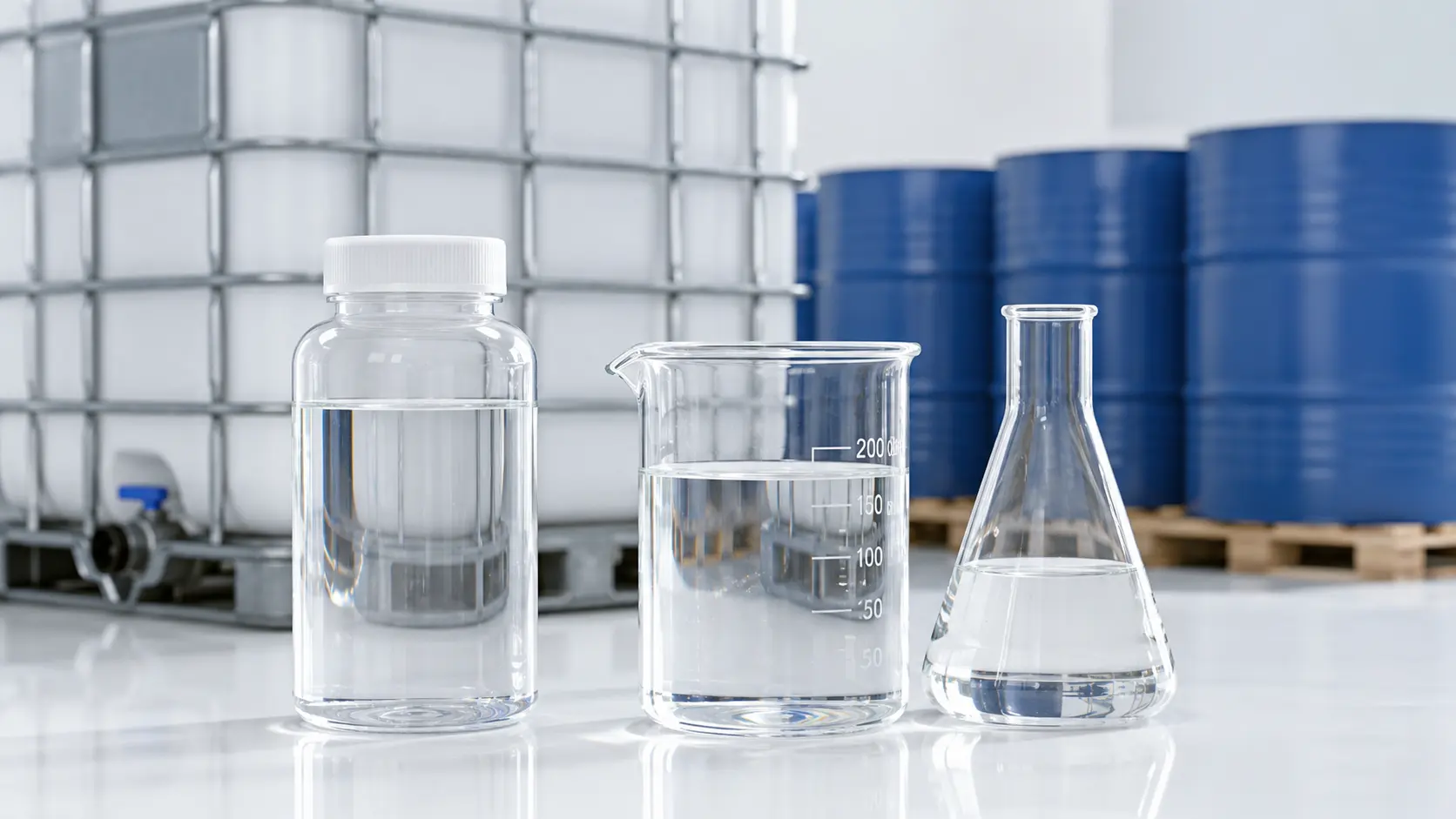
It is widely used in oilfield fluids, industrial cooling systems, deicing formulations and other chemical processes. One of the main reasons is pretty simple: the product arrives as a concentrated liquid, so it can be pumped, transferred and blended into a process without going through a separate powder-dissolving step.
For industrial users handling hundreds or thousands of kilograms at a time, that convenience can make a real difference.
Still, 75% potassium formate is not automatically the best grade for every customer. Before purchasing, buyers should understand its basic properties, applications, storage requirements and how it compares with higher-concentration solid potassium formate.
What Is Potassium Formate 75% Solution?
Potassium formate is the potassium salt of formic acid. Its chemical formula is HCOOK, and its CAS number is 590-29-4.
A 75% potassium formate solution is a concentrated aqueous solution containing approximately 75% potassium formate by weight.
Commercial material normally appears as a clear, colorless to slightly yellow liquid.
Because the salt is already dissolved in water, the solution can be introduced into many industrial liquid systems directly or diluted to a lower concentration according to formulation requirements.
This is one of the biggest differences compared with potassium formate solid.
You don't need to unload bags, transfer powder into a mixing tank and wait for dissolution. For some factories this isn't a big problem, but for oilfield blending plants or continuous liquid-processing operations, avoiding that extra step can save quite a bit of time.
Typical Properties of Potassium Formate 75%
Industrial specifications can vary somewhat between manufacturers, so buyers should always check the supplier's latest TDS and COA.
A typical commercial 75% solution can be described as follows.
| Property | Typical Information |
|---|---|
| Chemical name | Potassium Formate |
| Chemical formula | HCOOK |
| CAS No. | 590-29-4 |
| Concentration | Approx. 75% |
| Appearance | Clear, colorless to light yellow liquid |
| Density at 25°C | Approx. 1.57–1.58 g/cm³ |
| pH | Approx. 9–10 |
| Water solubility | Completely miscible |
| Product form | Concentrated aqueous solution |
These numbers are useful as a general reference, but a commercial buyer should not use a website specification alone for final quality approval.
Always check the actual specification agreed with the supplier.
For important projects, especially oilfield work, reviewing a recent Certificate of Analysis (COA) before shipment is a good idea too.
Why Use a 75% Liquid Solution?
The most obvious advantage is handling.
Solid potassium formate is highly soluble in water, but somebody still has to dissolve it.
That requires:
- Mixing equipment
- Water
- Storage tanks
- Labor
- Concentration control
- Additional production time
With the 75% solution, much of this preparation has already been completed.
The material can normally be pumped from an IBC or suitable bulk-storage system into the customer's blending process.
It sounds like a small operational detail, but when a company is preparing large batches every day, the difference adds up.
Liquid handling can also reduce dust associated with dry chemical transfer.
Potassium Formate 75% in Oilfield Drilling Fluids
Oilfield applications are one of the most important markets for concentrated potassium formate solutions.
Potassium formate can be used as part of water-based drilling-fluid systems, particularly where operators want a formate-based fluid with relatively high density and low solids.
Potential applications include:
- Water-based drilling fluids
- Shale-inhibition systems
- High-density brines
- Horizontal wells
- Extended-reach wells
- High-temperature drilling programs
- Offshore drilling
One important point, though: 75% potassium formate solution is a raw material or base fluid, not a complete drilling-fluid system by itself.
A drilling fluid may also contain viscosifiers, filtration-control additives, corrosion inhibitors, lubricants and other components.
The final formulation depends on the well.
This is why it is risky to discuss potassium formate only in terms of concentration. An oilfield buyer may also need to check chloride, carbonate, iron, insoluble matter and other impurities.
Use in Completion and Workover Fluids
Potassium formate is also well known in completion and workover brine systems.
In these applications, clean brines can be important because operators generally want to minimize solids entering sensitive formations.
A properly designed formate brine can be considered for:
- Completion fluids
- Workover fluids
- Well-control fluids
- Formation-sensitive wells
- High-density clear brines
- Reduced-chloride fluid systems
Compared with conventional chloride or bromide brines, formate systems can offer a different combination of density, corrosion behavior and environmental characteristics.
That doesn't mean potassium formate should simply replace another brine without testing.
Fluid compatibility, formation conditions, temperature, elastomers and corrosion-control requirements all have to be considered.
Oilfield chemistry is rarely as simple as “this chemical is better.”
Potassium Formate 75% for Heat Transfer Fluids
Another interesting use is secondary refrigeration and heat-transfer systems.
Potassium formate can be formulated into low-temperature heat-transfer fluids for applications such as:
- Cold-storage facilities
- Industrial refrigeration
- Food-processing cooling
- HVAC secondary loops
- Process cooling
- Low-temperature circulation systems
Its high water solubility and low-temperature performance make formate-based fluids useful in some systems where a conventional water solution would freeze too easily.
But again, the raw 75% potassium formate solution is normally a starting material.
The finished heat-transfer fluid may require dilution and a suitable corrosion-inhibitor package.
Compatibility with metals, seals, pumps and piping also needs to be confirmed before full-scale use.
Use in Deicing and Anti-Icing Products
Potassium formate is also used as a raw material for certain liquid deicing and anti-icing formulations.
Possible applications include:
- Roads
- Bridges
- Industrial yards
- Logistics centers
- Parking areas
- Airport-related winter maintenance
Formate-based deicers are often considered when users want to reduce reliance on conventional chloride salts.
However, there is an important distinction here.
A standard industrial potassium formate 75% solution should not automatically be treated as a finished certified airport runway deicer.
Airport applications can have specific performance, corrosion and aviation requirements. The final formulation may need additives, testing and applicable approvals.
So if you are buying potassium formate for aviation use, tell the supplier exactly what the end use will be.
75% Liquid vs 96% Solid Potassium Formate
Buyers often ask which form is better.
There isn't one answer because the economics depend heavily on your equipment and logistics.
| Factor | 75% Solution | 96% Solid |
|---|---|---|
| Active potassium formate | Approx. 75% | Approx. 96% |
| Form | Liquid | Solid |
| On-site dissolution | Normally not required | Usually required for liquid systems |
| Pumping | Easy with suitable equipment | Not applicable before dissolution |
| Dust during handling | Very low | Possible during dry handling |
| Freight efficiency | More water shipped | More active chemical shipped |
| Storage | Liquid tank / IBC system | Dry warehouse |
| Best suited for | Ready liquid processing | Local blending and distribution |
If the customer is located far from the manufacturing plant, shipping 96% solid may be more efficient because less water is being transported.
On the other hand, if a drilling-fluid plant needs liquid product immediately, the 75% solution could be easier and faster to use.
There is always a trade-off.
How to Dilute Potassium Formate 75%
A concentrated solution can be used to prepare lower-concentration potassium formate fluids.
The basic principle is straightforward: add the appropriate quantity of water under controlled industrial mixing conditions.
But concentration should not be guessed visually.
After dilution, operators should verify the final concentration using an appropriate analytical method or a validated density-concentration relationship.
Water quality can also matter, particularly in sensitive oilfield or industrial formulations.
If the incoming water contains unwanted ions, suspended solids or other contaminants, the finished fluid may behave differently from what was expected.
For important processes, using specified process water is much safer than simply using whatever water happens to be available.
Packaging and Bulk Supply
Potassium formate solution is commonly handled in industrial liquid packaging such as IBCs, drums or suitable bulk-liquid systems.
For international buyers, packaging selection affects more than convenience.
It can influence:
- Container loading
- Freight cost
- Warehouse handling
- Unloading equipment
- Storage space
- Final cost per ton
Questions to Ask Before Ordering
| Question | Why It Matters |
|---|---|
| What concentration is guaranteed? | Confirms active material |
| What is the typical density? | Useful for formulation and receiving checks |
| What packaging is available? | Affects handling and freight |
| What is the net loading per container? | Important for landed-cost calculation |
| Can you provide COA? | Confirms batch quality |
| Is SDS available? | Needed for safe handling and transport review |
| Is TDS available? | Provides technical product information |
| What is the lead time? | Important for production planning |
| Can a sample be supplied? | Useful for initial qualification |
For regular industrial customers, annual demand is worth mentioning too.
A buyer requiring 20 MT once has a different purchasing profile from a company consuming 500 MT per year.
Storage and Handling
Potassium formate solution should be stored in sealed, chemically compatible equipment according to the supplier's current SDS and technical recommendations.
Keep the product protected from contamination and avoid mixing it with incompatible materials.
Temperature is also worth paying attention to.
Highly concentrated salt solutions can show crystallization behavior under unsuitable storage conditions. If material is being stored or transported in a cold region, discuss winter handling with the supplier before shipment.
This is especially important when the product is stored outside in IBCs or bulk tanks.
Nobody wants to discover a handling problem when a truck is already waiting to unload.
What Should Buyers Check on the COA?
For general industrial use, concentration is obviously important, but it should not be the only parameter considered.
Depending on the application, a buyer may also specify:
- Appearance
- Density
- pH
- Chloride
- Carbonate
- Iron
- Insoluble matter
- Other application-specific impurities
For repeat orders, keeping historical COA records can also help procurement and technical teams monitor batch consistency.
One good batch is nice.
Consistent batches over two or three years are much more valuable.
How to Choose a Potassium Formate 75% Supplier
A serious supplier should be able to discuss more than price.
Look for a company that can provide clear technical information, stable product specifications and proper documentation.
Before purchasing, ask about:
- Quality-control procedures
- Batch testing
- Production or supply capacity
- Packaging
- Export experience
- Lead time
- COA, SDS and TDS
- Sample availability
- Bulk shipment options
Vanchor supplies Potassium Formate 75% Solution for industrial customers including oilfield service companies, fluid formulators, chemical distributors and other bulk users. Technical documentation, packaging information and quotations can be supplied according to project requirements.
For large-volume purchasing, sending a clear specification with the RFQ is usually the fastest way to get an accurate response.
Final Thoughts
Potassium formate 75% solution is a practical choice when buyers need a concentrated liquid that can be pumped, dosed and blended without first dissolving dry potassium formate.
Its applications range from drilling and completion fluids to industrial heat transfer and formulated deicing products.
The main advantage is convenience, but convenience has to be balanced against transportation cost.
A 75% solution contains more water than 96% solid potassium formate, so customers should compare both grades based on their own storage, mixing equipment, freight distance and production process.
Before buying, check the actual specification, request a COA, SDS and TDS, and make sure the supplier understands your end application.
Getting the concentration right is important.
Getting the whole product right is more important.
FAQ
What is potassium formate 75% solution?
It is a concentrated aqueous solution containing approximately 75% potassium formate by weight. It is commonly supplied as a clear liquid for industrial applications.
What is the density of potassium formate 75% solution?
A typical commercial 75% solution may have a density of around 1.57–1.58 g/cm³ at 25°C. The actual specification should be confirmed with the supplier.
Is potassium formate 75% used in drilling fluids?
Yes. It can be used as a concentrated component or base fluid in professionally formulated drilling, completion and workover fluid systems.
Is 75% potassium formate better than 96% solid?
Neither grade is always better. The liquid grade offers easier pumping and dosing, while the solid grade provides more active potassium formate per ton shipped.
Can potassium formate 75% be diluted?
Yes. It can be diluted under controlled industrial conditions to prepare lower-strength solutions. Final concentration should be verified after blending.
What documents should I request before ordering?
Industrial buyers should normally request the product specification or TDS, SDS and COA before approving a bulk order.


Contact Us
In This Article
Related Posts
Индивидуальные упаковочные решения от поставщика безводного ацетата натрия в Китае
2026-09-23
Тенденции применения безводного ацетата натрия для специального химического производства
2026-09-23
Безводный ацетат натрия для дубления кожи: улучшает равномерность окрашивания
2026-09-22
Formic Acid 85% for Animal Feed Preservation: Moisture and Storage Stability Guide
2026-09-21


