



Sodium Acetate Buffer pH Range: How the Acetate Buffer System Works
By Tonmoy
2026-08-15Related Posts
Индивидуальные упаковочные решения от поставщика безводного ацетата натрия в Китае
2026-09-23
Тенденции применения безводного ацетата натрия для специального химического производства
2026-09-23

Безводный ацетат натрия для дубления кожи: улучшает равномерность окрашивания
2026-09-22
Formic Acid 85% for Animal Feed Preservation: Moisture and Storage Stability Guide
2026-09-21
A conventional acetic acid–sodium acetate buffer is commonly described as effective over approximately pH 3.6–5.6. This is a practical working range, not a guaranteed specification for every sodium acetate solution or commercial buffer product. The final pH depends on the relative amounts of acetic acid and acetate, the total concentration, temperature, measurement conditions, and the specific formulation.
The distinction is important: sodium acetate is one component of the conventional acetate buffer system. A sodium acetate solution by itself should not automatically be treated as equivalent to a complete acetic acid–acetate buffer.
What pH range does a sodium acetate buffer cover?
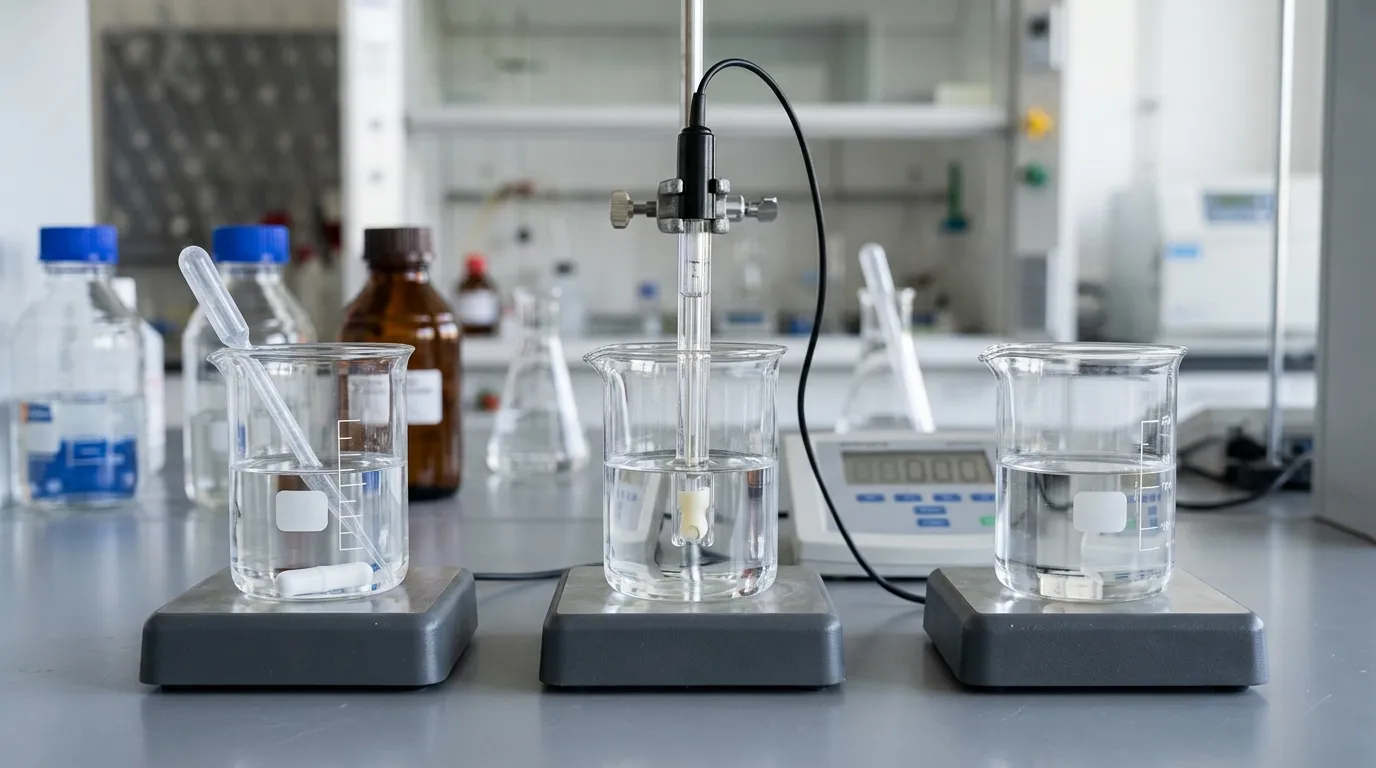
The commonly cited sodium acetate buffer pH range is approximately 3.6 to 5.6. This range appears in acetate-buffer preparation guides and commercial buffer references, including AAT Bioquest’s acetate buffer preparation reference.
| Interpretation | What it means |
|---|---|
| Approximate pH range | The conventional region in which an acetic acid–acetate system is generally selected for buffering |
| Not a sharp cutoff | Buffering performance does not suddenly stop at pH 3.6 or pH 5.6 |
| Not a product specification | A commercial sodium acetate product may have its own stated pH, concentration, and tolerance |
| Not the pH of sodium acetate alone | The complete buffer system normally contains both acetic acid and acetate |
The range should therefore be used as a technical selection guide. If the required process pH is well outside this region, the formulation should not be assumed to provide the same buffering behavior simply because sodium acetate is present.
Buffer performance also depends on the amount of acid or base the solution must absorb. A formulation may have a nominal pH within the commonly cited range but still have insufficient capacity for the process load.
Why sodium acetate and acetic acid form a buffer system
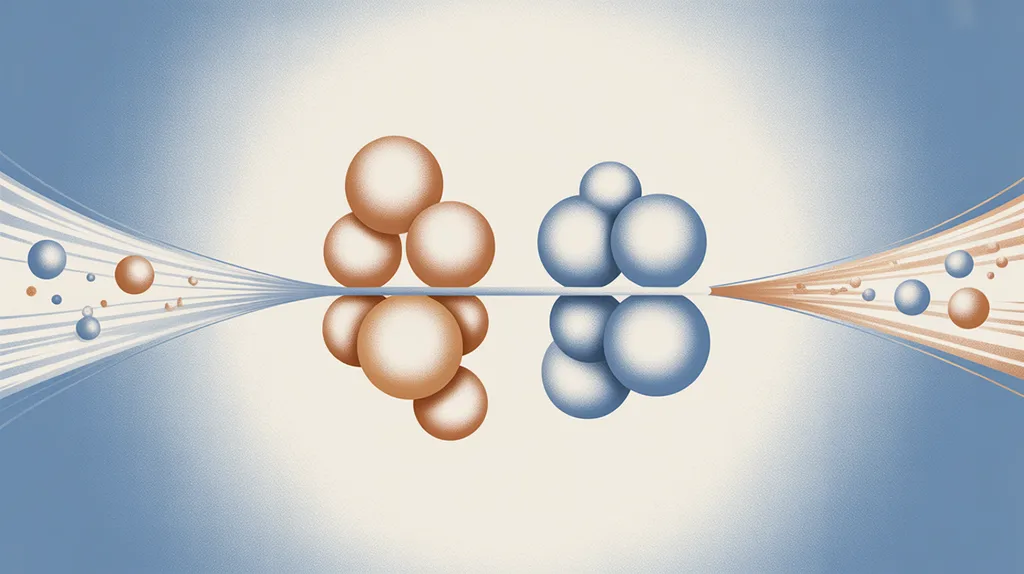
The acetate buffer system is based on a weak acid and its conjugate base:
- Acetic acid is the weak-acid component.
- Acetate is the conjugate-base component.
- Sodium acetate supplies acetate when dissolved in water.
The two components respond to additions that would otherwise cause a rapid pH change. When acid is added, acetate can react with hydrogen ions to form acetic acid. When base is added, acetic acid can react with hydroxide ions, producing acetate and water. This reversible behavior helps moderate pH movement.
The key point is that useful buffering depends on having both forms available in a suitable balance. Sodium acetate provides the acetate side of the pair, but the term “sodium acetate buffer” is often used loosely for a formulation that also contains acetic acid.
This is different from treating sodium acetate as a complete buffer in every situation. The chemical identity, concentration, formulation method, and target pH all need to be defined before performance can be evaluated.
What controls the final pH and buffering performance?
The acetic acid-to-acetate ratio
The relative quantities of acetic acid and acetate are the main formulation variable used to establish the target pH. Changing that ratio changes the balance between the weak acid and its conjugate base.
A preparation guide from AAT Bioquest describes preparing the acetate system from acetic acid and sodium acetate, followed by pH adjustment and verification. The exact quantities in a preparation must remain tied to the selected concentration and formulation basis.
Total concentration
Total concentration and pH are not the same specification.
- The acid-to-acetate ratio primarily influences the target pH.
- The total concentration influences how much added acid or base the system can absorb before the pH changes significantly.
- A dilute formulation and a concentrated formulation may be adjusted to a similar pH but respond differently to process contamination or chemical loading.
For this reason, a specification that states only “acetate buffer, pH 5” is incomplete for many technical applications. QA and formulation teams may also need the concentration basis, component ratio, acceptable tolerance, temperature, and measurement method.
Temperature and measurement conditions
Measured pH can depend on temperature and on the conditions under which the measurement is made. When reviewing a ready-made buffer, the stated pH should be read together with its temperature, concentration, tolerance, and test conditions.
Do not transfer a pH value from one product or preparation to another without checking these details.
Final pH adjustment
Preparation procedures commonly include measuring the solution and adjusting it to the required pH. This is different from assuming that the chemical name alone determines the final result.
A practical formulation record should identify:
- The exact chemical form used
- The target pH and acceptable tolerance
- The concentration basis
- The acid and acetate sources
- The temperature at measurement
- The pH measurement method
- The adjustment and verification steps
Detailed concentration calculations and preparation procedures should be handled separately from this range-and-mechanism guide.
Why a commercial sodium acetate product may show a different pH
A commonly cited acetate-buffer range should not be confused with the stated pH of every commercial sodium acetate formulation.
For example, Teknova lists a 1 M sodium acetate buffer specified at pH 5.00 ± 0.04. This is a product-specific specification for a defined formulation. It is not a universal pH value for all sodium acetate products.
A different example is provided by Medicago’s sodium acetate buffer product, which is described as a 3.0 M product specified at pH 7.0 ± 0.05 at 25°C. This product-specific specification should not be used to redefine the conventional pH 3.6–5.6 range for an acetic acid–acetate buffer system.
These examples show why technical buyers should separate three different questions:
- What is the typical selection range for the acetate buffer system?
- What pH does a particular prepared formulation reach?
- What pH, concentration, and tolerance does a particular commercial product specify?
The answers may differ because the product form, concentration, formulation components, and specification basis may differ.
For procurement and QA review, request or confirm:
- Exact product name and chemical form
- Whether the material is sodium acetate alone or a prepared buffer
- Concentration and concentration basis
- Stated pH and tolerance
- Measurement temperature
- Applicable technical documentation
- Batch-specific information where process release requires it
A third-party specification must not be transferred to a Vanchor product or to another grade without corresponding documentation.
How to evaluate an acetate buffer before preparation or process use

Use the following sequence when assessing an acetate buffer for a formulation or process:
- Define the chemical system. Confirm whether the requirement is for sodium acetate as a raw material or for a complete acetic acid–sodium acetate buffer.
- Define the target pH. Record the required pH and acceptable tolerance instead of relying on the general pH 3.6–5.6 range.
- Define the concentration. State the intended concentration and whether it is expressed on a molar, mass, or supplied-product basis.
- Confirm the chemical form. Anhydrous sodium acetate and sodium acetate trihydrate should not be treated as interchangeable for weighing or concentration calculations. Product-form information should be checked separately for anhydrous sodium acetate and sodium acetate trihydrate.
- Prepare or adjust using a documented procedure. The component quantities and adjustment method must match the selected concentration and formulation.
- Measure the final pH. Verify the actual solution under the defined measurement conditions rather than inferring pH from the ingredient name.
- Review capacity requirements. Confirm that the formulation can tolerate the expected acid or base load without unacceptable pH movement.
- Compare the result with the applicable specification. A generic range is not a substitute for a product specification, batch record, or process acceptance criterion.
For readers who need concentration-specific quantities or calculation steps, the relevant resource is sodium acetate buffer preparation. The preparation method should remain separate from the general explanation of the buffer range because the required quantities depend on the intended concentration, chemical form, and formulation basis.
When acetate buffer may not be the right choice
The acetate system is generally considered when the required pH falls within or near the commonly cited pH 3.6–5.6 region. If the target pH is substantially outside that region, another buffer system may need to be evaluated rather than forcing acetate to perform beyond its practical selection range.
A different system may also be needed when:
- The process introduces a significant acid or base load.
- The required pH tolerance is narrow.
- The formulation contains components that interact with acetate or acetic acid.
- The product must meet a specific concentration and temperature-dependent specification.
- A ready-made solution has a pH or composition that does not match the intended process.
- The application requires separate regulatory, biological, food, feed, pharmaceutical, or water-use documentation.
There is no universal substitute that is automatically better in every application. Buffer selection should be based on the required pH, capacity, composition, temperature, compatibility, and applicable product documentation.
The practical conclusion is straightforward: use approximately pH 3.6–5.6 as a qualified selection range for a conventional acetic acid–sodium acetate buffer, not as the guaranteed pH of every sodium acetate solution. Confirm the exact formulation, chemical form, concentration, measurement conditions, and final pH before using the system in a controlled process.


Contact Us
In This Article
Related Posts
Индивидуальные упаковочные решения от поставщика безводного ацетата натрия в Китае
2026-09-23
Тенденции применения безводного ацетата натрия для специального химического производства
2026-09-23
Безводный ацетат натрия для дубления кожи: улучшает равномерность окрашивания
2026-09-22
Formic Acid 85% for Animal Feed Preservation: Moisture and Storage Stability Guide
2026-09-21


