



Potassium Formate Thermal Fluid: Properties, Applications and Selection Guide
By LIN
2026-09-02Related Posts
Индивидуальные упаковочные решения от поставщика безводного ацетата натрия в Китае
2026-09-23
Тенденции применения безводного ацетата натрия для специального химического производства
2026-09-23

Безводный ацетат натрия для дубления кожи: улучшает равномерность окрашивания
2026-09-22
Formic Acid 85% for Animal Feed Preservation: Moisture and Storage Stability Guide
2026-09-21
A potassium formate thermal fluid is an aqueous potassium formate solution used to move heat through industrial cooling, refrigeration and low-temperature circulation systems.
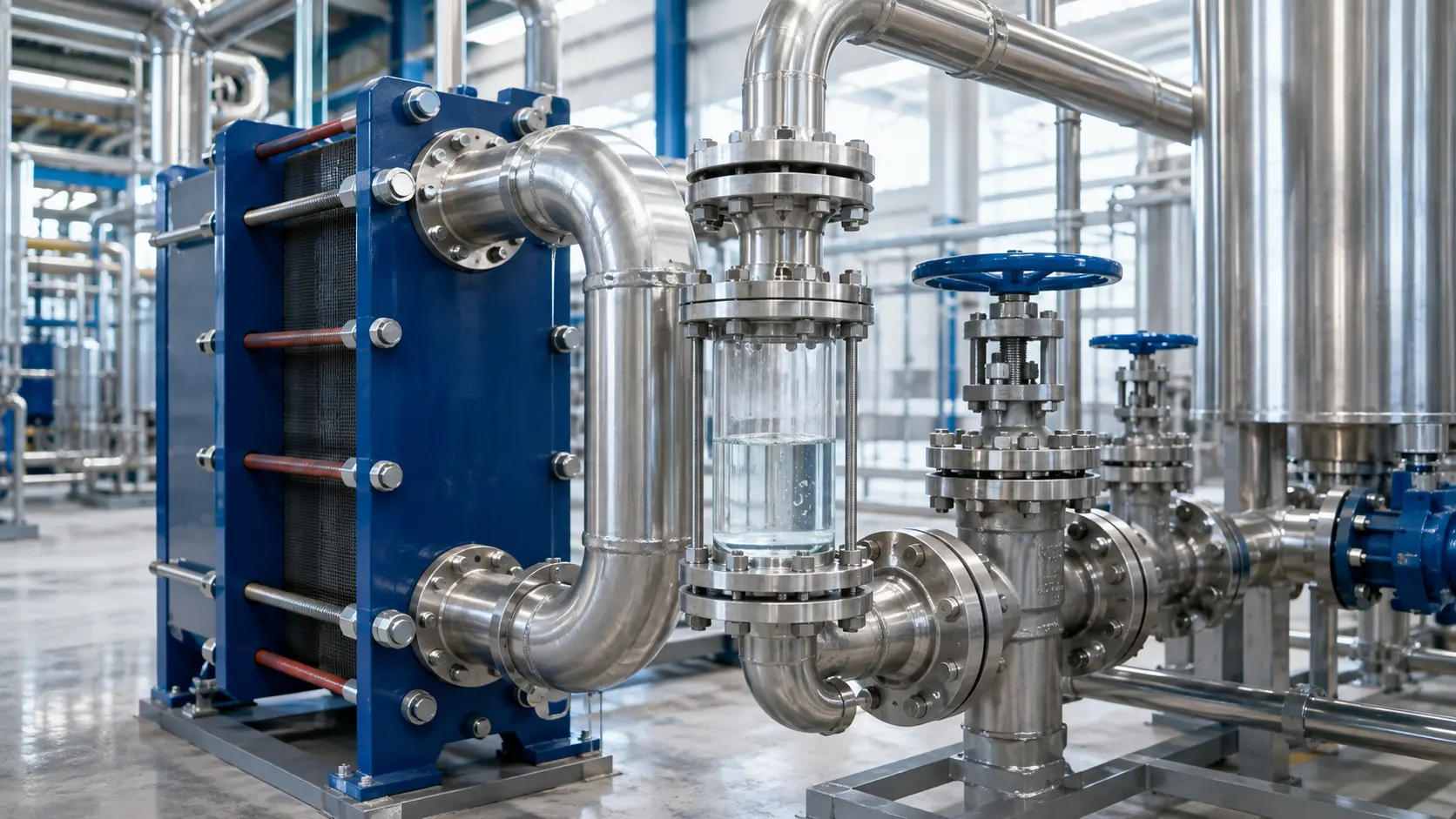
In many installations, it works as a secondary heat-transfer fluid.
The main refrigeration plant removes heat from the potassium formate solution through a heat exchanger. Pumps then circulate the fluid through cold rooms, industrial equipment or process lines. After absorbing heat, the fluid returns to the plant and the cycle repeats.
ASHRAE groups this type of liquid with secondary coolants, heat-transfer fluids, brines and secondary refrigerants. Potassium formate is a less common option than glycol or calcium chloride brine, but it is recognized for secondary thermal systems.
For manufacturers producing low-temperature thermal fluids, Potassium Formate 75% Solution can be used as concentrated feedstock and then adjusted according to the actual system temperature, viscosity and corrosion requirements. Vanchor currently lists industrial refrigeration, cold storage, food-processing refrigeration, HVAC secondary circuits and process cooling among relevant applications.
What Is Potassium Formate Thermal Fluid?
Potassium formate is the potassium salt of formic acid.
Its chemical formula is HCOOK, with CAS No. 590-29-4.
When dissolved in water, potassium formate changes the freezing and crystallization behavior of the solution. That allows properly formulated fluids to remain usable below the normal freezing point of water.
A finished thermal fluid may contain:
- Potassium formate
- Water
- Corrosion inhibitors
- pH-control additives
- Other compatible treatment components
That last point matters.
A concentrated potassium formate solution is normally the base material.
The final thermal fluid is the engineered circulating formulation.
Vanchor's heat-transfer guidance similarly describes 75% potassium formate as concentrated formulation feedstock rather than automatically as a ready-to-use heat-transfer fluid.
How Does It Transfer Heat?
A simplified system looks like this:
Primary refrigeration plant → heat exchanger → potassium formate thermal fluid → cooling load → return loop
The thermal fluid:
- Is cooled at the central plant.
- Moves through pumps and insulated piping.
- Absorbs heat from the process or refrigerated space.
- Returns to the heat exchanger.
- Releases the absorbed heat.
Unlike a primary refrigerant, it normally stays liquid rather than repeatedly evaporating and condensing.
This makes potassium formate useful where cooling needs to be distributed across multiple areas from one centralized plant.
Why Use Potassium Formate as a Thermal Fluid?
A good thermal fluid needs several properties to work together.
Low freezing temperature alone is not enough.
Relatively Low Viscosity
Viscosity directly affects how much energy is required to circulate the fluid.
Research comparing aqueous potassium formate with traditional alcohol and glycol solutions found clearly lower viscosity under the studied conditions. Although potassium formate had lower volumetric heat capacity, its lower viscosity helped keep pumping-power demand competitive.
This can matter in systems with:
- Long pipe runs
- Low operating temperatures
- Multiple cooling zones
- Large circulation volumes
High-viscosity fluid can increase pressure drop and pump energy quickly.
Good Thermal Conductivity
Potassium formate has also shown favorable thermal conductivity in published refrigeration research, which supports heat transfer through heat exchangers.
But thermal conductivity should never be evaluated by itself.
Engineers should consider:
thermal conductivity + specific heat + density + viscosity + flow rate
together.
Sub-Zero Operation
Potassium formate-water solutions can remain liquid at temperatures where ordinary water would freeze.
This makes them relevant to low-temperature systems such as:
- Freezer warehouses
- Refrigeration loops
- Food-processing plants
- Process cooling
- Ice rinks
- Specialized HVAC systems
Important Thermal-Fluid Properties
| Property | Why It Matters |
|---|---|
| Crystallization temperature | Defines the low-temperature operating limit |
| Viscosity | Affects pumping energy and pressure drop |
| Density | Influences hydraulic calculations |
| Specific heat | Determines heat-carrying capacity |
| Thermal conductivity | Influences heat-exchanger performance |
| pH | Important for corrosion control |
| Concentration | Changes most other physical properties |
A thermal fluid is always a compromise.
A very low freezing point may look impressive on paper, but if the resulting fluid becomes too viscous, system efficiency can suffer.
Concentration Is a Design Variable
Potassium formate concentration strongly affects thermal-fluid performance.
Changing concentration alters:
- Crystallization behavior
- Density
- Viscosity
- Specific heat
- Thermal conductivity
- Pumping performance
Vanchor's current heat-transfer guidance specifically recommends selecting concentration around the required minimum system temperature rather than simply using the strongest available solution.
A practical design process is:
| Step | Design Question |
|---|---|
| 1 | What is the minimum fluid temperature? |
| 2 | What freeze-protection margin is required? |
| 3 | What concentration provides that margin? |
| 4 | Is viscosity acceptable at that temperature? |
| 5 | Is heat-transfer performance sufficient? |
| 6 | Can pumps maintain the required flow? |
| 7 | Is the fluid compatible with system materials? |
This sequence is more useful than starting with a commercial concentration and forcing the system around it.
Why 75% Is Not Automatically the Best Working Fluid
This is one of the most misunderstood points.
A 75% potassium formate solution contains more active salt, but that does not mean it has the lowest possible freezing or crystallization temperature.
The potassium formate-water system is non-linear.
Vanchor's current freezing-point guide notes that increasing potassium formate concentration initially lowers the freezing point, but after an optimum concentration range, further increases can raise the crystallization temperature again. It also advises engineers to use actual supplier phase data or the finished-fluid TDS because published values vary with formulation and test method.
So 75% solution is generally better understood as concentrated feedstock.
It can be:
- Pumped into a blending tank
- Diluted with suitable water
- Adjusted to a target concentration
- Combined with corrosion inhibitors
- Qualified for the actual system
Vanchor states that its 75% concentrate can be diluted to achieve the required freezing behavior, viscosity and heat-transfer performance.
For more detail, see the Potassium Formate Heat Transfer Solution Guide.
Potassium Formate vs Glycol Thermal Fluid
Ethylene glycol and propylene glycol are widely used industrial thermal fluids.
Potassium formate offers a different balance.
| Factor | Potassium Formate | Glycol |
|---|---|---|
| Chemistry | Aqueous formate salt | Aqueous organic glycol |
| Sub-zero operation | Yes | Yes |
| Low-temp viscosity | Often relatively favorable | Can increase significantly |
| Heat-transfer performance | Good when correctly designed | Well established |
| Corrosion control | May be required | Usually required |
| Industry familiarity | More specialized | Very high |
| Best choice | System dependent | System dependent |
Published potassium formate research found useful thermodynamic properties, low toxicity, non-flammability and comparatively low viscosity versus traditional glycol and alcohol solutions.
That does not mean potassium formate is always better.
Glycol is widely supported, familiar to engineers and available in many commercial inhibited packages.
The correct comparison should be made at the actual operating temperature.
A fluid that looks similar at 20°C may behave very differently at -25°C.
Potassium Formate vs Calcium Chloride Brine
Calcium chloride brine has a long history in industrial refrigeration.
Its biggest advantage is often cost.
Potassium formate uses formate rather than chloride as its primary active chemistry, which can be attractive when system designers want to reduce chloride exposure.
However, potassium formate should not automatically be described as non-corrosive.
The finished thermal fluid still needs corrosion control.
Corrosion and Material Compatibility
A thermal fluid may circulate for years through equipment made from different materials.
These can include:
- Carbon steel
- Stainless steel
- Copper
- Brass
- Aluminum
- Pumps
- Valves
- Gaskets
- Elastomer seals
Vanchor recommends testing the finished potassium formate thermal formulation against the actual metals, seals, pumps and other materials used in the system.
Depending on the application, the formulation may require:
- Corrosion inhibitors
- pH control
- Routine concentration testing
- Fluid-condition monitoring
The quality of dilution water matters too.
ASHRAE guidance recommends considering water quality because chlorides, sulfates, hardness ions and other contaminants can contribute to corrosion, deposits or heat-transfer problems. Vanchor incorporates the same point in its heat-transfer guide.
Common Applications
Potassium formate thermal fluid can be considered for several industries.
Industrial Refrigeration
It can distribute cooling between a central refrigeration plant and multiple production or storage zones.
Cold Storage
Large freezer warehouses may benefit from efficient liquid circulation through long secondary loops.
Food Processing
A secondary thermal fluid can distribute cooling while keeping the primary refrigeration circuit more centralized.
Process Cooling
Manufacturing equipment, reactors and production processes may require controlled temperatures below the range of normal chilled water.
Ice Rinks
Thermal fluids can circulate through extensive piping networks beneath the ice surface.
HVAC Secondary Circuits
Specialized HVAC installations may require sub-zero freeze protection or remote thermal distribution.
For concentration-specific guidance, see Vanchor's Potassium Formate Freezing Point Guide.
What Should Buyers Check?
When sourcing potassium formate for thermal-fluid formulation, do not compare only concentration and price.
Useful purchasing parameters include:
| Parameter | Why It Matters |
|---|---|
| Potassium formate content | Establishes the formulation basis |
| Density | Useful for concentration QC |
| pH | Important for fluid conditioning |
| Chloride | Relevant to corrosion-sensitive systems |
| Iron | Helps monitor product consistency |
| Insoluble matter | Protects pumps and filters |
| Batch consistency | Supports repeatable production |
| COA | Confirms batch-specific quality |
| TDS | Provides technical information |
| SDS | Supports handling and storage |
Vanchor's current 75% product specification lists the liquid as nominal 75% potassium formate with an approximate density of 1.57–1.58 g/cm³ at 25°C and provides COA, TDS and SDS documentation.
How to Request a Quote
A practical RFQ might look like:
Product: Potassium Formate
Application: Industrial Thermal Fluid
Preferred Supply Form: 75% Aqueous Solution
Quantity: 100 MT
Packaging: IBC / Flexitank / Bulk
Required Documents: COA, TDS and SDS
Minimum Operating Temperature: -25°C
End Use: Industrial Refrigeration / Process Cooling
Key Requirements: Stable concentration and controlled impurities
Providing the expected minimum temperature makes the inquiry far more useful.
It tells the supplier how the material will actually be used.
Final Thoughts
A potassium formate thermal fluid can be an effective option for industrial refrigeration and low-temperature heat-transfer systems.
Its technical advantages can include:
- Sub-zero circulation
- Relatively low viscosity
- Favorable thermal conductivity
- High water solubility
- Non-flammable aqueous chemistry
- Suitability for indirect cooling loops
But fluid selection is not simply a matter of buying the strongest potassium formate solution.
The real engineering work is balancing:
crystallization temperature, viscosity, specific heat, thermal conductivity, pumping power and corrosion protection.
Potassium formate provides the base chemistry.
The final thermal fluid should be designed around the actual system.
FAQ
What is potassium formate thermal fluid?
It is an aqueous potassium formate solution used to transfer heat in industrial refrigeration, cooling and other low-temperature circulation systems.
Is potassium formate thermal fluid a primary refrigerant?
Usually no. It generally acts as a secondary fluid that carries cooling between the refrigeration plant and the load.
Why use potassium formate instead of glycol?
Potassium formate can offer attractive low-temperature viscosity and heat-transfer characteristics. The best choice depends on actual operating temperature, system design and lifecycle cost.
Is 75% potassium formate ready to use as thermal fluid?
Not automatically. It is commonly used as concentrated feedstock and diluted or inhibited according to system requirements.
Does potassium formate thermal fluid need corrosion inhibitors?
The complete working fluid may require corrosion inhibitors and pH control based on the metals, seals and operating conditions in the system.
Where is potassium formate thermal fluid used?
Typical applications include industrial refrigeration, cold storage, food processing, process cooling, ice rinks and specialized HVAC secondary circuits.


Contact Us
In This Article
Related Posts
Индивидуальные упаковочные решения от поставщика безводного ацетата натрия в Китае
2026-09-23
Тенденции применения безводного ацетата натрия для специального химического производства
2026-09-23
Безводный ацетат натрия для дубления кожи: улучшает равномерность окрашивания
2026-09-22
Formic Acid 85% for Animal Feed Preservation: Moisture and Storage Stability Guide
2026-09-21


