



Potassium Formate Aqueous Solution: Properties, Concentrations and Industrial Uses
By LIN
2026-09-01Related Posts
Индивидуальные упаковочные решения от поставщика безводного ацетата натрия в Китае
2026-09-23
Тенденции применения безводного ацетата натрия для специального химического производства
2026-09-23

Безводный ацетат натрия для дубления кожи: улучшает равномерность окрашивания
2026-09-22
Formic Acid 85% for Animal Feed Preservation: Moisture and Storage Stability Guide
2026-09-21
A potassium formate aqueous solution is simply potassium formate dissolved in water, but in industrial applications it is much more than just “salt water.”
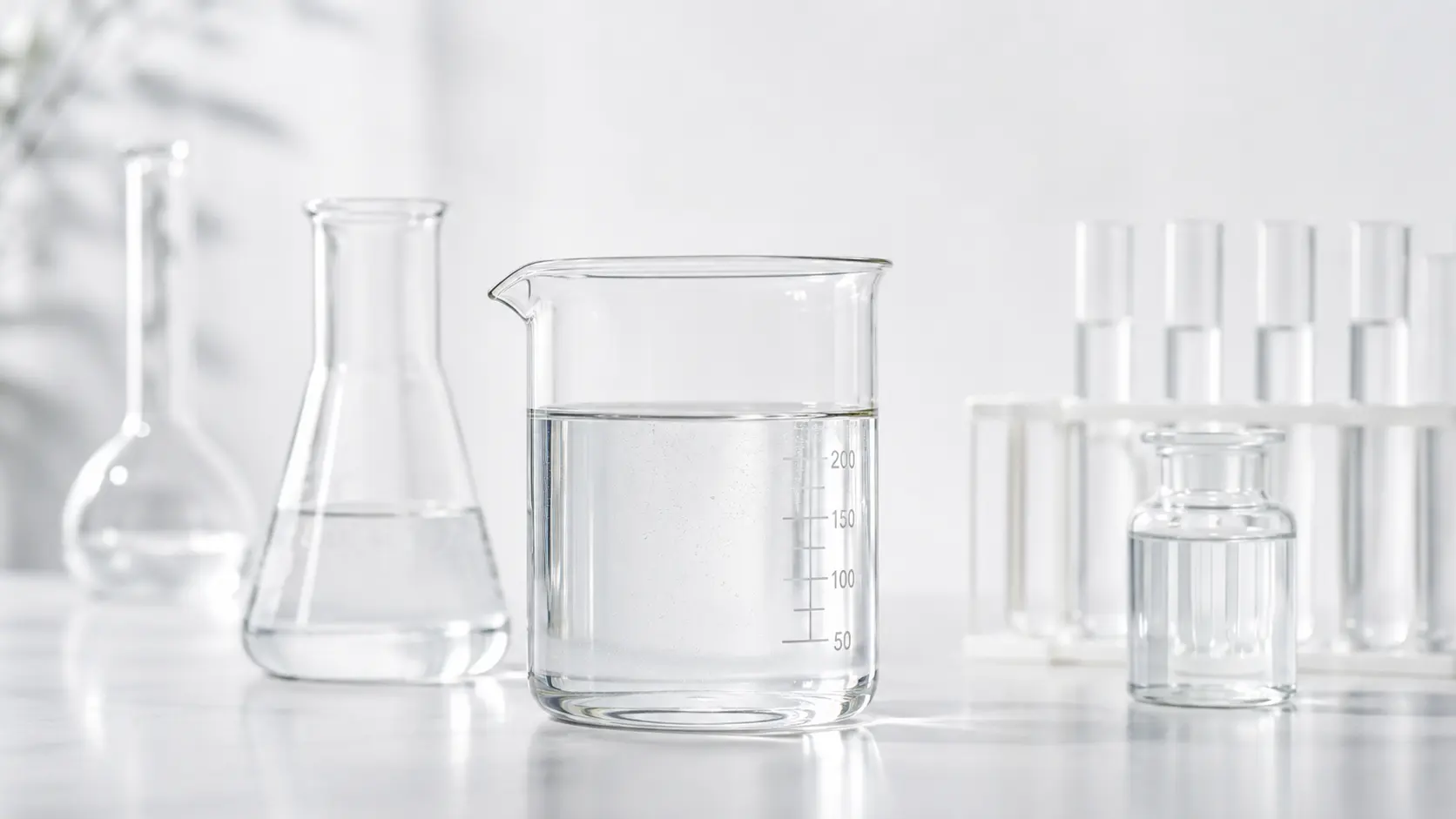
Depending on the concentration, potassium formate solutions can be used in drilling fluids, completion brines, heat-transfer systems, deicing products and other technical formulations.
One of the reasons potassium formate is useful is its very high solubility in water. This allows manufacturers and end users to prepare concentrated clear solutions without introducing large amounts of suspended solids.
For many industrial users, that makes handling easier and gives more flexibility when adjusting density or concentration.
Still, not every potassium formate aqueous solution is the same.
A 30% solution, a 50% solution and a 75% solution can behave quite differently in storage, transportation and final use. So buyers should pay attention to concentration, density, impurities and intended application before selecting a grade.
What Is a Potassium Formate Aqueous Solution?
Potassium formate is the potassium salt of formic acid.
Its chemical formula is:
HCOOK
Its CAS number is:
590-29-4
When potassium formate is dissolved in water, it forms a clear aqueous solution.
Commercial solutions may be supplied at relatively high concentrations, while lower concentrations are often prepared by end users according to their own process requirements.
A concentrated commercial solution may then be diluted to reach a specific density, freezing point or chemical composition.
This flexibility is one of the main advantages of potassium formate in industrial fluid systems.
Common Concentration Ranges
There is no single concentration used for every application.
The right concentration depends on the final function of the fluid.
| Concentration Range | Typical Situation | Main Consideration |
|---|---|---|
| 20–40% | Diluted process or cooling fluids | Lower viscosity and easier pumping |
| 40–60% | Intermediate industrial formulations | Balance between active content and fluidity |
| 60–70% | Concentrated working solutions | Higher density and reduced water content |
| 70–75% | Commercial concentrated supply | Efficient liquid handling |
| Above 75% | Specialized high-strength systems | Crystallization and handling need more attention |
These ranges are only general guidance.
Actual formulation should be based on technical data, operating temperature and the specific performance required.
A fluid engineer normally cares more about the final density and operating behavior than the number printed on the drum.
Why Use Potassium Formate in Water?
Potassium formate has several useful characteristics in aqueous systems.
First, it is highly soluble.
Second, concentrated solutions can provide useful density without relying on suspended weighting solids.
Third, potassium formate solutions can remain clear when properly prepared.
These features are particularly useful in oilfield and heat-transfer applications.
Compared with some traditional salt solutions, formate-based fluids can also offer a different corrosion and environmental profile.
That doesn't mean potassium formate is always the best option.
It means it is one of several technically useful choices depending on the project.
Typical Properties of Potassium Formate Solution
The exact properties change with concentration.
As concentration increases, density generally rises and the amount of water decreases.
General Property Relationship
| Property | Lower Concentration | Higher Concentration |
|---|---|---|
| Potassium formate content | Lower | Higher |
| Density | Lower | Higher |
| Water content | Higher | Lower |
| Active material per ton | Lower | Higher |
| Freight efficiency | Lower | Higher |
| Dilution requirement | Less concentrated starting point | More flexibility for final blending |
| Low-temperature behavior | Depends on formulation | Depends strongly on concentration |
For this reason, industrial buyers should avoid asking only:
“What is the density of potassium formate solution?”
The better question is:
“What is the density at my required concentration and temperature?”
Temperature matters.
A density value measured at one temperature should not automatically be used at another without checking the relevant technical data.
Potassium Formate Solution in Drilling Fluids
One of the best-known applications of potassium formate aqueous solution is in oilfield drilling systems.
Formate brines can be used as part of water-based drilling-fluid formulations where high density, low solids and shale inhibition are important.
Possible applications include:
- Water-based drilling fluids
- High-angle wells
- Horizontal wells
- Reactive shale formations
- High-temperature drilling
- Offshore wells
- Low-solids fluid systems
The potassium ion can be useful in shale-control systems, while the formate brine contributes to fluid density and overall system performance.
Still, potassium formate solution is not a finished drilling mud.
A complete system may also contain:
- Viscosifiers
- Fluid-loss additives
- Lubricants
- Corrosion inhibitors
- Shale-control polymers
- Other specialty chemicals
The final formulation should always be designed around actual well conditions.
Completion and Workover Brines
Potassium formate aqueous solutions are also widely considered for completion and workover fluids.
In these applications, clean brines are often preferred because suspended solids can contribute to formation damage.
A properly formulated potassium formate brine can provide useful density while remaining clear.
Typical uses include:
- Completion fluids
- Workover fluids
- Well-control fluids
- Clear brine systems
- Formation-sensitive wells
For these applications, impurity control becomes very important.
Buyers may need to check:
- Chloride
- Iron
- Carbonate
- Insoluble matter
- pH
- Concentration
- Density
A specification that is acceptable for a general industrial application may not be suitable for a sensitive completion project.
That is why application details should be shared with the supplier before placing a bulk order.
Heat-Transfer and Refrigeration Fluids
Potassium formate aqueous solution can also be used in secondary refrigeration and heat-transfer systems.
Potential applications include:
- Cold-storage facilities
- Food-processing plants
- Industrial refrigeration
- HVAC systems
- Process cooling
- Low-temperature circulation loops
In these systems, the potassium formate concentration is normally adjusted according to the required operating temperature.
A more concentrated solution may provide stronger freezing-point depression, while a lower concentration may offer easier pumping or lower material cost.
The finished heat-transfer fluid may also contain corrosion inhibitors and other additives.
This is important because a raw potassium formate and water mixture is not always enough for long-term equipment protection.
The final system should be evaluated for compatibility with:
- Carbon steel
- Stainless steel
- Copper
- Aluminum
- Seals
- Pumps
- Heat exchangers
Use in Deicing Formulations
Another application is deicing and anti-icing.
Potassium formate aqueous solutions can help lower the freezing point of water and may be used in formulated winter-maintenance products.
Possible areas include:
- Roads
- Bridges
- Industrial sites
- Parking areas
- Logistics centers
- Specialized airport products
For ordinary industrial deicing, formulation requirements may be relatively simple.
Airport applications are different.
A raw potassium formate aqueous solution should not automatically be treated as a finished aviation-approved deicer.
Aviation products may require specific corrosion, performance and environmental testing.
So if the end use involves airports, tell the supplier clearly.
How Is Potassium Formate Aqueous Solution Prepared?
There are two common approaches.
The first is to purchase a ready-made concentrated liquid.
The second is to dissolve solid potassium formate in water locally.
For users preparing the solution themselves, several points matter:
- Water quality
- Mixing temperature
- Dissolution rate
- Target concentration
- Final density
- Contamination control
Potassium formate is highly water soluble, but large-scale dissolution should still be performed with proper industrial mixing equipment.
It is not a good idea to simply add large amounts of solid material into a tank without controlling mixing.
Uneven concentration can make downstream quality control difficult.
Water Quality Matters More Than People Think
The water used for dilution or solution preparation may affect the finished fluid.
Possible unwanted components include:
- Calcium
- Magnesium
- Chloride
- Suspended solids
- Iron
- Organic contamination
For simple industrial applications, minor impurities may not create much trouble.
For sensitive oilfield or heat-transfer systems, they can matter.
A clean process water source gives better control over the final formulation.
For critical projects, buyers should also ask whether the supplier's concentrated solution is produced using controlled water quality.
Aqueous Solution vs Solid Potassium Formate
Some buyers prefer purchasing solid potassium formate and making the solution themselves.
Others prefer buying ready-made liquid.
Both approaches can work.
| Factor | Aqueous Solution | Solid Potassium Formate |
|---|---|---|
| Handling | Pumpable liquid | Dry material handling |
| Dissolution | Already dissolved | Required before liquid use |
| Freight | Includes water | More active chemical per ton |
| Storage | Tanks / IBC | Dry warehouse |
| Process convenience | High | Requires preparation |
| Dust | Minimal | Possible during handling |
| Concentration flexibility | Easy to dilute | Easy to formulate from scratch |
| Best suited for | Liquid-processing plants | Distributors and local blenders |
For nearby customers, liquid may be very convenient.
For long-distance export, solid potassium formate can sometimes reduce freight per ton of active material.
There is no single right answer.
The economics depend on the full supply chain.
Storage Considerations
Potassium formate aqueous solution should be stored in sealed and compatible containers.
General considerations include:
- Keep the product clean
- Avoid contamination
- Use suitable tank materials
- Follow SDS recommendations
- Protect against incompatible chemicals
- Monitor low-temperature storage conditions
Highly concentrated salt solutions can show crystallization behavior under certain temperature conditions.
If the product will be stored outdoors in winter, discuss expected storage temperature with the supplier.
This is especially important for concentrated grades.
What Should Buyers Check Before Ordering?
A commercial buyer should confirm more than just concentration.
Recommended Specification Checklist
| Parameter | Why It Matters |
|---|---|
| Potassium formate content | Confirms active concentration |
| Density | Helps verify concentration and formulation |
| pH | Important for chemical compatibility |
| Chloride | Relevant to corrosion-sensitive systems |
| Carbonate | Can affect technical applications |
| Iron | Important for clean brine systems |
| Insoluble matter | Important for filtration and fluid cleanliness |
| Appearance | Simple incoming quality check |
| Packaging | Affects storage and logistics |
For repeat purchases, buyers should also compare COAs from different batches.
Consistency is often more important than one perfect laboratory result.
Buying Potassium Formate Aqueous Solution
When requesting a quotation, provide enough detail for the supplier to understand the project.
A useful inquiry may include:
Product: Potassium Formate Aqueous Solution
Required Concentration: 70% or 75%
Application: Completion fluid
Quantity: 25 MT
Packaging: IBC
Destination: Houston
Documents: COA, SDS and TDS
Trade Term: CIF Houston
If your technical department has specific limits for chloride, iron or insoluble matter, include them too.
This saves a lot of back-and-forth communication.
Vanchor supplies potassium formate solutions for industrial applications including oilfield fluids, heat-transfer systems and other technical uses. Buyers can request product specifications, packaging information, technical documents and bulk quotations according to required concentration.
Final Thoughts
A potassium formate aqueous solution is a flexible industrial fluid that can be supplied at different concentrations and adjusted according to the final application.
Its major advantages include high water solubility, clear-fluid capability, convenient liquid handling and the ability to prepare different density ranges.
That makes it useful in drilling and completion fluids, refrigeration systems, heat-transfer formulations and deicing products.
But concentration alone does not define product quality.
Density, impurity levels, water quality, storage conditions and final application all need to be considered.
For industrial buyers, the best approach is simple:
Confirm the required concentration, request the COA, SDS and TDS, and make sure the supplier understands how the fluid will actually be used.
A good potassium formate solution is not just the right percentage.
It is the right solution for the complete system.
FAQ
What is potassium formate aqueous solution?
It is potassium formate dissolved in water to form a clear liquid solution. Commercial products are available in different concentrations depending on application requirements.
What concentrations are available?
Industrial potassium formate solutions can be supplied at various concentrations, with concentrated commercial grades commonly around 70–75%.
Is potassium formate solution used in drilling fluids?
Yes. It is commonly used as a component in water-based drilling, completion and workover fluid systems.
Can potassium formate aqueous solution be diluted?
Yes. Concentrated material can be diluted with suitable process water to achieve the required concentration or density.
Can I prepare potassium formate solution from solid material?
Yes. Solid potassium formate can be dissolved in water using controlled industrial mixing, although ready-made liquid grades can save preparation time.
What documents should I request before purchasing?
Industrial buyers should request a Technical Data Sheet, Safety Data Sheet and Certificate of Analysis before approving a bulk order.


Contact Us
In This Article
Related Posts
Индивидуальные упаковочные решения от поставщика безводного ацетата натрия в Китае
2026-09-23
Тенденции применения безводного ацетата натрия для специального химического производства
2026-09-23
Безводный ацетат натрия для дубления кожи: улучшает равномерность окрашивания
2026-09-22
Formic Acid 85% for Animal Feed Preservation: Moisture and Storage Stability Guide
2026-09-21


