



Potassium Formate 70% Solution: Properties, Applications and Selection Guide
By LIN
2026-09-01Related Posts
Индивидуальные упаковочные решения от поставщика безводного ацетата натрия в Китае
2026-09-23
Тенденции применения безводного ацетата натрия для специального химического производства
2026-09-23

Безводный ацетат натрия для дубления кожи: улучшает равномерность окрашивания
2026-09-22
Formic Acid 85% for Animal Feed Preservation: Moisture and Storage Stability Guide
2026-09-21
Potassium formate 70% solution is a concentrated aqueous form of potassium formate used in oilfield fluids, industrial heat-transfer systems, deicing formulations and various chemical-processing applications.
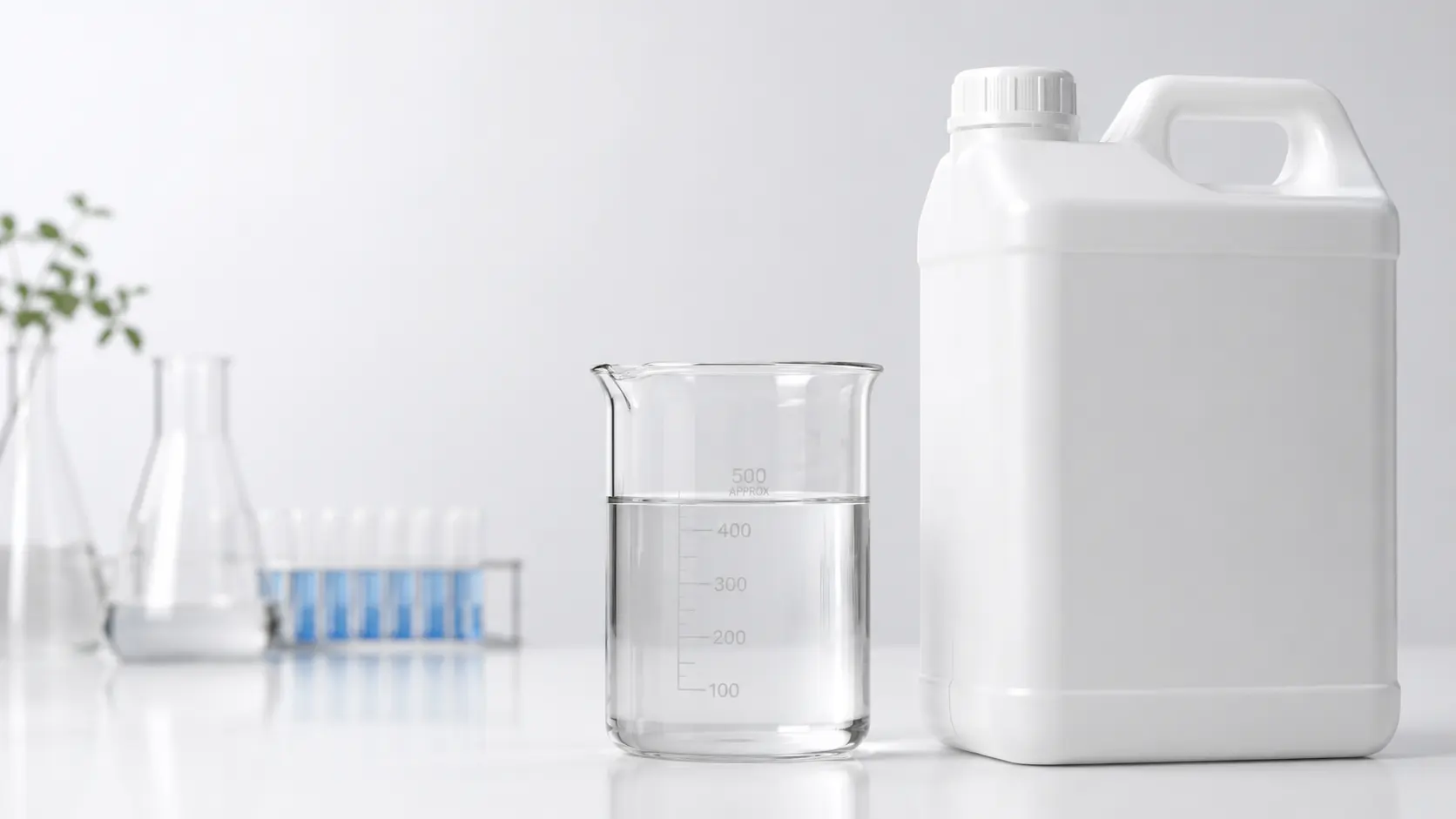
At first glance, the difference between a 70% solution and a 75% solution looks very small. Only five percentage points, right?
In actual industrial use, though, that difference can matter.
A 70% solution contains more water, which means slightly less active potassium formate is transported in each ton. On the other hand, it can give formulators a little more flexibility when preparing lower-density brines or finished liquid products. For customers who do not need the highest possible concentration, 70% can be a very practical working grade.
The important thing is not deciding whether 70% is “better” than 75%.
It is deciding which concentration fits the process better.
What Is Potassium Formate 70% Solution?
Potassium formate is the potassium salt of formic acid.
Its chemical formula is HCOOK, and its CAS number is 590-29-4.
A 70% potassium formate solution generally means that approximately 70% of the solution by weight is potassium formate, while the remaining portion is mainly water.
The product is normally supplied as a clear aqueous liquid.
Because potassium formate is already dissolved, users do not need to prepare a solution from dry crystals before introducing it into many liquid processes.
That makes the product convenient for industrial facilities using pumps, IBCs, tanks and automatic dosing systems.
Basic Product Information
| Item | Typical Description |
|---|---|
| Product name | Potassium Formate 70% Solution |
| Chemical formula | HCOOK |
| CAS No. | 590-29-4 |
| Concentration | Approx. 70 wt.% |
| Physical form | Concentrated aqueous liquid |
| Appearance | Clear, colorless to slightly colored liquid |
| Solubility | Fully soluble in water |
| Main markets | Oilfield, cooling, deicing, chemical processing |
Exact density, pH and impurity limits can differ slightly from one producer or specification to another.
For this reason, commercial buyers should always use the supplier's TDS and agreed specification rather than relying only on a generic online number.
Why Do Some Buyers Choose 70% Instead of 75%?
One obvious reason is formulation flexibility.
If the final product does not need a very high potassium formate concentration, starting with a 70% liquid can reduce the amount of water that needs to be added during downstream blending.
At the same time, it remains highly concentrated compared with many finished working fluids.
Another reason is handling.
Very concentrated salt solutions can become more sensitive to temperature and concentration changes. A slightly lower concentration may sometimes give users a bit more operating room, depending on storage temperature and the final formulation.
This should not be treated as a universal rule, though.
Storage performance depends on the complete product specification and actual environmental conditions.
For most buyers, 70% is simply another useful concentration option between a highly concentrated liquid and a more diluted working solution.
70% vs 75% Potassium Formate Solution
The difference is mainly active content and water content.
| Factor | 70% Solution | 75% Solution |
|---|---|---|
| Potassium formate content | Approx. 70% | Approx. 75% |
| Water content | Higher | Lower |
| Active material per ton | Lower | Higher |
| Dilution flexibility | Slightly higher | High |
| Freight efficiency | Slightly lower | Slightly higher |
| Liquid handling | Convenient | Convenient |
| Typical use | Formulation, brines, deicing, heat transfer | Higher-strength brines and formulations |
If you purchase 100 metric tons of 70% solution, you are buying roughly 70 metric tons of potassium formate content.
With 100 metric tons of 75% solution, the active content is roughly 75 metric tons.
That difference becomes quite noticeable when purchasing multiple containers.
This is why price comparison should not be based only on USD per metric ton of solution.
For a more accurate comparison, calculate the cost per ton of active potassium formate.
Use in Oilfield Drilling Fluids
Potassium formate solutions are widely used as components in certain water-based drilling-fluid systems.
They are particularly interesting where operators want a clear or low-solids fluid with useful density and potassium-ion activity.
Potassium ions can be useful in fluid systems designed for reactive shale formations, while the formate component contributes to the overall brine system.
A 70% solution may be used as a starting material for preparing drilling fluids at the concentration required by the actual well program.
Applications can include:
- Water-based drilling fluids
- Shale-control systems
- Low-solids drilling fluids
- High-temperature wells
- Directional drilling
- Offshore operations
However, potassium formate solution should not be viewed as a complete drilling mud.
A finished fluid normally includes other additives for rheology, filtration control, lubrication and corrosion management.
The exact recipe depends on downhole conditions.
Completion and Workover Applications
Potassium formate can also be used in clear completion and workover brines.
These applications often place strong emphasis on cleanliness because suspended solids may contribute to formation damage.
A formate-based brine can be adjusted to meet specific density and fluid-performance requirements.
Possible applications include:
- Completion fluids
- Workover fluids
- Well-control brines
- Formation-sensitive operations
- Clear-fluid systems
For this kind of application, concentration alone is not enough to approve a product.
Buyers may also need to control chloride, iron, insoluble matter and other impurities.
It is better to send the supplier your actual specification instead of simply asking for “oilfield grade.”
Different companies can mean different things by that term.
Heat-Transfer and Refrigeration Applications
Potassium formate solutions are also used as raw materials in certain low-temperature heat-transfer fluids.
Possible applications include:
- Cold-storage warehouses
- Food-processing facilities
- Industrial refrigeration
- HVAC secondary circuits
- Process cooling
- Low-temperature circulation systems
A 70% starting solution can be diluted according to the final operating temperature and formulation requirements.
In a commercial heat-transfer fluid, potassium formate is normally not the only component.
Corrosion inhibitors may also be required to protect piping, heat exchangers, pumps and other metal components.
This is pretty important.
A good freeze-point performance means little if the fluid creates corrosion problems elsewhere in the system.
The final formulation should therefore be tested as a complete heat-transfer fluid, not just evaluated based on potassium formate concentration.
Deicing and Anti-Icing Formulations
Potassium formate has also been studied and used in deicing and anti-icing systems because concentrated formate solutions can significantly depress the freezing point of water.
A 70% potassium formate solution may serve as a concentrated raw material for formulated deicing products.
Potential applications include:
- Roads
- Bridges
- Industrial yards
- Logistics terminals
- Parking areas
- Specialized winter-maintenance formulations
For airport applications, buyers need to be more careful.
A raw potassium formate solution is not automatically the same thing as an approved finished aviation deicer.
Finished runway products may need specific corrosion, performance and environmental testing.
If the final application is an airport or aviation facility, tell the supplier clearly from the beginning.
Does 70% Solution Need Further Dilution?
Often, yes.
The 70% product is generally a concentrated feedstock rather than the concentration used in every final application.
Depending on the required fluid density, freezing point or chemical formulation, users may dilute it with suitable process water.
The basic concentration calculation is straightforward, but industrial production should still use controlled mixing.
Water quality also deserves attention.
Poor-quality dilution water may introduce:
- Calcium
- Magnesium
- Chloride
- Suspended solids
- Other dissolved contaminants
In a simple application, this may not create much trouble.
In a sensitive completion-fluid or industrial cooling formulation, it can become a bigger issue.
What Should Be Checked Before Buying?
A purchasing team should look beyond the “70%” printed on the quotation.
Important Purchase Parameters
| Parameter | Why Buyers Check It |
|---|---|
| Potassium formate concentration | Confirms active content |
| Density | Useful for receiving and formulation control |
| pH | Relevant to process chemistry |
| Chloride | Important in corrosion-sensitive systems |
| Carbonate | May affect some formulations |
| Iron | Important for clean brine applications |
| Insoluble matter | Relevant to filtration and completion fluids |
| Packaging | Affects storage and handling |
| Batch COA | Confirms delivered quality |
For a first order, requesting a representative sample is also a sensible idea.
The customer's laboratory can test the material against its internal specification before a full-container purchase is released.
Packaging and Transportation
Potassium formate 70% solution is a liquid product, so suitable industrial liquid packaging is required.
Depending on order volume and supplier capability, it may be handled in:
- IBC containers
- Chemical drums
- Bulk tanks or other approved liquid-transport systems
IBC packaging is convenient for many industrial buyers because it can be moved by forklift and connected relatively easily to pumping equipment.
For large orders, however, buyers should ask about net loading per container.
That figure has a direct effect on freight cost.
Compared with 75% solution, 70% solution carries slightly more water for the same quantity of active potassium formate.
Over a single IBC this may not feel important.
Over hundreds of tons per year, it starts to matter.
How to Compare 70% Solution Pricing
Imagine Supplier A offers 70% potassium formate at a lower price per ton than Supplier B's 75% material.
The cheaper number does not necessarily mean a cheaper chemical.
Calculate the active-content cost.
A simple comparison should include:
Product cost ÷ active potassium formate content
Then add:
- Packaging
- Export handling
- Ocean freight
- Import expenses
- Inland delivery
This gives a much better picture of the real purchasing cost.
For long-term supply, consistency should also be included in the decision.
A slightly cheaper batch is not much of a saving if every new shipment requires formulation adjustments.
How to Request a Quotation
A good RFQ can be very simple.
For example:
Product: Potassium Formate 70% Solution
Quantity: 25 MT
Application: Industrial heat-transfer fluid
Packaging: IBC
Destination: Hamburg
Trade Term: CIF
Documents Required: COA, SDS and TDS
If your company has specific impurity limits, attach them to the inquiry.
That makes the quotation much more meaningful and saves time for both sides.
Vanchor supplies potassium formate solutions for industrial applications including oilfield fluids, heat-transfer systems and other technical formulations. Buyers can request specifications, technical documentation, packaging information and bulk quotations according to their actual project requirements.
Storage and Handling
Store potassium formate solution in sealed, compatible tanks or containers and protect the material from contamination.
Users should follow the supplier's latest SDS for specific handling and storage requirements.
For colder regions, it is also worth discussing storage temperature before ordering.
Concentrated salt solutions can behave differently at low temperatures depending on concentration and impurities.
If an outdoor tank will see very cold winter conditions, tell the supplier.
It is better to discuss this before shipping than after the material is already sitting in the storage yard.
Final Thoughts
Potassium formate 70% solution is a useful concentrated liquid grade for industrial users who need convenient pumping, blending and dilution.
It can be used as a starting material in drilling and completion fluids, heat-transfer systems, deicing formulations and other chemical processes.
Compared with 75% solution, the main difference is straightforward: 70% contains slightly less active potassium formate and slightly more water.
That can mean more formulation flexibility, but also somewhat lower freight efficiency per ton of active chemical.
Neither concentration is automatically better.
The right choice depends on your final formulation, equipment, logistics and required product specification.
Before purchasing, review the COA, TDS and SDS, confirm important impurity limits, and compare suppliers using active-content cost instead of just the quoted price per ton.
That small calculation can make the purchasing decision much clearer.
FAQ
What is potassium formate 70% solution?
It is an aqueous solution containing approximately 70% potassium formate by weight, with the remainder mainly being water.
Is 70% potassium formate used in drilling fluids?
Yes. It can be used as a concentrated raw material in properly designed drilling, completion and workover fluid systems.
What is the difference between 70% and 75% potassium formate solution?
The main difference is concentration. A 75% solution contains more active potassium formate per ton, while a 70% solution contains slightly more water.
Can potassium formate 70% solution be diluted?
Yes. It can be diluted with suitable process water to prepare lower-concentration fluids according to application requirements.
Is potassium formate 70% suitable for deicing?
It can be used as a raw material in formulated deicing and anti-icing products. Specific airport applications may require additional formulation, testing and approvals.
What documents should I request from a supplier?
For industrial purchasing, request a Technical Data Sheet, Safety Data Sheet and Certificate of Analysis, together with packaging and shipping information.


Contact Us
In This Article
Related Posts
Индивидуальные упаковочные решения от поставщика безводного ацетата натрия в Китае
2026-09-23
Тенденции применения безводного ацетата натрия для специального химического производства
2026-09-23
Безводный ацетат натрия для дубления кожи: улучшает равномерность окрашивания
2026-09-22
Formic Acid 85% for Animal Feed Preservation: Moisture and Storage Stability Guide
2026-09-21


