



Potassium Formate Industrial Grade: Properties, Uses and Buying Guide
By LIN
2026-09-02Related Posts
Индивидуальные упаковочные решения от поставщика безводного ацетата натрия в Китае
2026-09-23
Тенденции применения безводного ацетата натрия для специального химического производства
2026-09-23

Безводный ацетат натрия для дубления кожи: улучшает равномерность окрашивания
2026-09-22
Formic Acid 85% for Animal Feed Preservation: Moisture and Storage Stability Guide
2026-09-21
Potassium formate industrial grade is widely used in oilfield fluids, deicing products, heat-transfer systems, refrigeration fluids and industrial chemical formulations.
For most industrial buyers, the main question is not whether potassium formate can reach laboratory-level purity.
It is whether the product has the right concentration, controlled impurities, stable batch quality and suitable physical form for the actual production process.
That difference matters.
A chemical distributor may want a high-content solid product because freight efficiency is important. An oilfield blending plant may prefer a concentrated liquid because it can be pumped directly. A heat-transfer fluid manufacturer may care more about chloride and batch consistency than achieving the highest possible assay.
So when purchasing industrial grade potassium formate, the best specification is usually not the most expensive one.
It is the one that fits the application.
What Is Industrial Grade Potassium Formate?
Potassium formate is the potassium salt of formic acid.
Its chemical formula is HCOOK, and its CAS number is 590-29-4.
Industrial potassium formate may be supplied in two main forms:
- Concentrated aqueous solution
- High-content solid or crystalline powder
Common commercial grades include approximately 70–75% liquid solutions and solid material around 96% potassium formate.
These grades are designed for large-scale industrial processing rather than laboratory analytical use.
Typical Industrial Grade Information
| Item | Typical Description |
|---|---|
| Chemical name | Potassium Formate |
| Formula | HCOOK |
| CAS No. | 590-29-4 |
| Available form | Liquid solution / solid |
| Typical liquid concentration | Around 70–75% |
| Typical solid content | Around 96% or higher |
| Appearance | Clear liquid or white crystalline solid |
| Solubility | Highly soluble in water |
| Main markets | Oilfield, deicing, heat transfer, refrigeration, chemical processing |
Exact specifications vary between suppliers, so commercial buyers should always review the agreed TDS and COA.
What Does “Industrial Grade” Actually Mean?
This term sometimes creates confusion.
Unlike pharmaceutical or reagent grades, there is no single universal potassium formate specification that every manufacturer must call “industrial grade.”
Different suppliers may use the term for slightly different products.
For example, one industrial buyer may receive:
75% potassium formate solution
while another purchases:
96% solid potassium formate
Both may be classified as industrial grade because both are intended for large-scale technical use.
What matters is the specification behind the grade name.
A serious buyer should check:
- Potassium formate content
- Chloride
- Carbonate
- Iron
- Insoluble matter
- Moisture
- Density for liquid grades
- pH
- Packaging
These numbers tell you much more than the word “industrial.”
Industrial Grade vs Technical Grade
Industrial grade and technical grade are often close in meaning.
Some manufacturers even use the terms almost interchangeably.
Other suppliers use “technical grade” to describe products with somewhat tighter impurity control.
General Comparison
| Factor | Industrial Grade | Technical Grade |
|---|---|---|
| Main market | General industrial processing | More controlled technical applications |
| Purity | Application dependent | Often tighter |
| Impurity limits | Standard industrial limits | May be more strictly specified |
| Batch consistency | Important | Usually very important |
| Typical users | Manufacturers, distributors | Oilfield and specialty formulators |
| Selection priority | Cost + performance | Specification + performance |
The key point is simple.
Do not buy potassium formate based only on the grade name.
Compare the specification sheet.
A good industrial grade may be perfectly suitable for a technical process if the impurity limits meet the customer's requirements.
Why Industrial Buyers Choose Potassium Formate
Potassium formate has several useful characteristics.
It is highly soluble in water, allowing concentrated aqueous solutions to be prepared.
It can also produce relatively high-density clear brines without depending on large quantities of suspended weighting solids.
This makes it useful in applications where fluid cleanliness and concentration control matter.
Typical industrial uses include:
- Drilling fluids
- Completion fluids
- Workover fluids
- Clear brines
- Deicing formulations
- Heat-transfer fluids
- Secondary refrigeration
- Chemical blending
The same industrial grade may behave differently in each application, so end use should always be discussed with the supplier.
Use in Oilfield Drilling Fluids
Oilfield applications are one of the most important uses of potassium formate.
Potassium formate can be used as part of water-based drilling systems requiring:
- Useful brine density
- High water solubility
- Low suspended solids
- Shale-control performance
- Thermal stability
- Clear-fluid capability
The potassium ion can be useful in some shale-inhibition systems, while the formate brine contributes density and fluid characteristics.
However, potassium formate itself is not a complete drilling fluid.
A finished system may also contain:
- Polymers
- Filtration-control additives
- Lubricants
- Corrosion inhibitors
- Rheology modifiers
- Other specialty additives
The actual formulation depends on well conditions.
Completion and Workover Brines
Industrial grade potassium formate is also used to prepare completion and workover brines.
These applications often require low-solids or solids-free fluids.
This is important because suspended solids can contribute to formation plugging and additional cleanup.
Potassium formate can provide density through dissolved salt.
That makes it attractive for clear-brine systems.
For completion applications, industrial buyers may pay particular attention to:
- Density
- Chloride
- Iron
- Insoluble matter
- pH
- Crystallization behavior
- Batch consistency
A product may have excellent assay but still be unsuitable if the impurity profile does not fit the project.
Chloride Is Worth Checking
Potassium formate is not a chloride salt.
But that does not automatically mean an industrial product contains absolutely zero chloride.
Trace chloride can come from raw materials or processing.
This is why technical purchasing specifications should use an actual chloride limit rather than vague marketing phrases such as:
chloride-free
A measurable number is much more useful.
For general industrial applications, a relatively small chloride difference may not matter.
For corrosion-sensitive oilfield or heat-transfer systems, it may matter considerably.
Insoluble Matter Can Be Important
Insoluble matter often appears as a tiny line on the COA.
It is easy to ignore.
But in clear-fluid applications, even a small amount of suspended contamination can create problems.
Possible effects include:
- Increased filtration requirement
- Reduced fluid clarity
- Deposits
- Plugging
- Difficulty meeting completion-fluid cleanliness targets
For a deicing formulator, this may not be the biggest concern.
For a clear completion brine, it can be much more important.
Again, specification should follow application.
Industrial Grade Potassium Formate for Deicing
Potassium formate is also used as a raw material in deicing and anti-icing products.
Potential applications include:
- Roads
- Bridges
- Industrial yards
- Logistics terminals
- Parking areas
- Specialized winter-maintenance products
The high water solubility of potassium formate makes it easy to prepare liquid deicing formulations.
Solid material can be dissolved locally, while liquid material can be blended directly.
However, industrial potassium formate should not automatically be sold as a ready-to-use certified aviation deicer.
Airport applications may require:
- Specific formulation
- Corrosion testing
- Performance testing
- Applicable certifications or approvals
The raw chemical and the finished deicer are not the same product.
Use in Heat-Transfer and Refrigeration Fluids
Another important industrial market is secondary refrigeration.
Potassium formate-based fluids can be formulated for:
- Cold storage
- Food processing
- Industrial refrigeration
- HVAC secondary loops
- Process cooling
- Low-temperature circulation
Industrial grade potassium formate can be supplied as a concentrate or solid raw material.
The customer then adjusts the final concentration according to required freeze protection and operating temperature.
Finished heat-transfer fluids may also contain corrosion inhibitors.
This is particularly important when the system includes multiple metals.
A raw potassium formate solution may provide good low-temperature properties, but the whole fluid system still needs corrosion protection and compatibility testing.
Solid or Liquid Industrial Grade?
This is one of the most practical purchasing decisions.
| Factor | 96% Solid | 75% Liquid |
|---|---|---|
| Active content | Higher | Lower |
| Water transported | Less | More |
| Freight efficiency | Higher | Lower |
| Dissolution | Required | Usually not required |
| Pumping | After dissolution | Direct |
| Storage | Dry warehouse | Tank / IBC |
| Main handling issue | Moisture and caking | Temperature and liquid storage |
| Best suited for | Local blending | Direct liquid use |
A manufacturer with good dissolution equipment may prefer solid potassium formate because more active material can be transported in each shipment.
A plant that wants quick pumping and blending may prefer liquid.
There is no need to force every customer into the same grade.
What Should Buyers Put in the Specification?
Industrial purchasing becomes much easier when the RFQ contains actual requirements.
Recommended Industrial RFQ Parameters
| Parameter | Why It Matters |
|---|---|
| Potassium formate content | Defines active chemical level |
| Physical form | Determines storage and handling |
| Density | Important for liquid products |
| Moisture | Important for solid products |
| Chloride | Relevant to corrosion-sensitive uses |
| Carbonate | May affect fluid chemistry |
| Iron | Important in some technical fluids |
| Insoluble matter | Important for clear applications |
| Packaging | Affects handling and freight |
| Required documents | Helps quality approval |
The customer should only specify limits that are actually needed.
Creating extremely tight limits for every impurity may increase cost without giving any real process benefit.
Packaging and Bulk Supply
Industrial potassium formate is normally purchased in larger quantities.
Solid grades may be supplied in moisture-resistant bags or jumbo bags.
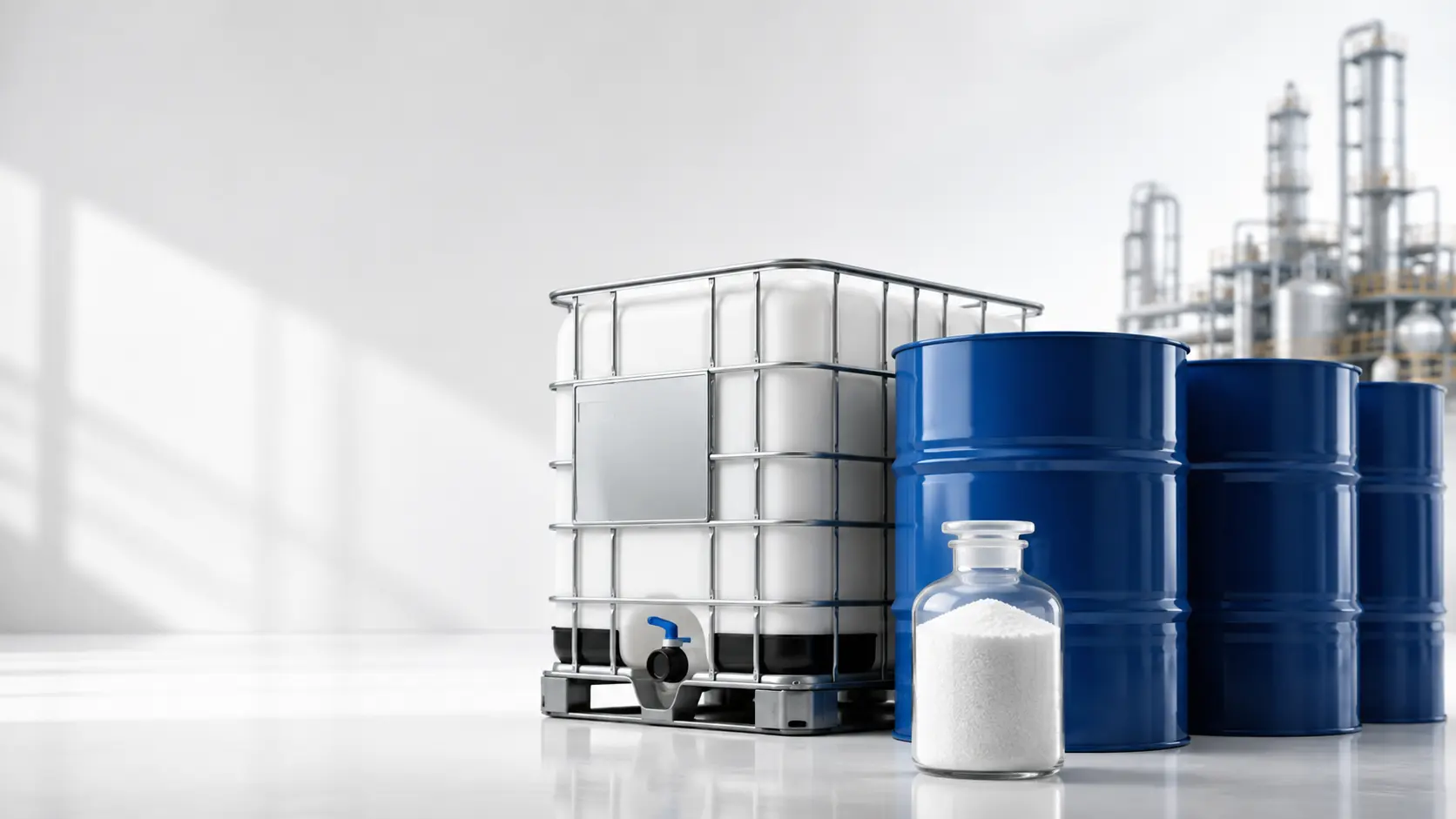
Liquid grades may be supplied in IBCs, drums or bulk-liquid systems.
Packaging selection should consider:
- Warehouse equipment
- Local labor
- Container loading
- Storage space
- Product form
- Annual consumption
- Resale requirements
For importers, freight efficiency deserves attention.
A slightly lower product price does not always give a lower landed cost if packaging and container utilization are poor.
Documents to Request Before Ordering
Industrial buyers should normally request:
COA
The Certificate of Analysis confirms batch or representative quality.
TDS
The Technical Data Sheet describes the product specification and technical characteristics.
SDS
The Safety Data Sheet provides handling, storage and safety information.
For a new supplier, requesting a sample can also be useful.
A sample allows the buyer to confirm that the product behaves correctly in the actual formulation before ordering one or more containers.
How to Request a Quote
A useful inquiry could be:
Product: Potassium Formate Industrial Grade
Form: 96% Solid
Quantity: 20 MT
Application: Heat-Transfer Fluid Production
Packaging: 25 kg moisture-resistant bags
Destination: Rotterdam
Trade Term: CIF
Documents Required: COA, SDS and TDS
For liquid applications, specify the concentration instead.
For oilfield applications, include any chloride, iron or insoluble-matter limits required by the project.
Vanchor supplies industrial potassium formate in different concentrations and physical forms for oilfield fluids, deicing, heat transfer, refrigeration and industrial processing. Buyers can request specifications, technical documents, packaging information and bulk quotations according to their required application.
Final Thoughts
Potassium formate industrial grade is not one fixed product with one universal specification.
It is a group of commercial potassium formate grades designed for industrial applications.
Depending on the customer, this may mean a 75% liquid solution, a high-content solid material or another customized concentration.
The most important thing is matching the product to the process.
Oilfield users may need tighter impurity control.
Distributors may care more about solid content and packaging.
Heat-transfer manufacturers may focus on batch consistency and corrosion-related impurities.
Deicing formulators may prioritize concentration and cost.
So don't spend too much time asking whether a supplier calls the material industrial grade or technical grade.
Ask for the COA.
The numbers usually give a much better answer.
FAQ
What is potassium formate industrial grade?
It is potassium formate manufactured for large-scale industrial applications such as oilfield fluids, deicing, heat-transfer systems and chemical processing.
What purity is industrial grade potassium formate?
There is no single universal purity. Commercial products may range from concentrated liquid grades to solid potassium formate around 96% or higher.
Is industrial grade potassium formate available as a liquid?
Yes. Concentrated aqueous solutions, including around 70–75%, are commonly used for industrial liquid processing.
Can industrial grade potassium formate be used in oilfield fluids?
Yes. It can be used as a raw material in properly designed drilling, completion and workover fluid systems, provided the specification meets project requirements.
What is the difference between industrial grade and technical grade?
The terms can overlap. Some suppliers use technical grade for tighter specifications, but buyers should compare actual assay and impurity limits instead of relying only on grade names.
What documents should I request?
Industrial buyers should normally request a COA, TDS and SDS together with packaging and shipping information.


Contact Us
In This Article
Related Posts
Индивидуальные упаковочные решения от поставщика безводного ацетата натрия в Китае
2026-09-23
Тенденции применения безводного ацетата натрия для специального химического производства
2026-09-23
Безводный ацетат натрия для дубления кожи: улучшает равномерность окрашивания
2026-09-22
Formic Acid 85% for Animal Feed Preservation: Moisture and Storage Stability Guide
2026-09-21


