



How to Use Potassium Formate Brine: Preparation, Density Adjustment, and Field Handling
By LIN
2026-09-01Related Posts
Индивидуальные упаковочные решения от поставщика безводного ацетата натрия в Китае
2026-09-23
Тенденции применения безводного ацетата натрия для специального химического производства
2026-09-23

Безводный ацетат натрия для дубления кожи: улучшает равномерность окрашивания
2026-09-22
Formic Acid 85% for Animal Feed Preservation: Moisture and Storage Stability Guide
2026-09-21
Knowing how to use potassium formate brine requires more than dissolving potassium formate in water.
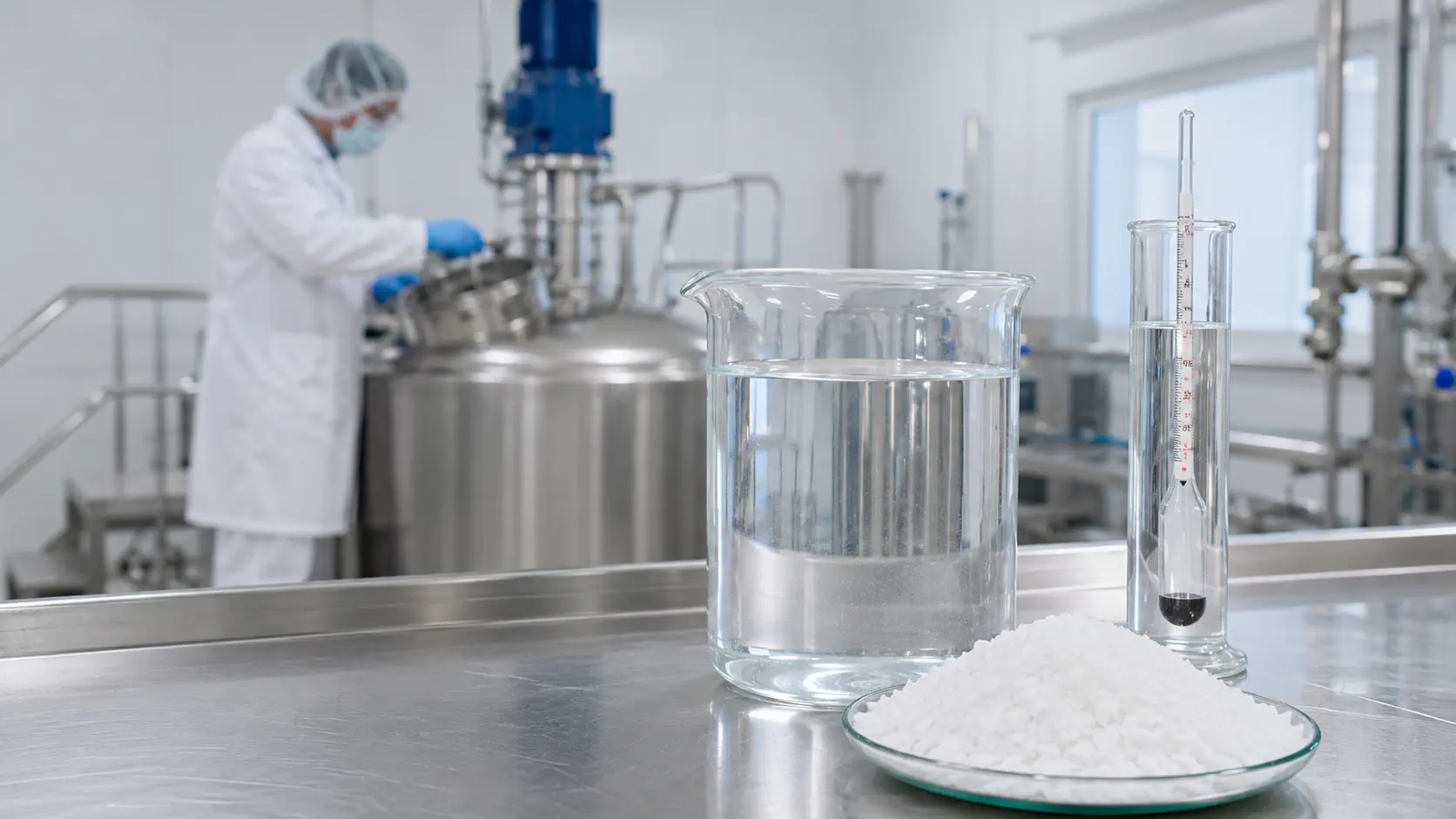
For oilfield drilling, completion and workover operations, the final brine should be designed around:
- Required fluid density
- Well pressure
- Surface and downhole temperature
- Crystallization margin
- Formation compatibility
- Metallurgy
- Filtration requirements
- Additive compatibility
Potassium formate is highly water-soluble and can produce clear, high-density brines with relatively low suspended-solids content.
SLB notes that clear brines are typically blended according to density, TCT, PCT and clarity, not concentration alone.
Where Is Potassium Formate Brine Used?
Typical applications include:
- Drilling fluids
- Reservoir drill-in fluids
- Completion fluids
- Workover fluids
- Displacement fluids
- Packer fluids
- Well-service operations
Vanchor currently supplies both:
- 75% potassium formate solution
- ≥96% solid potassium formate
for preparing oilfield brine systems.
Step 1: Determine the Required Brine Density
Do not begin by simply choosing the highest potassium formate concentration.
First calculate the hydrostatic requirement:
Reservoir pressure → well depth → required hydrostatic head → target brine density
Potassium formate clear brine can reach approximately:
1.57–1.58 g/cm³
or roughly:
13.1–13.2 ppg
depending on concentration and temperature.
The final density should provide sufficient pressure control without creating unnecessary overbalance.
Step 2: Select 75% Liquid or ≥96% Solid
Use 75% Potassium Formate Solution When:
- Direct pumping is preferred
- Fast preparation is required
- Metering equipment is available
- Powder dissolution equipment is limited
- Consistent incoming concentration is important
Vanchor's 75% solution has a typical density of approximately 1.57–1.58 g/cm³ at 25°C.
Use ≥96% Solid When:
- Customized brine concentrations are needed
- Local mixing facilities are available
- Transporting less water is important
- Multiple fluid densities will be prepared
The solid grade provides more active potassium formate per unit shipment but requires proper dissolution and filtration.
Step 3: Prepare Clean Mixing Equipment
Before mixing, clean:
- Tanks
- Pumps
- Hoses
- Transfer lines
- Mixing equipment
Residual drilling mud, chloride brine, solids or incompatible chemicals can change:
- Density
- pH
- crystallization behavior
- Fluid clarity
- Formation compatibility
Vanchor's current completion guidance specifically recommends cleaning the entire preparation system before brine mixing.
Step 4: Check the Mixing Water
If preparing brine from solid potassium formate or diluting concentrate, test the water first.
Important contaminants include:
- Chloride
- Calcium
- Magnesium
- Iron
- Suspended solids
Poor water quality can contribute to:
- Precipitation
- Scale
- Corrosion
- Reduced fluid clarity
- Formation incompatibility
For critical completion fluids, use controlled-quality water.
Step 5: Start Agitation
Begin circulation or agitation before adding potassium formate.
The objective is to maintain:
- Uniform concentration
- Efficient dissolution
- Stable temperature
- Accurate density adjustment
If using solid potassium formate, gradual addition is normally preferable to dumping a large amount into one location.
Step 6: Add Potassium Formate
Using 75% Liquid
Transfer the concentrate gradually into the mixing tank.
Advantages include:
- No dissolution stage
- Faster preparation
- Lower dust exposure
- Easier automated dosing
Using Solid Potassium Formate
Add the solid gradually while maintaining agitation.
Continue mixing until:
- All material is dissolved
- No visible crystals remain
- The fluid is uniform
Potassium formate's high water solubility makes it suitable for preparing clear brines, but concentration and temperature limits still need to be respected.
Step 7: Measure Density
After complete mixing, measure the brine density.
Common oilfield units include:
- g/cm³
- specific gravity
- ppg
Density should be measured at a defined temperature because it changes with temperature.
Do not assume that:
calculated concentration = actual field density
Verify it.
If density is too high:
add controlled dilution water
If density is too low:
add potassium formate concentrate or dissolved solid
Then remix and remeasure.
Step 8: Check Crystallization Temperature
This is one of the most important steps.
High-density brine may crystallize if exposed to temperatures below its safe operating range.
Evaluate:
- TCT — True Crystallization Temperature
- PCT — Pressure Crystallization Temperature
- Minimum surface temperature
- Transport temperature
- Downhole conditions
SLB states that clear completion brines are blended according to both density and crystallization parameters.
Halliburton field experience also demonstrates why density alone is insufficient: brine selection in one project depended on both required density and TCT, along with formation compatibility.
Step 9: Add Compatible Fluid Additives
Depending on application, the finished system may require:
- Corrosion inhibitors
- pH buffers
- Fluid-loss additives
- Shale inhibitors
- Scale-control additives
- Bridging agents
- Biocide
These should be checked for compatibility with concentrated formate brine.
Potassium formate itself is not the complete drilling or completion fluid.
Step 10: Filter the Brine
For clear completion brines, filtration is especially important.
Filtering helps remove:
- Insoluble contamination
- Rust
- Undissolved material
- Mixing debris
- Suspended solids
SLB describes clear brines as solids-free or very low-solids systems designed to minimize formation damage.
The required filtration level should match the completion program and reservoir sensitivity.
Step 11: Perform Final Quality Control
Before transferring the brine to the well, check:
- Density
- pH
- TCT/PCT where required
- Clarity
- Solids content
- Filtration quality
- Corrosion-control condition
- Additive concentration
For reservoir-facing fluids, also consider:
- Formation-water compatibility
- Shale compatibility
- Core testing
- Return permeability
- Scale tendency
How to Use Potassium Formate Brine in Completion Operations
Potassium formate brine can be used as a clear completion fluid where hydrostatic pressure must be maintained while limiting suspended solids.
A typical operational sequence may be:
Prepare brine
→ filter
→ verify density/TCT
→ clean displacement system
→ displace drilling fluid
→ circulate clean brine
→ perform completion operation
Fluid contamination during displacement should be minimized.
Vanchor's completion guidance specifically identifies drilling-mud compatibility, spacer design, cleaning efficiency and fluid-density hierarchy as important parts of displacement planning.
Using Potassium Formate as a Reservoir Drill-In Fluid
Potassium formate can also serve as the brine phase of a reservoir drill-in fluid.
The complete RDIF may contain:
- Potassium formate brine
- Viscosifier
- Fluid-loss additive
- Bridging material
- Lubricant
- Other compatible additives
The formulation should be tested for:
- HTHP fluid loss
- Rheology
- Thermal aging
- Shale stability
- Formation damage
- Filter-cake cleanup
Potassium formate is therefore the base brine, not the whole RDIF formulation.
Monitoring During Use
Brine properties can change during field operations due to:
- Water contamination
- Formation fluids
- Mud contamination
- Solids
- Temperature changes
- Chemical additions
Monitor:
Density
Unexpected density changes may indicate dilution or contamination.
pH
Changes may influence corrosion and additive performance.
Crystallization Margin
Especially important after dilution.
Solids
Contamination can reduce the benefits of a clear-brine system.
Volume
Track fluid losses and additions.
Can Potassium Formate Brine Be Reused?
Potentially yes.
Clear brine can sometimes be:
- Recovered
- Settled or filtered
- Tested
- Reconditioned
- Density-adjusted
- Reused
Reuse depends on contamination and economics.
Used fluid should be checked for:
- Solids
- Hydrocarbons
- Formation-water contamination
- Density
- pH
- TCT
- Additive condition
Do not assume recovered brine has the same properties as fresh brine.
Storage and Cold-Weather Handling
Storage temperature is especially important for concentrated potassium formate.
A concentrated product can crystallize at a much warmer temperature than a correctly diluted working brine.
For storage:
- Monitor tank temperature
- Avoid excessive evaporation
- Prevent water contamination
- Keep tanks clean
- Recirculate where appropriate
- Follow supplier TDS guidance
If crystallization occurs, do not simply pump crystals through sensitive equipment.
The fluid may require controlled warming, recirculation or reformulation according to the product procedure.
Common Mistakes to Avoid
Using Maximum Concentration Automatically
Higher concentration does not always mean better performance.
Ignoring TCT/PCT
A brine can meet density requirements but still crystallize during surface operations.
Using Poor-Quality Dilution Water
This can introduce scale and corrosion problems.
Skipping Filtration
A contaminated “clear brine” loses one of its main operational advantages.
Assuming Formate Is Universally Formation-Compatible
Halliburton documented a project where potassium formate was rejected after compatibility testing because it was unsuitable for the specific shale mineralogy.
Treating Potassium Formate as a Complete Mud System
It is normally the brine phase. The full drilling-fluid formulation requires additional engineering.
Frequently Asked Questions
How do you prepare potassium formate brine?
Start with clean equipment and suitable water, gradually add liquid or solid potassium formate under agitation, adjust density, test crystallization behavior, add compatible additives, filter and complete final QC.
Can 75% potassium formate be used directly?
Sometimes, but not automatically. The required working concentration depends on density, temperature, crystallization margin and the fluid application.
How do you increase potassium formate brine density?
Add additional potassium formate concentrate or properly dissolved solid material, then mix completely and remeasure density.
How do you reduce brine density?
Add controlled-quality water gradually while circulating, then recheck density and crystallization properties.
What is the maximum density of potassium formate brine?
A clear potassium formate solution can reach approximately 1.57–1.58 g/cm³, or around 13.1–13.2 ppg, depending on concentration and temperature.
Does potassium formate brine need filtration?
For clear completion fluids and reservoir-sensitive operations, filtration is generally important to control suspended solids and reduce formation-damage risk.
Conclusion
The correct way to use potassium formate brine is:
Define target density
→ select liquid or solid grade
→ prepare clean water and equipment
→ mix under controlled agitation
→ measure and adjust density
→ verify TCT/PCT
→ add compatible additives
→ filter
→ complete final QC
→ monitor during field use
Potassium formate can provide a high-density, low-solids brine for drilling, completion and workover operations, but successful use depends on complete fluid engineering rather than concentration alone.
For critical wells, the final procedure should always be qualified by experienced drilling or completion-fluid personnel using actual formation, temperature, pressure and compatibility data.


Contact Us
In This Article
Related Posts
Индивидуальные упаковочные решения от поставщика безводного ацетата натрия в Китае
2026-09-23
Тенденции применения безводного ацетата натрия для специального химического производства
2026-09-23
Безводный ацетат натрия для дубления кожи: улучшает равномерность окрашивания
2026-09-22
Formic Acid 85% for Animal Feed Preservation: Moisture and Storage Stability Guide
2026-09-21


