



Calcium Formate Compatibility with HPMC and RDP in Dry-Mix Mortar
By Tonmoy
2026-09-01Related Posts
Индивидуальные упаковочные решения от поставщика безводного ацетата натрия в Китае
2026-09-23
Тенденции применения безводного ацетата натрия для специального химического производства
2026-09-23

Безводный ацетат натрия для дубления кожи: улучшает равномерность окрашивания
2026-09-22
Formic Acid 85% for Animal Feed Preservation: Moisture and Storage Stability Guide
2026-09-21
Calcium formate is generally described as compatible with HPMC and RDP in cement-based dry-mix mortar. However, this does not mean that every calcium-formate, HPMC, and RDP grade will produce the same result in every formulation.
The practical conclusion is:
Calcium formate, HPMC, and RDP can often be used in the same dry-mix mortar system, but compatibility must be confirmed with the exact grades, cement composition, dosage basis, water content, mixing conditions, and required performance.
A compatibility statement is therefore a starting point for formulation work—not a substitute for a controlled laboratory or sample-approval trial.
What “compatible” means in a dry-mix mortar formulation
In this context, compatibility can refer to several different things:
- The powders can be blended uniformly.
- The additives disperse adequately when water is added.
- The mortar retains acceptable workability and water retention.
- Setting behavior remains suitable for the application.
- Open time, adhesion, flexibility, or early-age performance remain within the required range.
These are not identical criteria. A blend may be physically uniform but still change the mortar’s open time or workability. Similarly, a supplier may describe a product as compatible with HPMC and RDP without establishing performance across every cement type, additive grade, or formulation.
Supplier application literature commonly presents calcium formate as suitable for dry-mix systems containing cellulose ethers and redispersible polymer powder, while also emphasizing the need for formulation-specific testing. For broader calcium-formate context, see Vanchor’s page on calcium formate. The dry-mix application should still be evaluated separately from general chemical identity or product-category information.
The separate role of calcium formate, HPMC, and RDP
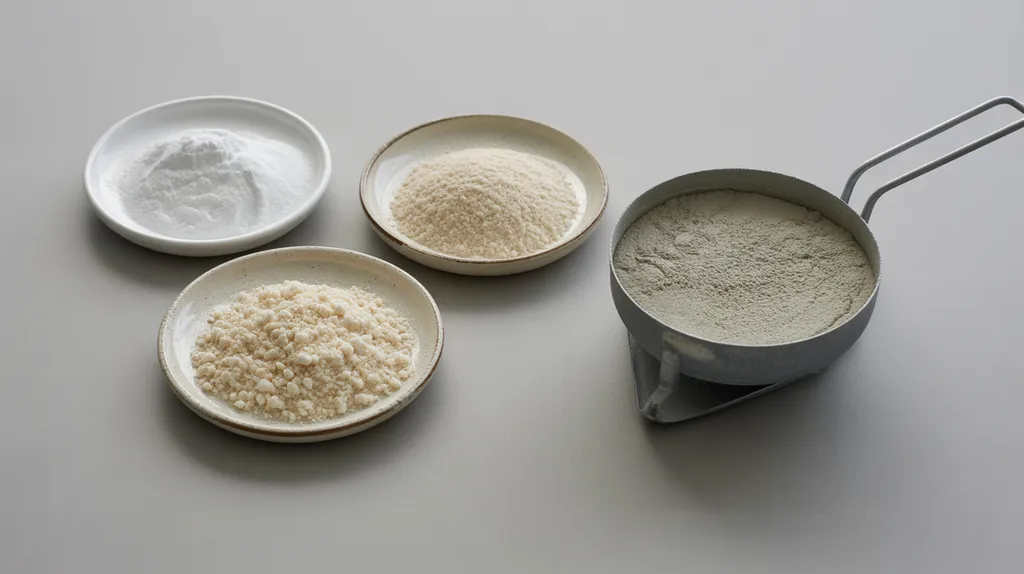
Calcium formate, HPMC, and RDP are not interchangeable additives. They may be used together because they address different formulation requirements.
| Material | Primary formulation role | What should be monitored when combined |
|---|---|---|
| Calcium formate | Commonly used as an early-strength or setting-related additive in cementitious systems | Setting behavior, early-age performance, workability, and open time |
| HPMC | Associated with water retention, rheology, workability, open time, and resistance to sagging | Water demand, consistency, application feel, open time, and dispersion |
| RDP | Used for polymer modification and commonly associated with adhesion and flexibility | Powder dispersion, adhesion, flexibility, film formation, and application performance |
Calcium formate is therefore not a replacement for HPMC or RDP. HPMC does not provide the same function as a setting-related additive, and RDP does not replace the rheological and water-retention role of a cellulose ether.
The precise result depends on the grades selected. HPMC products can differ in viscosity, substitution characteristics, particle behavior, and application performance. RDP products can also differ by polymer chemistry and supplier grade. A general statement about “HPMC” or “RDP” should not be treated as approval for every product sold under those names.
Technical dry-mix guidance, such as the material presented for calcium formate for dry-mix mortar, should be read together with the technical data for the specific calcium-formate, HPMC, and RDP grades under consideration.
Why compatibility can change from one mortar system to another
A general compatibility statement does not define the complete formulation. The observed result may change when any of the following variables changes:
- calcium-formate grade, form, or specification;
- HPMC grade and rheological characteristics;
- RDP type and supplier grade;
- cement type and binder composition;
- aggregate grading and fines content;
- total additive loading;
- water content or water-to-binder relationship;
- other admixtures in the blend;
- dry-mixing uniformity and addition sequence;
- ambient temperature and curing conditions;
- required balance between setting, workability, open time, adhesion, and early performance.
These variables can affect the apparent compatibility of the system. For example, a higher addition of calcium formate may alter setting behavior and, in some high-cement systems, may reduce open time or change workability. That observation should not be converted into a universal dosage limit because the result depends on the complete formulation.
A change in fresh-mortar behavior also does not automatically prove chemical incompatibility. It may indicate that the additive balance, water demand, dispersion, or processing conditions need to be reassessed.
The formulation should therefore identify the exact materials rather than using only generic descriptions such as “calcium formate,” “HPMC,” or “RDP.” The relevant documents should state the product form and specification basis. Do not transfer a specification from one grade to another, or from a construction product to a different application.
For applications such as self-leveling compounds, the required flow and setting balance may differ substantially from those of a tile adhesive or repair mortar. Those systems should be treated as separate formulation cases; see the related information on calcium formate for self leveling compound where relevant.
How to qualify calcium formate with HPMC and RDP before approval

A controlled qualification process is more reliable than relying on a general supplier compatibility statement. The following sequence can help formulation and QA teams organize the evaluation.
1. Define the target mortar
Record the application and the performance requirements before comparing materials. Depending on the product, these may include:
- workability and application feel;
- water retention;
- open time;
- setting behavior;
- adhesion;
- flexibility;
- early-age strength;
- sag resistance;
- required curing or environmental conditions.
The acceptance criteria should be defined before the trial so that a formulation is not approved simply because it can be mixed successfully.
2. Identify every material precisely
Record the exact product identity and grade for:
- calcium formate;
- HPMC;
- RDP;
- cement or binder;
- aggregate;
- other chemical additives.
The evaluation should also retain the applicable supplier technical information. Do not assume that a result obtained with one calcium-formate grade applies to another grade, or that one HPMC or RDP product represents the entire material class.
3. Review the available documentation
Before approval, request and review the documents appropriate to the material and application. These may include:
- technical data;
- safety information;
- certificate of analysis where applicable;
- product specification;
- handling and storage information;
- supplier application guidance.
A supplier compatibility statement can help determine whether a trial is worthwhile. It does not replace a formulation test or establish universal performance approval.
4. Prepare a controlled comparison
Compare the candidate formulation with a suitable control or current formulation. Keep the important variables consistent, including:
- cement and aggregate sources;
- water basis;
- mixing conditions;
- order of addition;
- test temperature;
- curing conditions;
- application procedure.
The purpose is to identify the effect of the candidate calcium-formate material within the intended system. A dosage copied from an unrelated mortar should not be treated as a validated starting point for every product.
5. Check fresh and hardened performance
The exact tests depend on the mortar application, but the evaluation should consider the properties that determine acceptance. These may include:
- powder uniformity and visible dispersion;
- fresh consistency and workability;
- water retention;
- open time;
- setting behavior;
- adhesion;
- flexibility or crack-related performance where relevant;
- early-age performance;
- any other product-specific requirement.
The results should be recorded together with the formulation, test conditions, material grades, and test method. Without that context, a result cannot be transferred confidently to another system.
6. Record the decision and control future changes
Approval should identify the tested materials and conditions. A later change in calcium-formate supplier, HPMC grade, RDP grade, cement source, or formulation ratio may require a new comparison.
For organizations with a formal supplier-qualification process, the related chemical sample approval process can be used as a separate workflow reference if it matches the company’s requirements.
What not to conclude from a compatibility statement or dosage recommendation
A compatibility statement or supplier dosage recommendation should not be interpreted more broadly than its evidence allows.
| Do not infer | What must be verified |
|---|---|
| “Compatible with HPMC and RDP” means universally approved | Test the exact grades in the intended mortar |
| A supplier dosage applies to every dry-mix formulation | Confirm dosage basis and compare performance in the target system |
| Successful dry blending proves final mortar performance | Check fresh and application-specific properties |
| A tile-adhesive result applies to every mortar | Evaluate plaster, repair mortar, self-leveling, or other systems separately |
| HPMC and RDP can replace one another | Preserve their different formulation roles |
| A product listing proves current stock, manufacture, certification, or delivery capability | Request and review the relevant commercial or technical evidence |
| A general calcium-formate statement establishes a Vanchor product specification | Use the exact product documentation for the material being considered |
Numerical dosage values are especially easy to misapply. They may be expressed on different bases, such as total dry mix, cement content, or supplied product. A number without its basis, formulation, test method, and conditions is not a universal operating recommendation.
Detailed questions about calcium formate and other admixtures should also remain separate. For example, interaction with a superplasticizer is a different compatibility question from interaction with HPMC and RDP; it should be evaluated as calcium formate superplasticizer compatibility rather than assumed from this article.
Practical decision checklist for formulators and QA teams
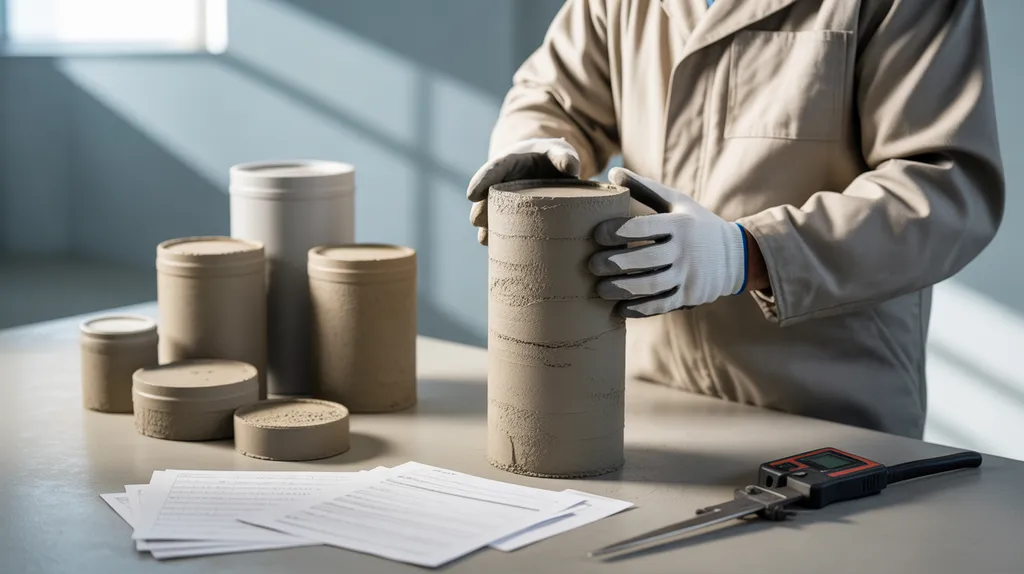
Before approving calcium formate for use with HPMC and RDP, confirm that the evaluation has addressed:
- [ ] Exact calcium-formate product identity and grade
- [ ] Product form and specification basis
- [ ] Exact HPMC grade
- [ ] Exact RDP grade and polymer type, where provided
- [ ] Cement, aggregate, and other major raw materials
- [ ] Technical and safety documentation
- [ ] Dosage basis for every additive
- [ ] Control or reference formulation
- [ ] Dry-blending uniformity and dispersion
- [ ] Workability and water-retention requirements
- [ ] Open time and setting behavior
- [ ] Application-specific adhesion, flexibility, or early-performance requirements
- [ ] Test temperature, curing conditions, and method
- [ ] Defined acceptance criteria
- [ ] Change-control requirements for future supplier or grade changes
The most defensible answer to the calcium formate HPMC RDP compatibility question is therefore conditional: the materials are commonly reported as usable in the same dry-mix mortar system, but the combination should be approved only after testing the exact formulation and performance requirements. A compatibility statement can support material screening; it cannot replace formulation-specific qualification.


Contact Us
In This Article
Related Posts
Индивидуальные упаковочные решения от поставщика безводного ацетата натрия в Китае
2026-09-23
Тенденции применения безводного ацетата натрия для специального химического производства
2026-09-23
Безводный ацетат натрия для дубления кожи: улучшает равномерность окрашивания
2026-09-22
Formic Acid 85% for Animal Feed Preservation: Moisture and Storage Stability Guide
2026-09-21


