



Calcium Formate for Cold-Weather Mortar: Early Hydration and Winter Formulation
By Tonmoy
2026-09-01Related Posts
Индивидуальные упаковочные решения от поставщика безводного ацетата натрия в Китае
2026-09-23
Тенденции применения безводного ацетата натрия для специального химического производства
2026-09-23

Безводный ацетат натрия для дубления кожи: улучшает равномерность окрашивания
2026-09-22
Formic Acid 85% for Animal Feed Preservation: Moisture and Storage Stability Guide
2026-09-21
Calcium formate is evaluated in mortar primarily as a cementitious-system accelerator. In cold weather, it may help reduce delays in hydration, setting, and early-strength development. It should not, however, be treated as a universal antifreeze or as a replacement for temperature control, curing protection, admixture-compatibility testing, and product-specific validation.
The practical question is not simply whether calcium formate works in “winter mortar.” It is whether the exact product, grade, dosage, binder system, and cold-weather process can deliver the required performance under defined test conditions.
Why cold weather delays mortar hydration and early strength
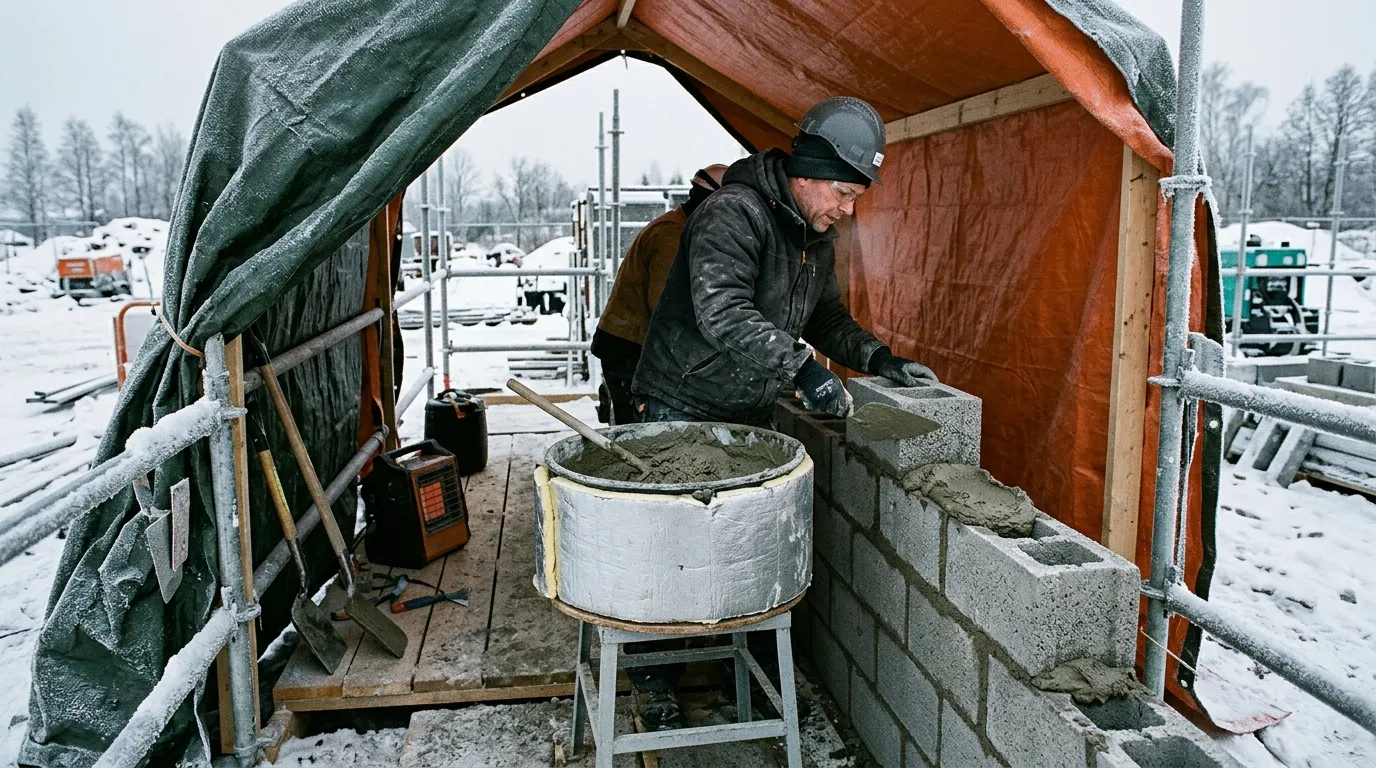
Cement hydration is temperature-sensitive. As mortar temperature falls, hydration generally slows, which can delay setting and reduce the rate at which early strength develops. For producers and contractors, that delay can affect handling, production scheduling, finishing, demolding, and exposure to early freezing conditions.
Cold-weather performance also depends on more than ambient air temperature. The temperature of the cementitious materials, water, aggregate, substrate, and surrounding environment can influence the mortar system. Moisture loss, insulation, curing protection, and the presence of other admixtures can further change the result.
For a formulator, the main winter risks include:
- Slower hydration and delayed setting
- Lower early strength at a required handling time
- Longer production or installation cycles
- Greater sensitivity to protection and curing conditions
- Compatibility changes when the accelerator is combined with other admixtures
This is why calcium formate should be considered as one part of a winter formulation strategy, not as a standalone solution.
How calcium formate may support early hydration in mortar
Calcium formate is used in cementitious applications as a setting or hydration accelerator. In mortar, the intended effect is to help the cementitious system develop setting and early strength more quickly than it would under the same conditions without the accelerator.
Technical explanations of calcium formate’s construction role commonly associate its action with changes in the ionic environment of the cement paste and the progress of cement hydration. The exact response, however, depends on the formulation and test conditions. A mechanism described for one product or cement system should not be treated as a guaranteed result for every calcium formate grade.
For readers evaluating a calcium formate cement accelerator, the relevant performance questions are:
- Does the mortar reach the required setting behavior within the target time?
- Does early strength develop quickly enough for handling or the next process step?
- Does the accelerator alter workability or water demand?
- Does it remain compatible with the other admixtures in the formulation?
- Does the benefit remain measurable at the actual winter temperature and curing condition?
The objective is therefore not simply “faster setting.” Excessive acceleration could reduce working time or change the balance between workability and early strength. The desired result is a controlled formulation response that meets the product or project requirement.
Accelerator or antifreeze? The distinction matters
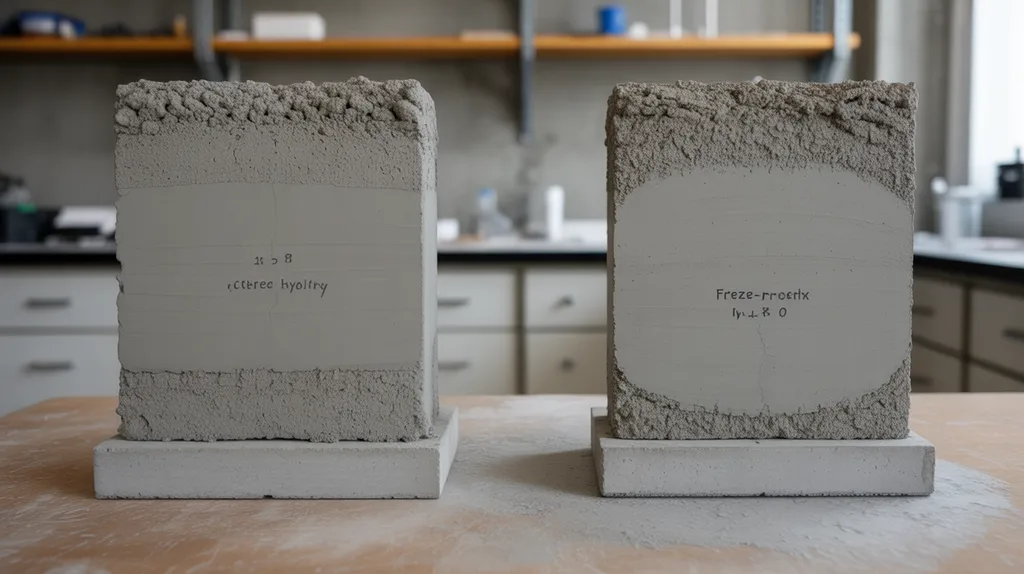
An accelerator and an antifreeze admixture address different technical questions.
| Term | Primary question | What must be demonstrated |
|---|---|---|
| Accelerator | Can hydration, setting, or early-strength development be advanced? | Setting and early-age performance under defined mix and temperature conditions |
| Antifreeze or freeze-protection admixture | Can the system resist freezing under specified conditions? | Freeze-related performance data under defined product, temperature, moisture, and curing conditions |
Calcium formate may be evaluated as an accelerator for cold-weather mortar, but the available evidence does not justify describing it as a universal freezing-point depressant. A supplier description using “antifreeze” language should not be treated as proof that a particular calcium formate product prevents mortar from freezing.
Cold-weather masonry guidance also distinguishes between accelerating hydration and using an admixture specifically intended for freeze protection. The Masonry Contractors Association of America guidance on hot- and cold-weather masonry construction emphasizes that protection, material handling, and admixture compatibility remain important in cold conditions.
The practical rule is simple: use calcium formate to investigate an acceleration requirement, and require separate evidence before making any freeze-protection claim.
Winter formulation variables that must be evaluated together
A calcium formate trial should be designed around the complete mortar system. Changing only the additive while ignoring the other variables can produce results that are difficult to interpret or impossible to reproduce.
Cement and binder composition
Cement type, supplementary cementitious materials, filler content, and the overall binder composition can influence hydration and accelerator response. A dosage or performance result from one binder system should not automatically be transferred to another.
Water content and water-to-binder relationship
Water content affects workability, hydration, porosity, and strength development. Reducing water to accelerate apparent strength gain may create other performance problems, while increasing water to recover workability can offset early-strength objectives.
The calcium formate dosage must also be defined on a clear basis. A percentage based on cement, total binder, dry mix, or product as supplied are not interchangeable descriptions.
Material and substrate temperature
The relevant temperature is not always the surrounding air temperature. Water, aggregate, dry materials, substrate, and freshly mixed mortar may have different temperatures. The formulation team should define which temperature is being controlled and measured.
Protection and curing conditions
An accelerator does not eliminate the need to protect mortar from unfavorable cold-weather exposure. Insulation, shelter, moisture control, and curing procedures can affect whether the hydration benefit is retained.
Target setting and early strength
The required outcome should be defined before testing. A dry-mix producer may prioritize factory setting behavior, pack stability, and early strength after mixing. A site-applied mortar may place greater emphasis on workability, open time, substrate contact, and early resistance.
Other admixtures
Water reducers, retarders, cellulose ethers, redispersible polymers, air-control agents, and superplasticizers can affect the result. Compatibility should be tested in the intended formulation rather than assumed from chemical similarity.
For a broader dry-mix context, see calcium formate for dry mix mortar. The cold-weather question still requires separate testing because a general dry-mix formulation result does not establish performance at a particular low temperature.
Why a universal calcium formate dosage should not be copied
There is no defensible universal dosage that can be applied to every cold-weather mortar. The appropriate amount, if any, depends on factors such as:
- Exact calcium formate grade and product form
- Cement and binder composition
- Water content
- Target setting and strength requirements
- Material and test temperature
- Other admixtures
- Mixing and curing conditions
- Required test method and acceptance criteria
The available sources do not provide comparable product identities, dosages, units, cement systems, and temperature conditions that would support a single transferable number. A value reported for another supplier’s product or another research formulation is not a Vanchor specification.
For general mortar application context, calcium formate for mortar may be relevant, but any dosage discussion still needs to be checked against the exact product documentation and the intended mortar system.
A validation workflow for cold-weather mortar trials
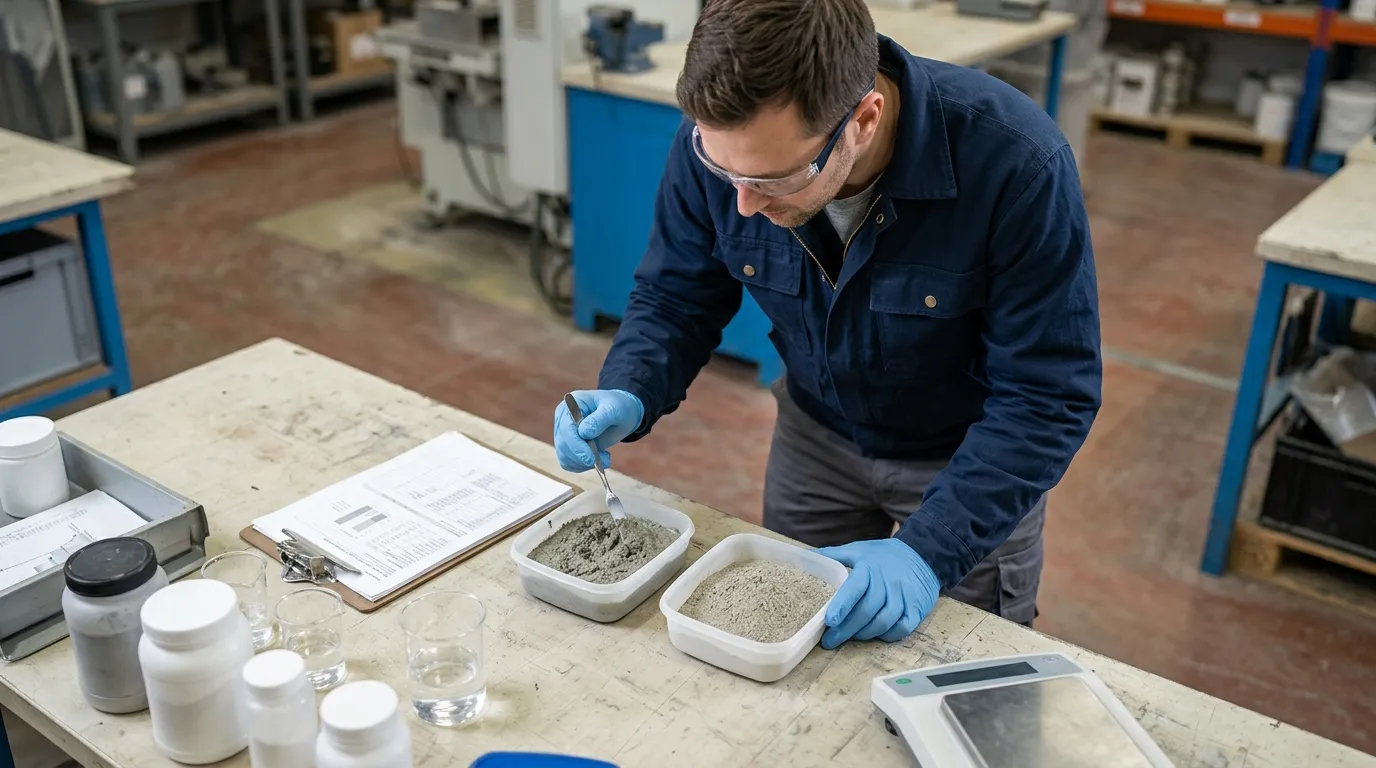
A controlled trial can determine whether calcium formate is suitable for a specific winter mortar. The following sequence helps keep the comparison useful.
- Define the performance target.
Record the mortar type, cement or binder system, target temperature range, required workability, setting requirement, early-strength requirement, and acceptance criteria.
- Confirm the exact product identity.
Identify the calcium formate grade, solid or solution form, assay basis, relevant physical properties, and supplier specification. Do not compare products only by chemical name.
- Prepare a control and trial mix.
Compare an untreated reference mortar with a calcium-formate trial while keeping the other formulation and process variables controlled. The dosage should be recorded on a clearly defined basis.
- Measure the relevant properties.
Depending on the application, evaluate workability, setting behavior, early strength, water demand, appearance, and handling characteristics using defined test methods.
- Test the relevant temperature conditions.
A result at one temperature does not establish performance across an entire winter operating range. Test conditions should represent the intended production or installation environment.
- Check admixture compatibility.
Evaluate the calcium formate with the complete additive package, not in isolation. Look for changes in setting, workability, air content, strength development, and storage or processing behavior.
- Confirm protection and curing requirements.
Review whether the mortar still requires insulation, shelter, moisture control, or other cold-weather measures. An acceleration result does not by itself establish freeze resistance.
- Compare results with the acceptance criteria.
Scale up only when the trial result is reproducible and meets the defined technical requirement.
Cold-weather masonry guidance identifies protection and compatibility as important parts of the overall process. It should be used alongside the product’s technical documentation and the producer’s own formulation testing, rather than as a substitute for either.
What technical and purchasing documents should be checked
Before approving calcium formate for a winter mortar formulation, QA, formulation, and procurement teams should review the exact product documentation. The relevant checks include:
- Chemical identity and product form
- Intended construction-grade designation, where applicable
- Assay or purity basis and test method
- Moisture and relevant physical-property limits
- Particle-size or powder-handling information where important to the dry-mix process
- Storage and handling instructions
- Recommended application scope
- Any stated dosage basis
- Product-specific setting or early-strength data
- Compatibility information for the intended admixture system
- Current technical data sheet, safety data sheet, and representative certificate of analysis
These documents serve different purposes. A safety data sheet addresses hazards and handling. A certificate of analysis reports results for a particular batch or lot. Neither document, by itself, proves universal mortar performance, freeze protection, regulatory approval, or suitability for every application.
If the formulation requires a defined construction grade, review the available information for construction-grade calcium formate before treating an unspecified calcium formate product as interchangeable with it. Exact assay, particle size, moisture, storage, and dosage values should come from current product documentation rather than industry averages.
Practical decision: when to consider calcium formate for winter mortar
Calcium formate is worth evaluating when the technical objective is to reduce cold-related delays in hydration, setting, or early-strength development and the formulation team can test the result under representative conditions.
It should not be selected solely because it is described as an antifreeze. Before production or site use, confirm the exact grade and form, define the dosage basis, compare the trial with an untreated control, test compatibility with the complete admixture package, and maintain appropriate cold-weather protection.
The strongest decision is not based on a generic dosage or a broad product claim. It is based on product-specific documentation and a controlled result in the mortar system that will actually be produced or applied.


Contact Us
In This Article
Related Posts
Индивидуальные упаковочные решения от поставщика безводного ацетата натрия в Китае
2026-09-23
Тенденции применения безводного ацетата натрия для специального химического производства
2026-09-23
Безводный ацетат натрия для дубления кожи: улучшает равномерность окрашивания
2026-09-22
Formic Acid 85% for Animal Feed Preservation: Moisture and Storage Stability Guide
2026-09-21


