



Sodium Formate for Sodium Hydrosulfite Production: Feedstock Quality and Purity
By Tonmoy
2026-09-08Related Posts
Индивидуальные упаковочные решения от поставщика безводного ацетата натрия в Китае
2026-09-23
Тенденции применения безводного ацетата натрия для специального химического производства
2026-09-23

Безводный ацетат натрия для дубления кожи: улучшает равномерность окрашивания
2026-09-22
Formic Acid 85% for Animal Feed Preservation: Moisture and Storage Stability Guide
2026-09-21
Sodium formate is used as a feedstock in documented formate-based routes for producing sodium hydrosulfite, also known as sodium dithionite. For producers, however, selecting a suitable feedstock requires more than comparing headline assay values. The relevant decision is whether the exact sodium formate grade, physical form, impurity profile, moisture basis, and batch documentation match the plant’s validated process requirements.
A practical review should therefore cover:
- chemical identity and grade;
- assay basis and test method;
- moisture and insoluble matter;
- relevant ionic impurities;
- physical form and handling characteristics;
- lot-to-lot consistency;
- TDS, COA, and SDS documentation.
Vanchor discusses sodium formate for sodium hydrosulfite as an industrial application. Any final acceptance decision should still be based on the producer’s own process specification and QA procedure.
What role does sodium formate play in sodium hydrosulfite production?
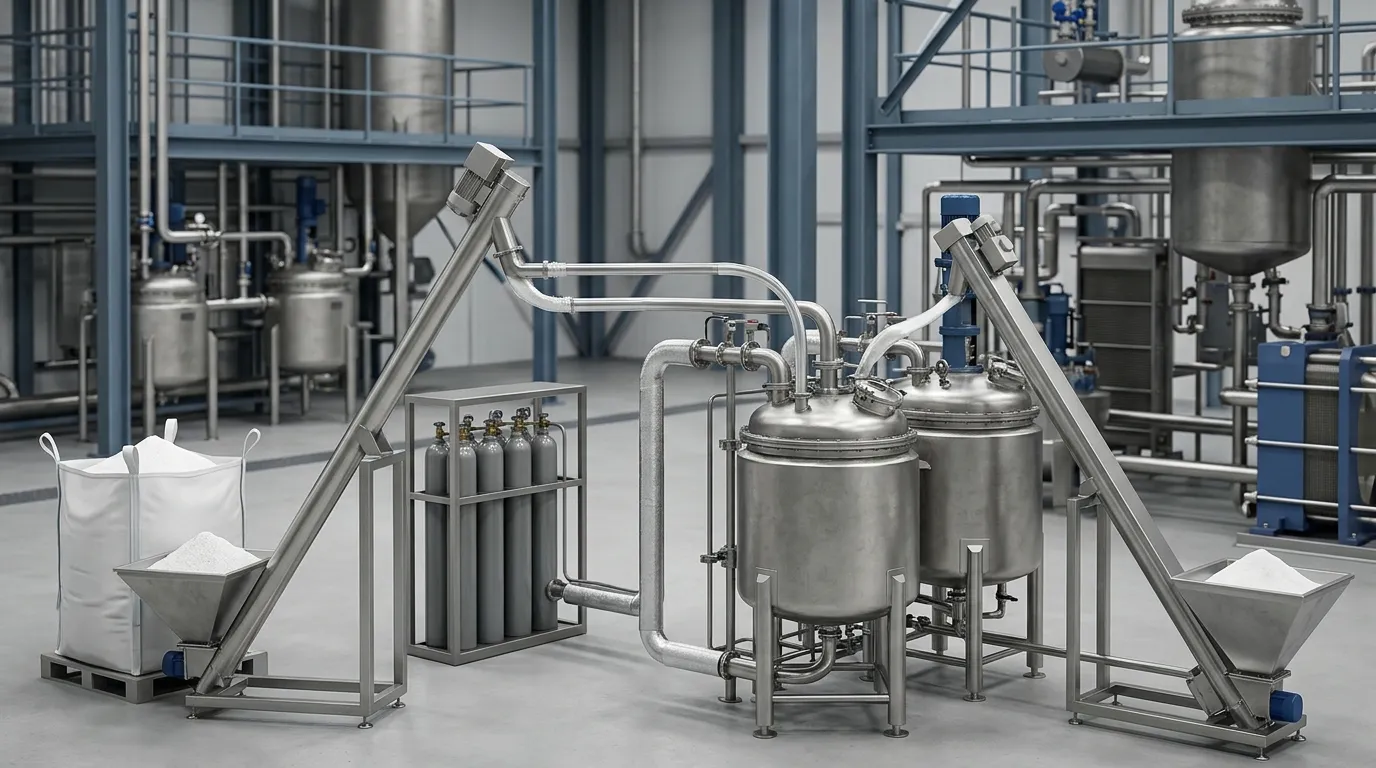
Sodium formate can serve as a sodium-containing feedstock in formate-based sodium hydrosulfite production routes. Sodium hydrosulfite and sodium dithionite are two names for the same target chemical, commonly identified as sodium dithionite or sodium hydrosulfite.
The overall process context may include several additional inputs and stages. Depending on the documented route, sulfur dioxide and sodium carbonate may be used alongside sodium formate. Some patented processes also describe methanol and water within the reaction system. These materials and conditions belong to particular process designs; they should not be treated as a universal commercial recipe.
For a feedstock buyer, the important point is that sodium formate enters a controlled chemical process in which raw-material consistency can affect downstream reaction control, separation, crystallization, and final product quality. The feedstock specification must therefore be considered together with the producer’s process chemistry rather than evaluated in isolation.
The distinction is also important when reviewing supplier information. Sodium formate is the feedstock under discussion. It should not be confused with sodium hydrosulfite, the target product, or sodium hydrosulfide, which is a different chemical.
Which sodium formate quality factors should be checked?
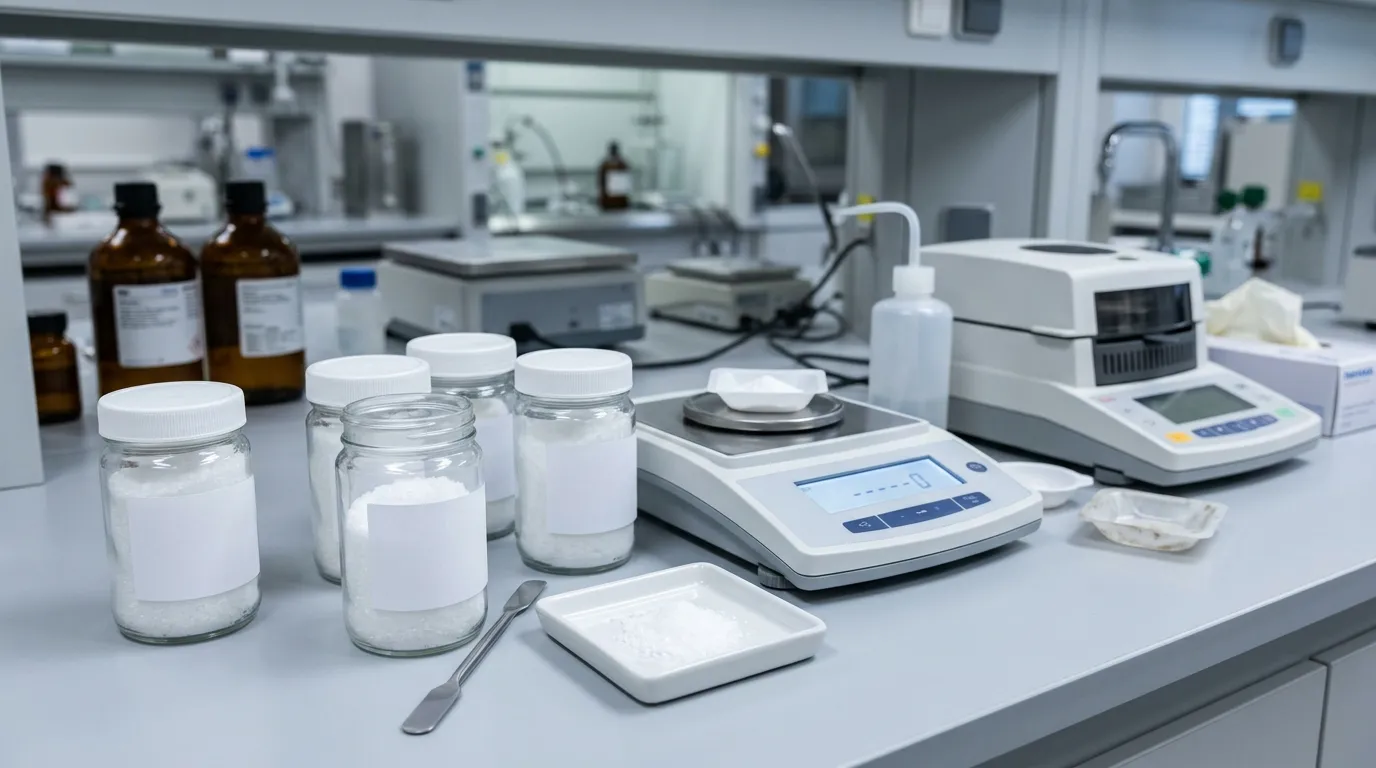
“Purity” usually refers to assay, but assay is only one part of feedstock quality. A sodium formate specification should be reviewed as a complete set of chemical, physical, and documentation requirements.
| Quality factor | What to verify | Why it may matter | Evidence to request |
|---|---|---|---|
| Assay | Reported sodium formate content, minimum or typical value, assay basis, and analytical method | Establishes the amount of stated chemical in the supplied material | Current TDS and batch COA |
| Moisture | Moisture value, test method, and whether assay is reported as received or on a dry basis | Changes the effective concentration of supplied material and may affect material balances | TDS, COA, and method details |
| Insoluble matter | Limit, test method, and whether the value is batch-specific | May affect dissolution, filtration, handling, or downstream solids control | TDS and COA |
| Relevant ionic impurities | Impurities important to the producer’s reaction and separation system | Some impurities may affect process control or final product quality | Agreed specification and COA |
| Physical form | Solid or solution, particle characteristics where relevant, and handling requirements | Must match storage, feeding, dissolution, and plant-handling systems | Product specification and commercial documentation |
| Batch consistency | Results from more than one lot, not only a representative value | Helps determine whether the material is suitable for repeat production | Multiple COAs or supplier quality records |
| Traceability | Lot number, production date, sampling information, and test date | Supports incoming inspection and investigation of deviations | Batch COA and traceability records |
Generic reference data can help confirm chemical identity, but it should not be used as a Vanchor product specification. The chemical identity of sodium formate is commonly associated with CAS 141-53-7, but identity alone does not define assay, moisture, impurity limits, or process suitability.
The plant’s own quality system should define which impurities are critical. A supplier may list several routine parameters, while the sodium hydrosulfite producer may need additional controls related to reaction chemistry, filtration, crystallization, or the required quality of the final product. Those process-specific limits cannot be inferred from a general product description.
Does a higher sodium formate assay automatically mean better process suitability?
No. A higher nominal assay may indicate a greater proportion of sodium formate in the supplied material, but it does not automatically prove that the material is the best choice for a sodium hydrosulfite process.
Several comparisons must be made on an equivalent basis:
- Is the assay reported on an as-received or dry basis?
- Is moisture included separately?
- Are the values minimum, maximum, or typical?
- Were the grades tested by comparable methods?
- Are the physical forms the same?
- Do the impurity profiles meet the plant’s acceptance criteria?
- Is the material consistent across multiple lots?
A lower-assay product and a higher-assay product may not be directly interchangeable if their moisture, insoluble matter, or other impurity levels differ. Conversely, a higher assay does not establish higher yield, better reaction stability, or higher final sodium hydrosulfite quality without process-specific validation.
Vanchor’s product information is associated with a range of sodium formate grades. Readers comparing sodium formate 92 vs 95 vs 98 should confirm that the compared values use the same assay basis, product form, and test method. The comparison should support a process decision, not create a universal ranking of grades.
A useful purchasing rule is:
Select the sodium formate grade that meets the validated process specification with reliable documentation and consistent lot results—not simply the grade with the highest headline assay.
No universal minimum purity threshold should be applied without evidence from the specific process. The appropriate limit may depend on the producer’s raw materials, equipment, reaction controls, separation system, and final product requirements.
Which documents should accompany a sodium formate feedstock?

Different documents answer different technical questions. A complete review should not treat a TDS, COA, and SDS as interchangeable.
| Document | Primary purpose | What to review |
|---|---|---|
| Technical Data Sheet (TDS) | Defines the product specification and stated test parameters | Chemical identity, grade, form, specification limits, units, and methods |
| Certificate of Analysis (COA) | Reports results for a particular batch or lot | Lot number, test date, actual results, units, methods, and pass/fail status |
| Safety Data Sheet (SDS) | Provides hazard, handling, storage, and emergency information | Hazard classification, protective measures, handling, and storage guidance |
| Internal inspection record | Documents the buyer’s incoming-lot review | Sampling, test results, deviations, and release decision |
| Process specification | Defines what the plant actually accepts | Required assay basis, moisture, impurities, form, and acceptance limits |
A TDS normally describes the intended specification, while a COA should relate to a specific batch. A COA is therefore useful for lot release, but one COA does not automatically establish the performance or consistency of every future shipment.
An SDS should be reviewed for safety and handling. It should not be used as proof of process performance, regulatory approval, food or feed suitability, or compliance with a separate product standard.
For sodium formate used in sodium hydrosulfite production, the most important document checks include:
- Does the document identify sodium formate rather than another sodium salt?
- Does the grade and physical form match the purchase specification?
- Is the assay basis clearly stated?
- Are moisture and insoluble matter reported?
- Are relevant impurity fields included?
- Are units and test methods shown?
- Does the COA identify the actual batch?
- Are minimum, maximum, and typical values clearly distinguished?
- Can the results be compared with the plant’s incoming-lot limits?
Current Vanchor grade-specific TDS, SDS, COA, impurity limits, and analytical methods should be confirmed directly before making a product-specific suitability decision.
How should buyers evaluate a sodium formate supplier for this application?
The procurement process should begin with the plant’s technical requirement rather than a generic request for “high-purity sodium formate.” A focused RFQ and qualification workflow can reduce ambiguity between suppliers.
- State the application clearly. Identify that the sodium formate is intended as a feedstock for a sodium hydrosulfite or sodium dithionite process.
- Define the chemical and supplied form. Specify sodium formate, the required solid or solution form, and any relevant handling or feeding requirements.
- Define the assay basis. State whether the requirement is based on as-received material or another agreed basis. Ask suppliers to identify the analytical method.
- List the required quality parameters. Include assay, moisture, insoluble matter, and any process-critical ionic impurities identified by the plant.
- Request the relevant documents. Ask for the current TDS, SDS, and a representative or batch-specific COA. Confirm that the documents correspond to the quoted grade.
- Review lot traceability. Check lot numbers, test dates, reported units, and the relationship between the COA and the shipped material.
- Compare more than one lot where consistency matters. A single result may demonstrate one batch’s status but cannot establish long-term consistency by itself.
- Approve against the internal process specification. Supplier documentation should support the decision, but the producer’s validated QA requirements should determine acceptance.
A practical RFQ checklist can include:
- CAS identity;
- grade and physical form;
- assay and assay basis;
- moisture;
- insoluble matter;
- relevant impurity limits;
- test methods and units;
- minimum, maximum, and typical values;
- batch and lot traceability;
- applicable TDS, SDS, and COA documents.
For larger-volume purchasing, readers can also review Vanchor’s bulk sodium formate information after defining the technical specification. Bulk sourcing should follow technical qualification; it should not replace it.
What the available evidence does—and does not—establish
Historical patents document formate-based routes in which sodium formate is used in sodium hydrosulfite production. One such process describes sodium formate together with sulfur dioxide and sodium carbonate, with methanol and water also appearing in the process description. These disclosures establish process relevance, but their specific conditions should remain attached to the patented route and should not be presented as universal plant operating conditions. See the documented sodium dithionite process for the route-specific disclosure.
A separate patent discusses recovery of sodium formate and sodium sulfite from process liquor. A reported purity value for a recovered stream should not be treated as a commercial virgin-feedstock specification or as evidence that a particular grade is suitable for every sodium hydrosulfite process.
The available Vanchor search information supports an attributed application position, but it does not verify current grade-specific impurity limits, analytical methods, batch consistency, or process-performance data. Those details should be obtained from current product documentation and evaluated against the producer’s own specification.
The most defensible decision is therefore conditional:
- confirm the chemical identity and supplied form;
- compare assay values on the same basis;
- review moisture and impurity information;
- verify the batch documentation;
- assess consistency across lots where required; and
- release the material only against the plant’s validated feedstock criteria.
For a technical discussion, buyers should provide the intended process specification and request confirmation of the applicable sodium formate grade and documentation rather than relying on assay percentage alone.


Contact Us
In This Article
Related Posts
Индивидуальные упаковочные решения от поставщика безводного ацетата натрия в Китае
2026-09-23
Тенденции применения безводного ацетата натрия для специального химического производства
2026-09-23
Безводный ацетат натрия для дубления кожи: улучшает равномерность окрашивания
2026-09-22
Formic Acid 85% for Animal Feed Preservation: Moisture and Storage Stability Guide
2026-09-21


