



Soda Ash for Sodium Silicate Production: Raw-Material Quality and Process Considerations
By Tonmoy
2026-08-23Related Posts
Индивидуальные упаковочные решения от поставщика безводного ацетата натрия в Китае
2026-09-23
Тенденции применения безводного ацетата натрия для специального химического производства
2026-09-23

Безводный ацетат натрия для дубления кожи: улучшает равномерность окрашивания
2026-09-22
Formic Acid 85% for Animal Feed Preservation: Moisture and Storage Stability Guide
2026-09-21
Soda ash is sodium carbonate, the sodium-bearing raw material used with silica sand in the dry or fused route for producing sodium silicate. For a sodium silicate plant, the purchase decision involves more than chemical identity. Assay and impurities affect material balance and composition, while particle size, bulk density, moisture, and caking behavior can affect storage and solids feeding.
Dense soda ash is associated with sodium silicate production in some industry references, but it should not be treated as a universal requirement. The appropriate form depends on the plant’s conveying, batching, storage, furnace, and quality-control requirements. Buyers should therefore qualify both the chemical specification and the physical handling characteristics of the offered material.
What role does soda ash play in sodium silicate production?
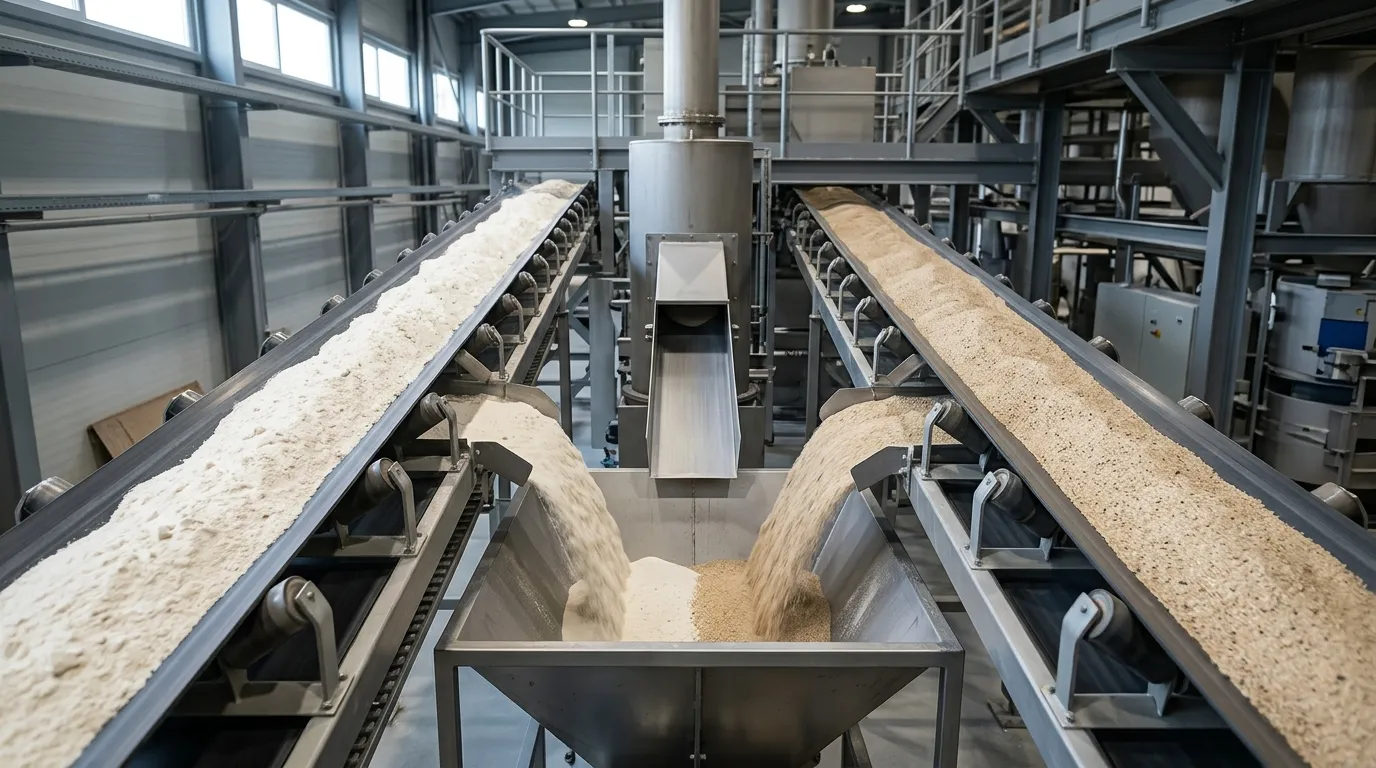
Soda ash is the common industrial name for sodium carbonate. In the dry-route production of sodium silicate, solid soda ash is combined with silica-bearing material, typically silica sand, and subjected to high-temperature processing. The soda component supplies sodium to the resulting sodium silicate structure.
A general industry description of sodium silicate production identifies soda ash and sand as the principal raw materials in a high-temperature fusion route. The relative quantities of the sodium-bearing and silica-bearing materials influence the composition of the sodium silicate produced. This relationship is often discussed in terms of the product’s silica-to-sodium oxide balance or modulus.
The chemical identity should remain clear during purchasing:
- Soda ash and sodium carbonate refer to the same chemical identity in this context.
- Soda ash is not sodium bicarbonate.
- Soda ash is not caustic soda.
- Solid soda ash should not be confused with a sodium silicate solution.
- A general sodium carbonate specification does not automatically establish suitability for every sodium silicate grade.
A broader discussion of sodium carbonate applications is available in Vanchor’s guide to sodium carbonate industrial uses.
For production planning, the important question is not simply whether the material is called soda ash. The plant must confirm that the offered grade, chemical quality, and physical form are compatible with its own sodium silicate process specification.
How soda ash and silica become sodium silicate
In the dry or fused route, soda ash and silica sand are prepared as solid raw materials and combined according to the producer’s formulation and process design. The mixture is then processed at high temperature to form sodium silicate. The resulting material may be further processed into the required solid or liquid product form.
The role of the soda ash-to-silica relationship is central:
- Soda ash supplies the sodium component.
- Silica supplies the silicon dioxide component.
- The relative amounts influence the composition and properties of the sodium silicate.
- Consistency in both raw materials supports consistent batching and composition control.
- The applicable ratio must come from the producer’s formulation and process specification.
Chemical Market Analytics describes sodium silicate as being produced by combining sand and soda ash at high temperature, with ratio adjustments used to produce different sodium silicate products. See its sodium silicate technical overview for the source description.
Process temperature must remain route-specific
Public sources do not provide one universal operating temperature for all sodium silicate production. One industry source describes furnace fusion at approximately 1,400°C, while another retrieved process description reports a temperature near 851°C for a particular soda ash and silica reaction route. These values should not be combined into a single standard.
The difference may reflect variations in:
- Furnace or reactor design.
- Whether the source describes fusion, reaction, or another process stage.
- Feed preparation and material composition.
- The intended sodium silicate product.
- The basis and scope of the source’s process description.
For this reason, a raw-material article should not prescribe a furnace temperature, residence time, or soda ash-to-silica ratio. Those parameters belong to the producer’s validated process design. The relevant purchasing task is to ensure that the soda ash specification is consistent with the plant’s established formulation and operating requirements.
Dense or light soda ash: which form is appropriate?
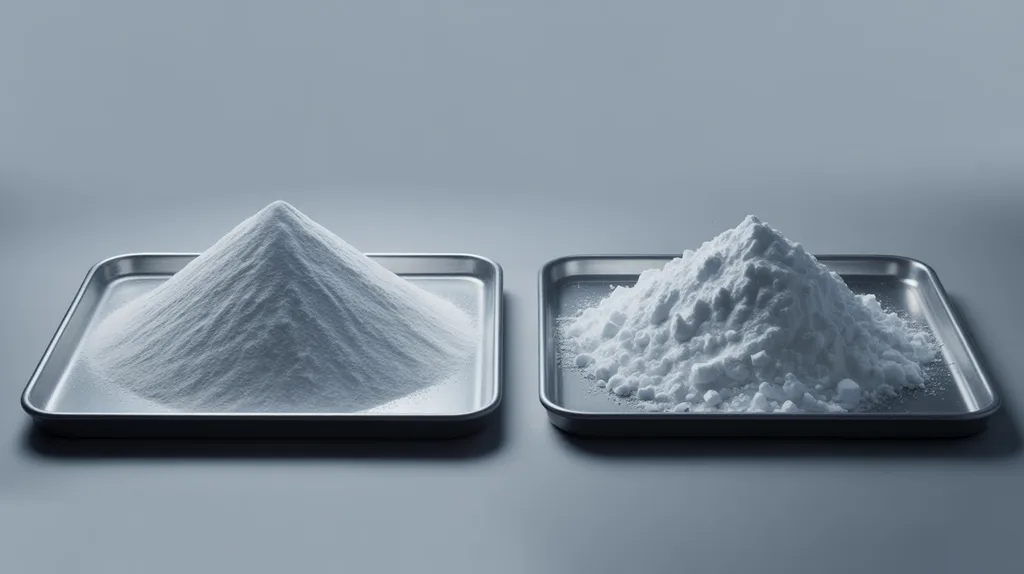
Dense and light soda ash are physical forms of sodium carbonate with different bulk-density and particle-handling characteristics. The chemical identity remains sodium carbonate, but the physical behavior of the supplied material can differ.
Some industry references associate dense soda ash with sodium silicate manufacture, and Vanchor’s soda ash light vs dense resource addresses the broader physical-form comparison. That association should be treated as a selection consideration rather than a universal rule.
The right question is not simply “Is dense soda ash better?” It is:
Which soda ash form matches the plant’s storage, conveying, feeding, batching, and reaction system?
| Decision question | What the plant should verify |
|---|---|
| Is the existing system designed for dense or light material? | Silo volume, conveying method, feeder design, and batching controls |
| Does the supplier define the physical form consistently? | Grade name, bulk-density range, particle-size method, and lot information |
| Are chemical and physical specifications separated? | Assay and impurity limits should be reviewed independently from density and particle size |
| Can the material be stored without serious caking? | Moisture condition, packaging, storage exposure, and discharge behavior |
| Will the supplied form affect feeder calibration? | Bulk-density basis and the equipment’s volumetric or gravimetric feeding method |
Dense soda ash may offer a higher bulk density than light soda ash, which can affect silo loading and the volume occupied by a given mass. Particle characteristics can also influence dusting, flow, segregation, and feeder behavior. These are process-fit considerations, not guaranteed performance claims.
A producer changing from one physical form to another should review:
- Feeder calibration.
- Silo capacity and level measurement.
- Conveying behavior.
- Dust-control arrangements.
- Material flow through hoppers and chutes.
- Batch calculations based on mass rather than assumed volume.
- Incoming inspection requirements.
Detailed particle-size considerations should be handled alongside the plant’s equipment requirements. Vanchor’s dense soda ash particle size page can serve as a related resource when the reader needs a more focused physical-property discussion.
Which soda ash properties should QA and operations verify?
For sodium silicate production, raw-material qualification should cover both chemical composition and physical handling. A high assay alone does not establish that a material will feed reliably or meet the plant’s process requirements.
Chemical and composition checks
The exact acceptance criteria should be set by the sodium silicate producer. Depending on the formulation and process, the technical specification may address:
- Sodium carbonate assay or purity basis.
- Moisture content and reporting basis.
- Insoluble matter or other relevant impurities.
- Limits for impurities that could affect product composition or process control.
- Lot or batch identification.
- Test methods used for each reported value.
- Whether results are minimum, maximum, or typical values.
The supplier’s technical data sheet and certificate of analysis should use the same chemical identity and grade description as the purchase order. If a specification gives a purity value without stating the test method or reporting basis, QA should request clarification before approval.
Physical and handling checks
Physical characteristics can affect the reliability of solids handling even when the chemical analysis is acceptable. The plant should determine whether it needs information on:
- Particle-size distribution.
- Bulk density.
- Moisture condition at dispatch and receipt.
- Flowability or caking tendency.
- Packaging format.
- Lot consistency.
- Storage recommendations.
- Compatibility with the existing feeding system.
Particle size and bulk density should not be treated as interchangeable measurements. Particle size describes the distribution of individual particles or agglomerates, while bulk density describes the mass occupying a defined volume under a stated test condition. Both may matter, but they answer different process questions.
| Check category | Why it matters | Evidence to request | Plant-specific decision |
|---|---|---|---|
| Assay | Supports material balance and composition control | TDS and lot COA | Required acceptance range |
| Impurities | May affect process control or product composition | Specification and test method | Which impurities are critical |
| Moisture | Affects supplied-material basis and handling | TDS or COA | Maximum acceptable condition |
| Particle size | Can affect feeding, dusting, and solids behavior | Particle-size result and method | Equipment compatibility |
| Bulk density | Influences silo loading and feeder behavior | Density result, range, and method | Calibration and capacity |
| Caking or flow | Can affect reliable discharge | Handling information or agreed test | Storage and discharge controls |
| Lot traceability | Supports investigation and release decisions | COA and batch identification | Internal QA procedure |
Moisture exposure during storage can contribute to caking. This means the material received by the plant should be considered together with packaging, warehouse conditions, transfer operations, and time in storage. A supplier specification cannot replace good storage control, and storage performance should not be inferred from assay alone.
The detailed storage requirements belong in a dedicated soda ash storage handling resource. In this article, the key point is that physical quality is part of process quality when soda ash is handled through silos, hoppers, conveyors, or feeders.
What should a buyer request before approving soda ash?
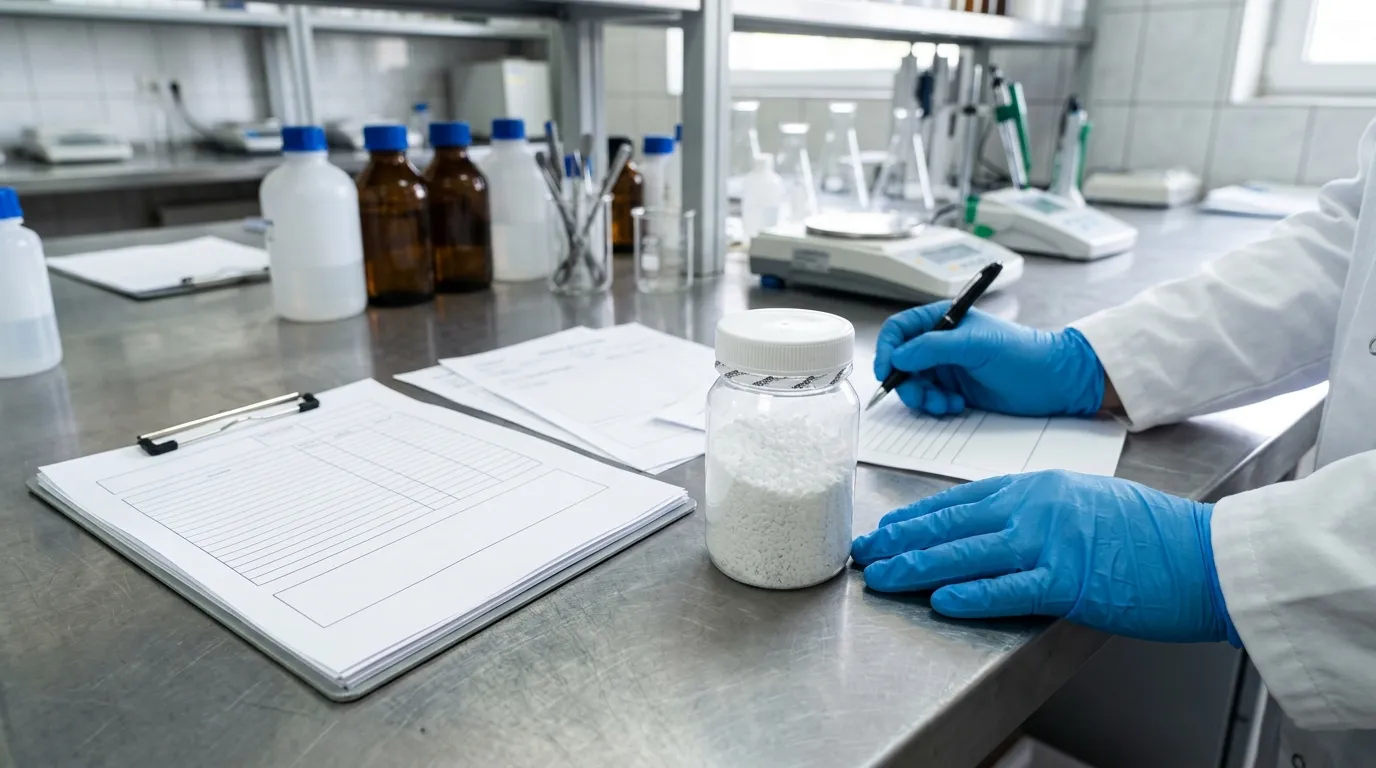
A technical RFQ for sodium carbonate used in sodium silicate production should identify the plant’s requirements before asking suppliers to quote. This helps prevent a chemically correct but physically unsuitable material from being approved.
A practical approval sequence is:
- Define the process requirement.
State that the material is intended for sodium silicate production and identify the relevant dry, fused, or other process route.
- Specify the required physical form.
If the plant requires dense or light soda ash, state that requirement. If either form may be considered, request comparable physical-property data for each option.
- Set chemical acceptance criteria.
Identify the required assay basis, moisture basis, relevant impurity limits, and test methods.
- Set physical acceptance criteria.
Request particle-size information, bulk density, caking or flow information where relevant, and the measurement methods used.
- Request quality documents.
Ask for the current technical data sheet, applicable safety data sheet, and a representative or lot-specific certificate of analysis.
- Compare the documents with plant requirements.
QA, operations, and procurement should confirm that the offered material matches the plant’s formulation, storage system, and feeding equipment.
- Approve the exact grade and form.
Approval should apply to the defined chemical and physical specification, not merely to the generic word “soda ash.”
A buyer should also confirm:
- The exact chemical name and physical form.
- The grade designation used on the quotation and documents.
- Whether reported values are minimum, maximum, or typical.
- The test method and units for each key property.
- Lot traceability and COA availability.
- Packaging and storage information.
- Whether the offered product is the same material represented in the technical documents.
A catalog listing by itself does not prove current stock, in-house manufacture, certification, product compliance, or suitability for a particular sodium silicate process. Those claims require direct, current evidence for the exact product and grade.
For product-level review, buyers may consult Vanchor’s sodium carbonate product information, while confirming the current page content and requesting the technical documents needed for their own approval process.
Process and procurement boundaries to keep in view
Soda ash is a well-established sodium-bearing raw material for the dry or fused production of sodium silicate, but raw-material selection remains plant-specific.
The main boundaries are:
- Do not treat dense soda ash as universally superior to light soda ash.
- Do not use a generic assay value as a substitute for the producer’s acceptance specification.
- Do not assume that particle size and bulk density are the same property.
- Do not present one process temperature as valid for every sodium silicate route.
- Do not transfer glass-industry preferences directly into sodium silicate production without process evidence.
- Do not approve a material from a catalog description alone.
- Do not treat an SDS as proof of product quality or application approval.
- Do not treat a COA as universal evidence for every batch or every application.
The most reliable purchasing decision combines three checks: chemical suitability, physical handling fit, and document consistency. If those three areas are defined before quotation and reviewed against the exact delivered grade, the buyer can evaluate soda ash for sodium silicate production without relying on unsupported assumptions.
For technical discussions about an exact sodium carbonate grade or physical form, contact Vanchor with the required assay, impurity, moisture, particle-size, bulk-density, packaging, and process requirements.


Contact Us
In This Article
Related Posts
Индивидуальные упаковочные решения от поставщика безводного ацетата натрия в Китае
2026-09-23
Тенденции применения безводного ацетата натрия для специального химического производства
2026-09-23
Безводный ацетат натрия для дубления кожи: улучшает равномерность окрашивания
2026-09-22
Formic Acid 85% for Animal Feed Preservation: Moisture and Storage Stability Guide
2026-09-21


