



Potassium Formate Manufacturer in China: What Global Buyers Should Check Before Ordering
By LIN
2026-09-01Related Posts
Индивидуальные упаковочные решения от поставщика безводного ацетата натрия в Китае
2026-09-23
Тенденции применения безводного ацетата натрия для специального химического производства
2026-09-23

Безводный ацетат натрия для дубления кожи: улучшает равномерность окрашивания
2026-09-22
Formic Acid 85% for Animal Feed Preservation: Moisture and Storage Stability Guide
2026-09-21
When buyers search for a potassium formate manufacturer in China, they are normally looking for a more direct source.
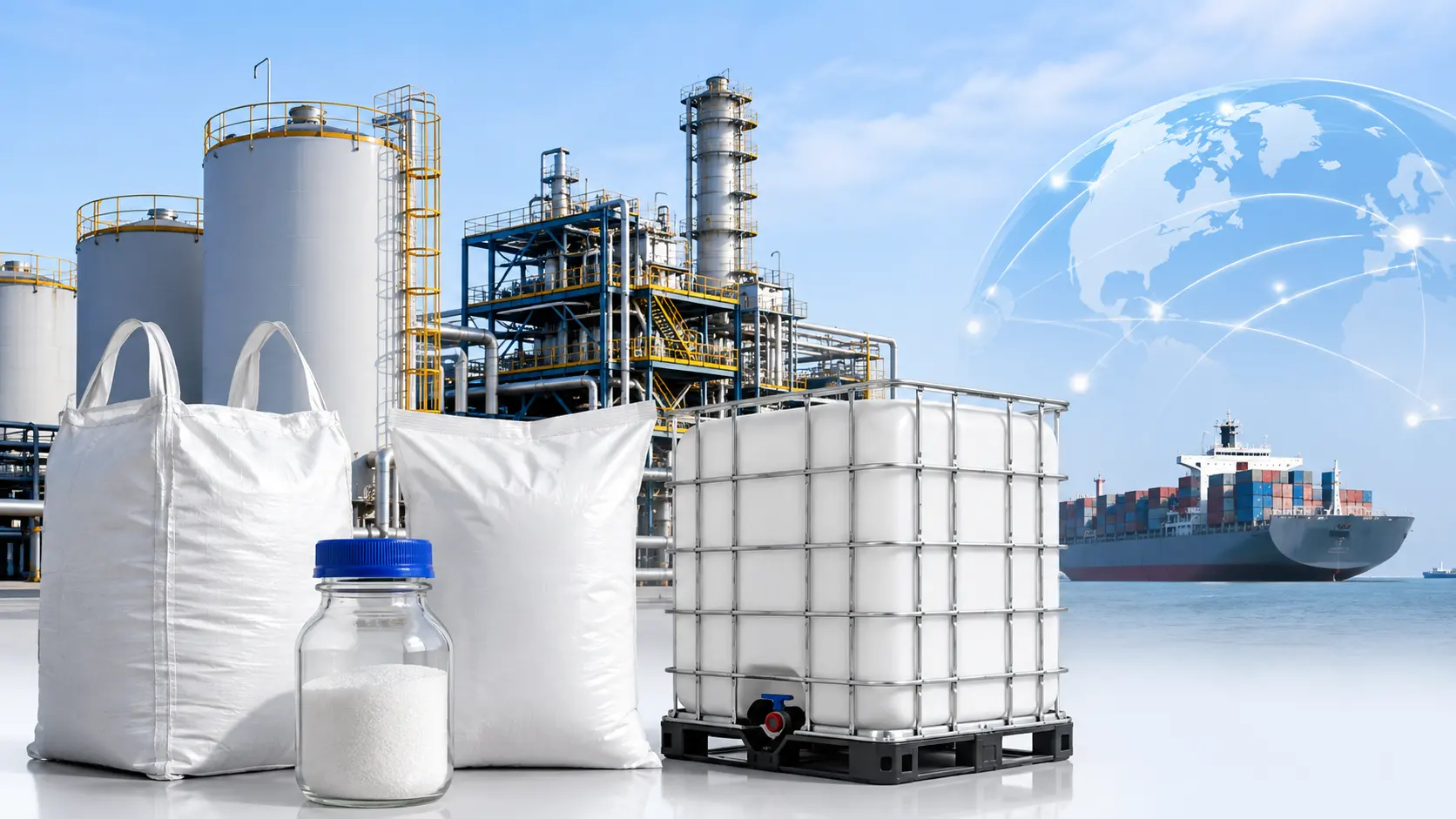
The reasons are pretty practical: better control over specification, more competitive pricing for larger orders, easier access to production information, and sometimes more flexibility on packaging or regular supply.
But “made in China” by itself doesn't tell you whether the potassium formate is good.
There are manufacturers, trading companies, exporters and companies doing a bit of everything. Some have strong production and QC systems. Others mainly compete on price.
For an industrial buyer, the main question should be:
Can this manufacturer supply the right specification consistently, not just once but across repeat orders?
Potassium formate, chemical formula HCOOK, CAS 590-29-4, is commonly supplied as concentrated liquid solution or high-content solid material. Typical applications include oilfield fluids, industrial refrigeration, heat-transfer systems, deicing formulations and other industrial chemical processes.
So if you're sourcing from China, it makes sense to check more than the factory address.
Why Source Potassium Formate From China?
China has a large industrial chemical manufacturing base, and that gives international buyers quite a few sourcing options.
For potassium formate, buyers may be looking for:
- Factory-direct supply
- Container-level pricing
- Regular monthly shipments
- Solid and liquid grades
- Custom packing
- Export documentation
- Technical support
- Long-term contracts
For larger purchasing programs, buying closer to the manufacturer can also make communication easier when something technical needs to be confirmed.
For example, if you need a tighter chloride limit, you would rather discuss it with the people controlling production than pass the question through several layers of sales companies.
That doesn't mean trading companies are bad.
Some are very good.
But for technically sensitive or large-volume orders, direct manufacturing access can be useful.
First Confirm What the Company Actually Is
This sounds basic, but it's worth doing.
A company website may say “manufacturer,” while the actual business model is mainly trading.
Before placing a large order, check:
- Factory address
- Production equipment
- Business scope
- Quality system
- Laboratory capability
- Production photos or audit records
- Whether the company can trace batches back to production
If possible, ask for a video factory tour or arrange a third-party audit.
You don't need to be suspicious of every supplier.
You just need to know who is actually making the material you're buying.
Liquid or Solid Potassium Formate?
Chinese manufacturers may supply potassium formate in more than one form.
| Factor | 75% Potassium Formate Solution | High-Content Solid |
|---|---|---|
| Product form | Clear liquid | Crystalline solid |
| Local dissolution | Usually not needed | Required |
| Pumping | Direct | After dissolution |
| Active content per ton | Lower | Higher |
| Freight efficiency | More water transported | Better per active kg |
| Storage concern | Low-temperature crystallization | Moisture absorption |
| Typical buyer | Fluid formulator | Distributor / brine plant |
For oilfield and fluid-blending companies, 75% liquid can be convenient because it can be pumped and diluted directly.
Solid potassium formate is more attractive when buyers want to reduce transported water or prepare several concentrations locally.
The important thing is to compare total operating cost, not just product price.
Don't Compare Quotations Until the Specification Matches
This is one of the biggest sourcing mistakes.
Supplier A quotes a low price.
Supplier B is $40 higher.
The buyer assumes Supplier A is cheaper.
But then you look closer and find the two specifications are different.
One has tighter chloride control.
One has lower insoluble matter.
One includes better packaging.
So before comparing price, put the technical details side by side.
| Parameter | Why It Matters |
|---|---|
| Assay / concentration | Confirms active product |
| Density | Important for liquid QC |
| pH | Relevant to formulation |
| Chloride | Important in corrosion-sensitive systems |
| Iron | May indicate metallic contamination |
| Insoluble matter | Important for clear brines |
| Appearance | Quick incoming check |
| Moisture | Important for solid product |
For repeat industrial purchasing, a slightly higher quotation can actually be the better deal if the specification is tighter and the batches are more consistent.
Ask for Several Recent COAs
A manufacturer can send one perfect COA.
That is useful, but not enough.
If you're evaluating a China potassium formate manufacturer for long-term supply, ask for COAs from several recent batches.
You are looking for consistency.
The values don't have to be exactly the same.
Real production always has some normal variation.
But you should see that:
- Assay stays inside the agreed range
- Chloride remains controlled
- Iron doesn't jump suddenly
- Insoluble matter stays low
- Liquid density remains predictable
That gives you a much better idea of how the factory actually runs.
Chinese Factory Price Is Only One Part of the Cost
International buyers often focus heavily on FOB China price.
Fair enough.
But the real cost may include:
**Product
- packaging
- inland freight
- ocean freight
- insurance
- customs
- destination charges
- local delivery
- storage
- testing
- handling**
For liquid potassium formate, freight efficiency also matters because part of the shipment weight is water.
For solid product, freight per active kilogram may be lower, but local dissolution adds work.
If you only compare USD/MT, you can miss quite a lot.
Export Experience Matters
A factory can produce a good chemical and still be poor at exporting it.
International shipments need correct handling of:
- Commercial invoice
- Packing list
- COA
- TDS
- SDS
- Certificate of origin when required
- Bill of lading details
- Container loading
- Shipping schedule
One small document error can create days of unnecessary communication.
Experienced export manufacturers are generally better at catching these issues before shipment.
Ask whether the company has shipped potassium formate or similar chemicals to your region before.
That can be useful, especially if your destination has specific labeling or document requirements.
Packaging Should Be Checked Before the PO
For liquid potassium formate, common questions include:
- What is the net weight per IBC?
- What type of IBC is used?
- How is the valve sealed?
- How many IBCs fit in a container?
- What storage temperature is recommended?
For solid material:
- What is the bag size?
- Is there an inner liner?
- Is the packaging moisture-resistant?
- Are jumbo bags available?
- How is the pallet wrapped?
Solid potassium formate is hygroscopic.
If moisture protection is poor, the material can cake during storage or transport.
For liquid product, low-temperature storage may cause crystallization depending on concentration.
Neither issue is difficult to manage if you know about it in advance.
Production Capacity Should Be Discussed Honestly
China has many large chemical factories, but buyers should still ask what capacity is actually available for their orders.
Useful questions include:
- Normal monthly output
- Current production schedule
- Peak-season lead time
- Safety stock
- Raw-material supply
- Maintenance planning
- Contract-customer allocation
If your first order is 20 MT and the next one may be 200 MT, say so early.
A good manufacturer can plan around expected demand.
A factory that promises any volume immediately without checking production may be giving you a sales answer rather than a real production answer.
Quality Certification Helps, but Doesn't Replace Batch Testing
Management certifications can be useful indicators.
They show that the manufacturer has documented systems for quality, environment or workplace management.
But a certificate is not the same thing as a good shipment.
For potassium formate, I would still prioritize:
- Actual specification
- Recent batch COA
- Sample testing
- Packaging inspection
- Factory audit where needed
A certificate supports the supplier evaluation.
It should not replace it.
A Simple China Supplier Evaluation Table
| Question | Better Sign | Warning Sign |
|---|---|---|
| Are you the actual manufacturer? | Clear factory information | Avoids answering |
| Can you send recent COAs? | Several batches available | Only one old report |
| What is the chloride limit? | Gives a measurable value | Only says “low chloride” |
| Can you supply liquid and solid? | Clear product range | Product details keep changing |
| What is normal lead time? | Gives realistic schedule | Always says “immediate” |
| How much loads per container? | Exact figures | No clear answer |
| Can you support repeat orders? | Discusses forecast planning | Focuses only on first order |
Frequently Asked Questions
Why do international buyers source potassium formate from China?
China has established industrial chemical manufacturing capacity, competitive export pricing and good access to large-volume production.
How do I know if a Chinese supplier is really a manufacturer?
Check factory details, business scope, production records, QC capability and, for larger orders, consider a factory audit.
What potassium formate grades are commonly supplied?
Concentrated liquid solution and high-content solid potassium formate are both common industrial forms.
Is factory-direct always cheaper?
Not always. Trading companies may sometimes have better local logistics or smaller-order flexibility.
Should I request a sample?
Yes, especially when qualifying a new manufacturer for a technical application.
Should I ask for several COAs?
For long-term supply, yes. Several batch COAs help you evaluate consistency.
Why does chloride matter?
Trace chloride can be important in corrosion-sensitive oilfield, refrigeration and industrial fluid systems.
Is Chinese potassium formate quality consistent?
Quality depends on the individual manufacturer. That is why specification, COA and supplier qualification matter.
What documents should be available?
COA, TDS and SDS should normally be available, together with export documents for international shipments.
Can Chinese manufacturers supply bulk quantities?
Many can, but actual available capacity and lead time should be confirmed instead of assumed.
Is liquid potassium formate easier to use?
Usually yes for plants with pumping and blending equipment because it does not require a separate dissolution stage.
Is solid potassium formate cheaper to ship?
It can be more freight-efficient per active kilogram because less water is transported.
What should I check before paying a deposit?
Confirm specification, packaging, lead time, payment terms, Incoterm and required documents in writing.
Should I visit the factory?
For large annual purchasing programs, a visit or independent audit can be worthwhile.
What matters most when choosing a manufacturer in China?
For me, it is consistent production plus clear communication.
A competitive price is useful, but only if the factory can repeatedly deliver the specification you agreed on.
Final Thoughts
Choosing a potassium formate manufacturer in China should not be based only on who sends the lowest quotation first.
The better approach is to compare the whole supply picture:
product grade, specification, batch consistency, manufacturing capability, packaging, export experience and lead time.
China can be a very practical source for large-volume potassium formate.
But like any industrial chemical purchase, the supplier still needs to be qualified properly.
If the factory can show stable COAs, give clear answers, package the material correctly and support repeat shipments without changing the specification every time, that is usually a much stronger sign than a very cheap first price.


Contact Us
In This Article
Related Posts
Индивидуальные упаковочные решения от поставщика безводного ацетата натрия в Китае
2026-09-23
Тенденции применения безводного ацетата натрия для специального химического производства
2026-09-23
Безводный ацетат натрия для дубления кожи: улучшает равномерность окрашивания
2026-09-22
Formic Acid 85% for Animal Feed Preservation: Moisture and Storage Stability Guide
2026-09-21


