



Polyacrylamide Emulsion vs Powder: Dissolution, Handling, and Cost Tradeoffs
By Tonmoy
2026-09-11Related Posts
Индивидуальные упаковочные решения от поставщика безводного ацетата натрия в Китае
2026-09-23
Тенденции применения безводного ацетата натрия для специального химического производства
2026-09-23

Безводный ацетат натрия для дубления кожи: улучшает равномерность окрашивания
2026-09-22
Formic Acid 85% for Animal Feed Preservation: Moisture and Storage Stability Guide
2026-09-21
Polyacrylamide (PAM) powder and emulsion are different supply forms of the same polymer family, but they create different demands for preparation, storage, dosing, and purchasing. Neither form is universally better.
Powder is often attractive when high supplied-product concentration, dry storage, bulk logistics, and existing make-down equipment are important. Emulsion is often attractive when faster preparation, liquid metering, reduced dry-powder handling, or limited make-down infrastructure matter.
The fairest decision compares the same PAM grade on an active-polymer basis while also considering labor, equipment, freight, storage, and operating conditions.
The comparison starts with physical form, not PAM grade
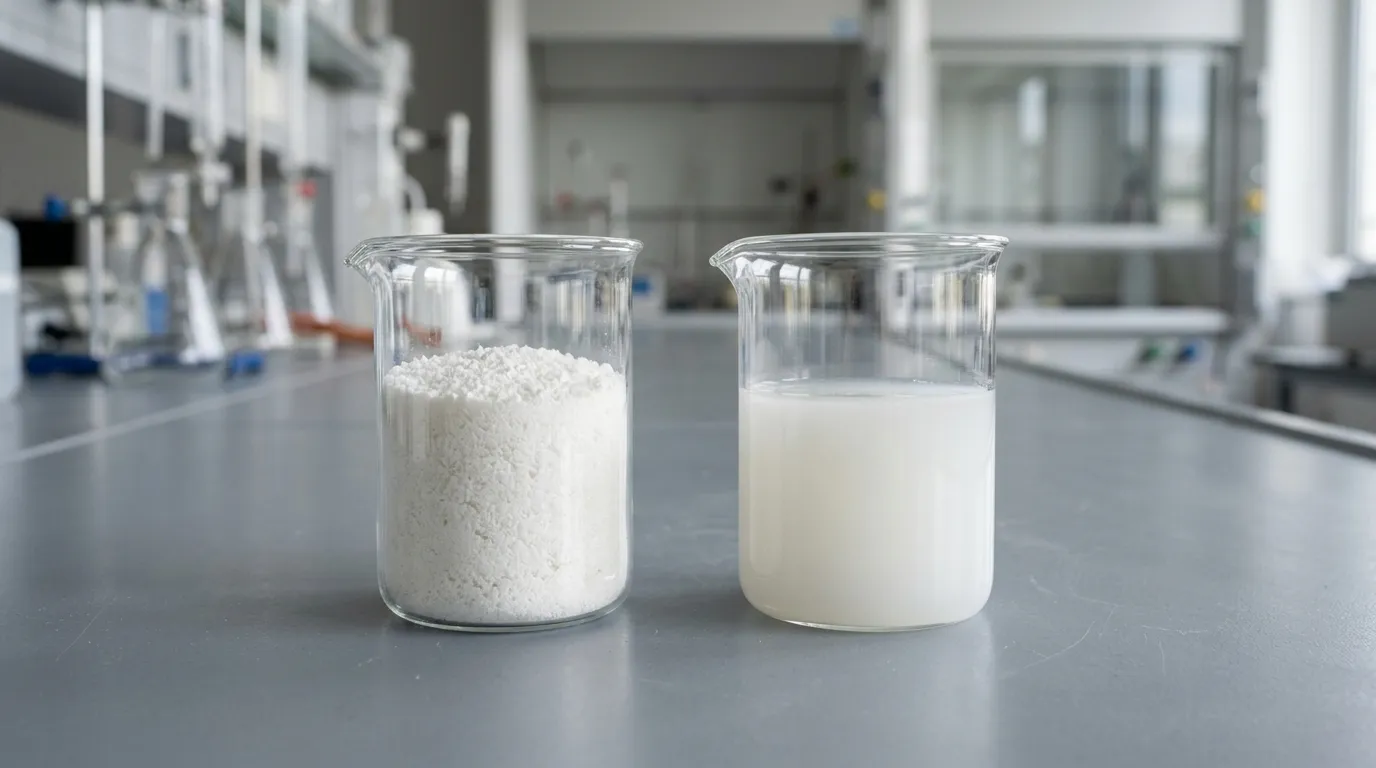
PAM powder is supplied as a dry solid. It must be wetted, dispersed, and prepared into a usable solution or working dilution before dosing.
PAM emulsion is supplied as a liquid formulation, commonly designed to be diluted and mixed before use. Its liquid form can simplify handling and preparation, but it also introduces carrier liquid, liquid-storage requirements, and different pumping considerations.
The physical form does not determine whether a product is suitable for a particular process. A meaningful comparison should keep the following variables as consistent as possible:
- Ionic type, such as anionic, cationic, or nonionic
- Molecular-weight range
- Charge density or degree of ionic character
- Application and process conditions
- Required active-polymer dose
- Preparation and dosing method
For example, comparing a cationic emulsion with an anionic powder would not show the effect of physical form alone. The difference could result from the polymer’s ionic type, molecular-weight profile, or application suitability.
A useful starting point for the broader product family is Vanchor’s polyacrylamide resource. Detailed grade decisions should remain separate from the powder-versus-emulsion decision.
Dissolution and make-down: why emulsion is often faster, but not automatically better
The most common operational reason for considering emulsion is preparation speed. Liquid emulsion products are generally designed to disperse more quickly than dry powder under suitable make-down conditions. A study of a specific ultra-high-concentration cationic polyacrylamide emulsion also reported rapid dissolution and convenient operation in a paper-mill wastewater application, but that result applies to the tested formulation and process—not to every PAM emulsion. Read the study.
Powder preparation typically requires careful wetting and dispersion. If powder contacts water unevenly, partially hydrated material can form lumps or fisheyes that take longer to break down. The preparation system may therefore require controlled feeding, adequate mixing, and sufficient time for hydration before the solution is dosed.
Emulsion does not eliminate preparation requirements. The product still needs compatible dilution, mixing, transfer, and metering conditions. A liquid product can be easier to pump, but its viscosity, stability, storage condition, and compatibility with the dosing system remain product-specific questions.
Dissolution or make-down time is not a universal specification. It can vary with:
- Polymer formulation and grade
- Product concentration
- Dilution ratio
- Water quality
- Mixing intensity and equipment design
- Temperature
- Preparation procedure
- Required working-solution concentration
- Time allowed before dosing
For that reason, supplier statements such as “rapid dissolution” should be evaluated together with the test conditions. A reported time from one emulsion cannot automatically be compared with a reported time from a powder prepared at a different concentration or with different mixing equipment.
Vanchor’s liquid emulsion product information states that its listed product is intended to reduce mixing time compared with powder. That is a site-stated product claim and should not be treated as a universal performance specification for all emulsions.
The practical question is therefore not simply “which dissolves faster?” It is:
Which form can be prepared consistently at the required concentration with the equipment, labor, and control available at the site?
For more detailed concentration considerations, readers can review polyacrylamide make down concentration. Any operating procedure should still follow the exact product documentation and site validation requirements.
Handling, storage, and equipment tradeoffs at the plant
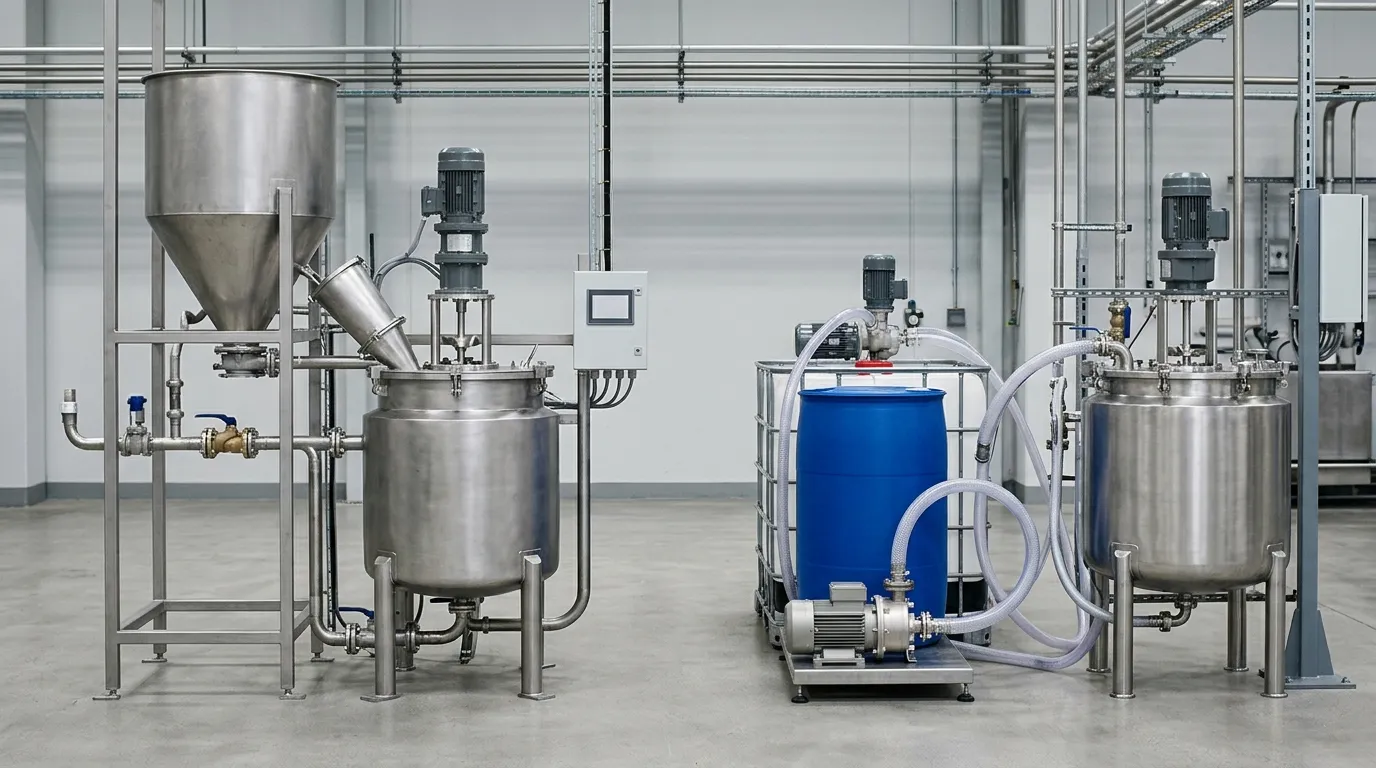
Powder handling
Powder can create dry-powder dust during bag opening, conveying, feeding, and transfer. A powder system may require controlled material handling, dust management, accurate feeding, wetting, mixing, and sometimes an aging or hydration stage before dosing.
Powder can be a practical fit when a facility already has:
- Dry-feed equipment
- A suitable make-down tank and mixer
- Established powder-handling controls
- Sufficient space for preparation and storage
- Operators familiar with dry polymer preparation
The higher concentration of polymer in a dry product can also reduce the amount of carrier liquid that must be purchased, transported, and stored. The actual logistics benefit depends on the product specification, packaging, order quantity, freight route, and destination.
Emulsion handling
Emulsion avoids dry-powder feeding and can reduce the amount of dry material handling around the preparation area. It may be attractive where operators want liquid metering, faster preparation, or a smaller make-down operation.
An emulsion system may require:
- Liquid storage compatible with the product
- Transfer and metering equipment
- Suitable pumping arrangements
- Mixing or dilution equipment
- Controls for product stability and storage conditions
Reduced powder handling does not mean that an emulsion requires no controls. Storage temperature, packaging, transfer method, viscosity, and product stability must be checked against the supplier’s documentation.
Storage requirements should not be generalized across all PAM products. Powder may require protection from moisture, while emulsion storage may require attention to temperature and product stability. Shelf life, freezing limits, storage temperature, and packaging compatibility should be confirmed for the exact grade and form. Vanchor’s polyacrylamide storage resource is relevant for this part of the evaluation, but product-specific limits should come from the applicable technical documents.
| Decision factor | Powder implication | Emulsion implication | What to verify |
|---|---|---|---|
| Dry dust | May require controlled dry handling | Avoids dry-powder feeding | Site handling and safety controls |
| Make-down equipment | Usually requires controlled wetting and mixing | Requires dilution, mixing, and liquid metering | Supplier instructions and plant compatibility |
| Storage | Protect from moisture and unsuitable conditions | Confirm temperature, stability, and packaging limits | Exact product documentation |
| Footprint | May need dry-feed and preparation equipment | May need liquid storage and transfer equipment | Available space and existing infrastructure |
| Operator workload | More dry handling and preparation control | Potentially simpler material transfer, but still requires process control | Labor and operating routine |
The lower handling burden of one form at a particular facility does not establish a universal technical or safety advantage. The decision depends on the complete installation.
Cost comparison: use active-polymer cost and total cost of ownership
A powder may have a higher polymer concentration on a supplied-product basis than an emulsion. This means that comparing price per tonne of product can produce a misleading result.
The first normalization is active-polymer cost:
Required supplied product = required active polymer ÷ active fraction
For example, if a process requires a defined mass of active polymer, the buyer must divide that requirement by the active fraction of the proposed product. The calculation is only meaningful when the products have comparable grade, application suitability, and concentration basis.
The active fraction must be confirmed from the exact product documentation. Do not use a generic industry average, and do not transfer the active-content statement from one emulsion product to an unspecified powder or another emulsion.
A broader total-cost comparison may include:
- Chemical price on a comparable active-polymer basis
- Freight and insurance
- Storage volume
- Packaging and disposal
- Labor for preparation and handling
- Make-down water
- Mixing and pumping energy
- Equipment purchase or modification
- Maintenance
- Product losses and waste
- Operational disruption during preparation
Powder may have a logistics advantage where reduced carrier-liquid volume, bulk purchasing, and existing dry make-down infrastructure are important. Emulsion may offset a higher supplied-product price in some installations if it reduces preparation labor, powder-handling requirements, or infrastructure complexity. These effects are site-specific and should be calculated rather than assumed.
A procurement comparison should therefore separate:
- Chemical cost per unit of active polymer
- Freight and storage cost
- Preparation labor and utility cost
- Equipment and maintenance cost
- Any verified difference in operating reliability or waste
No universal percentage saving or payback period should be applied without dated, grade-specific, quantity-specific, and location-specific commercial data.
When powder is the better operational fit—and when emulsion is
Powder may fit better when:
- The facility already operates suitable dry-feed and make-down equipment.
- Bulk storage and higher supplied-product concentration are important.
- Freight and storage volume materially affect the purchasing decision.
- The site has established controls for powder handling and hydration.
- The operation can manage the preparation time required by the selected product.
Emulsion may fit better when:
- Faster preparation is a priority.
- Liquid metering is easier to integrate than dry feeding.
- The site wants to reduce dry-powder handling.
- Space, labor, or make-down complexity is constrained.
- The product’s storage and transfer requirements are compatible with the facility.
Neither list should be treated as a universal selection rule. The preferred form may change if the grade changes, the application changes, or the site has different equipment and labor costs.
The comparison should also distinguish preparation speed from treatment performance. An emulsion that disperses quickly is not automatically a better flocculant than a powder. Performance depends on the polymer grade, process chemistry, application conditions, preparation quality, and dose. The form should be selected only after confirming that the proposed grade is suitable for the intended process.
What to request before approving a PAM form
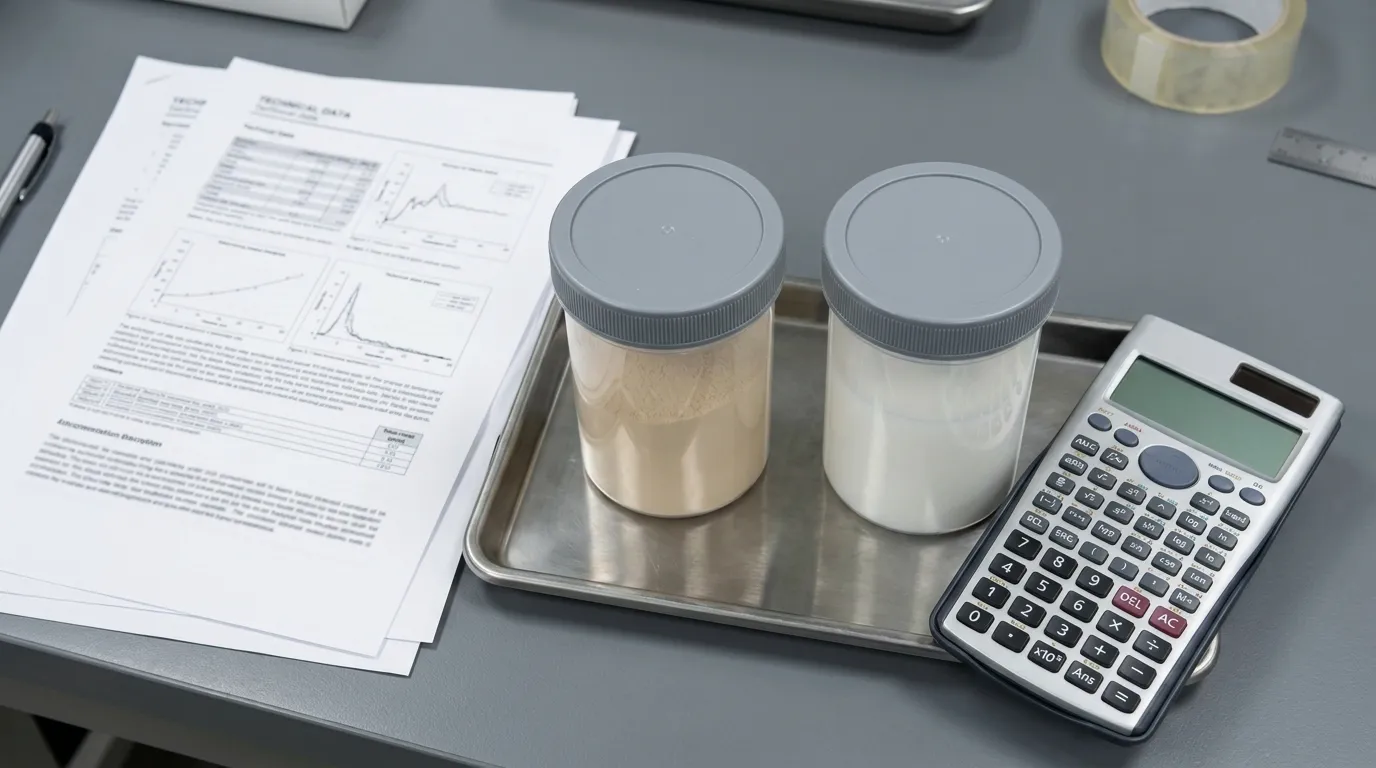
Before approving powder or emulsion, procurement, QA, and operations teams should request information for the exact proposed grade and form:
- Ionic type and application designation
- Molecular-weight range and charge-density information, where applicable
- Active-polymer content and test method
- Recommended make-down or dilution conditions
- Storage temperature and stability requirements
- Moisture-protection requirements for powder
- Packaging and transfer requirements for emulsion
- Technical data sheet and safety data sheet
- Representative certificate of analysis or batch documentation
- Supplied-product price and active-polymer price basis
- Incoterm, quantity, destination, and freight assumptions
- Compatibility with existing feeding, mixing, pumping, and storage equipment
- Product-specific performance data or site test requirements where equivalence is important
A certificate of analysis can document results for a particular batch, but it does not by itself establish universal product approval or performance. Similarly, an SDS provides important hazard and handling information but should not be treated as proof of food, feed, pharmaceutical, or drinking-water suitability.
The information should also preserve the distinction between:
- Product as supplied
- Active-polymer content
- Working-solution concentration
- Required active-polymer dose
- Grade-specific performance
These values are not interchangeable.
Final selection boundary: form is only one part of PAM fit
Powder and emulsion should be compared as equivalent PAM grades and evaluated on an active-polymer basis.
Powder is often the stronger operational fit where concentration, dry logistics, bulk storage, and existing make-down infrastructure matter. Emulsion is often the stronger fit where preparation convenience, liquid metering, reduced dry-powder handling, or limited site infrastructure matter.
The final decision should be based on:
- Grade and application suitability
- Preparation consistency
- Handling and storage requirements
- Existing plant equipment
- Active-polymer cost
- Freight and storage economics
- Labor and maintenance
- Product-specific technical documentation
The most reliable purchasing comparison is not “powder or emulsion in general,” but whether a specific powder or emulsion grade can meet the process requirement at an acceptable total operating cost.


Contact Us
In This Article
Related Posts
Индивидуальные упаковочные решения от поставщика безводного ацетата натрия в Китае
2026-09-23
Тенденции применения безводного ацетата натрия для специального химического производства
2026-09-23
Безводный ацетат натрия для дубления кожи: улучшает равномерность окрашивания
2026-09-22
Formic Acid 85% for Animal Feed Preservation: Moisture and Storage Stability Guide
2026-09-21


