



Chloride Free Deicing Fluid: Alternatives, Applications and Buying Guide
By LIN
2026-09-02Related Posts
Индивидуальные упаковочные решения от поставщика безводного ацетата натрия в Китае
2026-09-23
Тенденции применения безводного ацетата натрия для специального химического производства
2026-09-23

Безводный ацетат натрия для дубления кожи: улучшает равномерность окрашивания
2026-09-22
Formic Acid 85% for Animal Feed Preservation: Moisture and Storage Stability Guide
2026-09-21
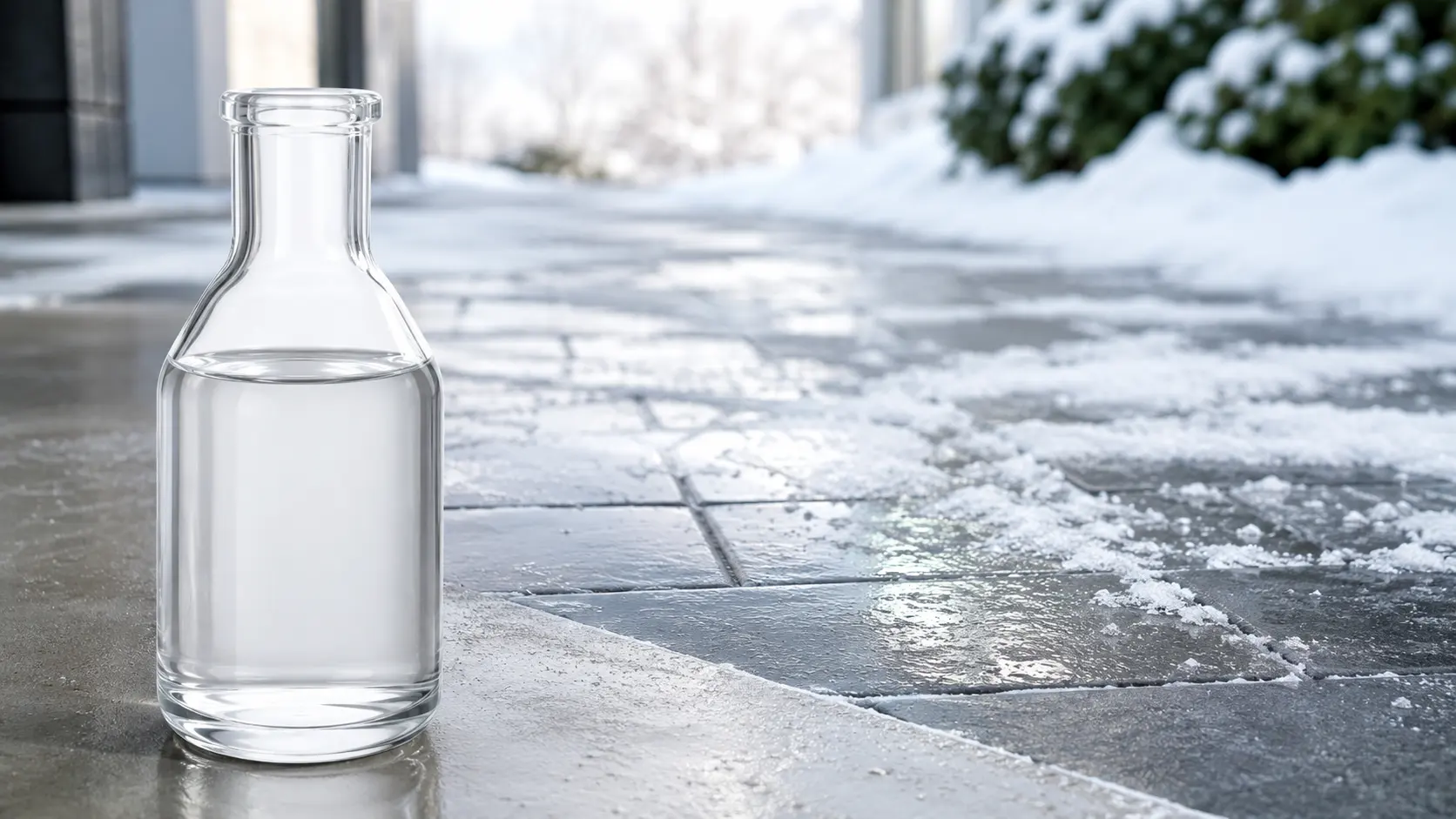
A chloride free deicing fluid is a liquid winter-maintenance formulation designed to control frost, snow and ice without using sodium chloride, calcium chloride or magnesium chloride as its primary active deicing salt.
For many roads, ordinary chloride salts still make sense. They are inexpensive, widely available and easy to use.
But some winter-maintenance projects have different priorities.
Bridge decks, parking structures, industrial facilities, logistics terminals and airport pavements may have more sensitive steel, reinforced concrete, electrical equipment or drainage systems. In these locations, reducing chloride exposure can become an important part of the maintenance strategy.
This is where chloride-free deicing chemistries such as potassium formate, potassium acetate and sodium formate become more interesting.
For liquid formulations in particular, potassium formate offers high water solubility and good compatibility with pumping and spray equipment. Manufacturers developing non-chloride winter fluids can use concentrated Potassium Formate 75% Solution as a raw-material feedstock and adjust the final working concentration for the intended application.
The important point is that chloride-free does not automatically mean corrosion-free, environmentally harmless or suitable for every surface.
The finished fluid still needs proper formulation and testing.
What Does Chloride Free Deicing Fluid Mean?
Traditional road deicers are usually based on chloride salts such as:
- Sodium chloride
- Calcium chloride
- Magnesium chloride
A chloride-free formulation uses another freezing-point depressant instead.
Common alternatives include:
- Potassium formate
- Sodium formate
- Potassium acetate
- Sodium acetate
- Calcium magnesium acetate in some formulations
EPA has identified potassium formate, sodium formate and acetate-based products among alternative deicing and anti-icing materials used where operators want alternatives to older deicing chemistries.
The term chloride free, however, should be used carefully.
A potassium formate product is not based on chloride chemistry, but a commercial raw material may still contain a small chloride impurity depending on manufacturing specifications.
For technical purchasing, it is therefore better to check the actual chloride limit on the COA rather than relying only on the marketing phrase.
How Does a Chloride-Free Deicer Work?
Potassium formate and other soluble deicing salts work primarily through freezing-point depression.
When dissolved in water, the ions interfere with the normal formation of ice crystals.
Applied to pavement, a chloride-free liquid can:
- Melt frost and thin ice
- Weaken ice-to-pavement bonding
- Create a liquid brine layer
- Support plowing and brushing
- Help prevent refreezing
- Provide preventive anti-icing protection
The effectiveness depends on concentration, pavement temperature, precipitation and application rate.
A formulation used at -3°C does not necessarily need the same concentration as one intended for much colder pavement.
That is why finished-fluid testing is more useful than making a universal claim such as “works down to -30°C.”
Chloride-Free Deicing vs Anti-Icing
The same liquid may be used in two different ways.
Deicing
The chemical is applied after ice has formed.
Its purpose is to weaken or melt the existing frozen layer.
Anti-Icing
The fluid is applied before or during the early stage of a weather event.
Its purpose is to stop snow or frost from bonding tightly to the pavement.
For professional winter maintenance, preventive anti-icing can reduce the amount of corrective work required later.
Practical Difference
| Method | Application Timing | Main Objective |
|---|---|---|
| Deicing | After ice forms | Melt or loosen existing ice |
| Anti-icing | Before strong bonding | Prevent ice adhesion |
| Mechanical removal | During/after snowfall | Remove snow and slush |
| Combined program | Throughout weather event | Maintain usable pavement efficiently |
For liquid potassium formate formulation details, manufacturers can also review Vanchor's Potassium Formate Liquid Deicer Guide.
Why Reduce Chloride in Winter Maintenance?
Chloride salts are effective, but repeated exposure can create maintenance concerns.
Depending on the site, chloride may contribute to corrosion or deterioration involving:
- Vehicles
- Structural steel
- Reinforcing steel
- Pumps and spray equipment
- Electrical systems
- Some concrete structures
EPA also notes that common road-salt use can create water-quality issues around surrounding areas, which is one reason deicing-material application and storage need management.
A chloride-free system can reduce direct chloride loading.
But this should not be translated into:
“No chloride means no corrosion.”
That would be too strong.
Formate- and acetate-based formulations can still interact with metals, pavement and equipment. Their performance depends on concentration, pH, inhibitor package, impurities and exposure time.
The finished formulation should still undergo appropriate materials testing.
Potassium Formate vs Other Chloride-Free Deicers
There is more than one way to formulate a non-chloride winter product.
| Chemistry | Typical Form | Main Advantage |
|---|---|---|
| Potassium formate | Liquid | High solubility and easy spray formulation |
| Potassium acetate | Liquid | Established specialty and aviation use |
| Sodium formate | Often solid | High-active-content non-chloride option |
| Sodium acetate | Solid / formulated | Non-chloride deicing chemistry |
| CMA | Solid / formulated | Used where chloride reduction is valued |
Potassium formate tends to be attractive where the buyer wants a liquid formulation.
Its high solubility makes it suitable for:
- Tank storage
- Metered pumping
- Spray bars
- Fixed bridge systems
- Automated anti-icing equipment
Sodium formate may make more sense where a dry solid product is required.
Potassium acetate is another established liquid option.
The right chemistry depends on cost, surface, equipment and regulatory requirements.
Roads, Bridges and Parking Structures
Chloride-free deicing fluids are usually most commercially attractive when used selectively.
Treating thousands of kilometers of ordinary roadway with a specialty fluid can become expensive.
Targeted applications may include:
- Bridge decks
- Elevated ramps
- Parking structures
- Tunnel approaches
- Critical intersections
- Commercial access roads
Bridge structures are particularly interesting because both icing risk and long-term infrastructure protection can be important.
A liquid formulation can also be integrated into fixed anti-icing systems and applied before frost develops.
This targeted approach often makes more economic sense than trying to replace conventional road salt everywhere.
Industrial and Logistics Applications
For a warehouse or distribution center, winter maintenance is not only a road-safety issue.
It is an operational issue.
Ice can affect:
- Truck entrances
- Loading docks
- Container yards
- Emergency routes
- Employee access
- Forklift areas
A chloride-free liquid may be considered where businesses want precise spray application and reduced chloride exposure around equipment or infrastructure.
The purchasing decision should consider the total cost of keeping the site operational, not simply the chemical price per ton.
Chloride-Free Airport Deicing Fluids
Airport pavement is one of the most technically demanding applications.
FAA's January 9, 2026 Engineering Brief states that recommended liquid runway deicing and anti-icing products include potassium acetate- and potassium formate-based fluids meeting SAE AMS 1435. Solid airfield products such as sodium formate fall under SAE AMS 1431.
This does not mean any industrial potassium formate solution can be sprayed directly on an airport runway.
The complete runway formulation needs to meet the applicable aviation specification.
FAA specifically warns that simply mixing or brining raw deicing material does not automatically produce a compliant liquid airfield product.
For airport applications, finished-product qualification may include:
- Ice-melting performance
- Anti-icing performance
- Corrosion
- Material compatibility
- Storage stability
- Environmental information
- Applicable SAE testing
A potassium formate supplier provides the raw material.
The runway-fluid manufacturer qualifies the finished aviation product.
Environmental Performance Still Requires Management
One advantage often associated with formate deicers is biodegradability.
EPA technical material identifies potassium formate and related alternative deicing chemicals as readily biodegradable alternatives with favorable characteristics compared with some older airfield chemistries.
However, biodegradable does not mean zero environmental impact.
Formate entering surface water can consume oxygen during biological degradation.
Operators still need to consider:
- Application rate
- Runoff
- Stormwater
- Nearby waterways
- Drainage
- Wastewater treatment
The best environmental strategy is usually a combination of appropriate chemistry and accurate application.
Using twice as much chloride-free fluid as necessary is still wasteful.
Choosing the Working Concentration
Commercial potassium formate may be purchased as a strong concentrate and then diluted.
Concentration influences:
- Freezing point
- Density
- Viscosity
- Pumpability
- Crystallization
- Cost per treated area
For more technical background, see Vanchor's Potassium Formate Brine Properties Guide.
The optimum working concentration should be selected according to the actual winter environment.
Using the maximum concentration available is not automatically the best approach.
The formulation has to stay pumpable, stable and commercially reasonable.
What Should Buyers Check?
A manufacturer purchasing potassium formate for chloride-free deicing fluid should normally review:
| Parameter | Why It Matters |
|---|---|
| Potassium formate content | Confirms active ingredient |
| Density | Supports liquid QC |
| pH | Influences formulation and corrosion |
| Chloride | Important for chloride-free positioning |
| Iron | Helps monitor consistency |
| Insoluble matter | Protects pumps and spray nozzles |
| Batch consistency | Supports repeat formulation |
| COA | Confirms delivered quality |
| TDS | Provides technical specifications |
| SDS | Supports safe handling and storage |
For the finished product, additional freezing, corrosion, storage and surface-compatibility testing may be required.
How to Request a Quote
A useful RFQ could look like:
Product: Potassium Formate
Application: Chloride-Free Deicing Fluid Manufacturing
Preferred Form: 75% Liquid Concentrate
Quantity: 100 MT
Packaging: IBC / Flexitank / Bulk
Required Documents: COA, TDS and SDS
Special Requirements: Controlled chloride, iron and insoluble matter
End Use: Roads, Bridges and Industrial Winter Maintenance
If the formulation is intended for airport pavement, that should be stated clearly because the finished product may need to comply with additional aviation requirements.
Final Thoughts
A chloride free deicing fluid gives winter-maintenance operators an alternative to conventional sodium, calcium and magnesium chloride products.
Potassium formate is particularly suitable for liquid formulations because it provides:
- High water solubility
- Controlled spray application
- Effective deicing and anti-icing chemistry
- Reduced reliance on chloride salts
- Good compatibility with automated liquid systems
Its strongest commercial case is usually found in targeted applications such as bridges, parking structures, industrial sites and specialized airport pavement products.
But chloride-free should not become an exaggerated promise.
The finished fluid still needs corrosion testing.
The surface still needs compatibility evaluation.
Runoff still needs management.
And the application rate still needs to be controlled.
Removing chloride solves one part of the winter-maintenance problem.
Good formulation solves the rest.
FAQ
What is chloride free deicing fluid?
It is a deicing or anti-icing formulation that does not use chloride salts such as sodium chloride or calcium chloride as its primary freezing-point depressant.
Is potassium formate chloride free?
Potassium formate itself is a formate salt rather than a chloride salt. Commercial products should still be checked for trace chloride impurities against the required specification.
What are common chloride-free deicing chemicals?
Potassium formate, sodium formate, potassium acetate, sodium acetate and certain acetate-based formulations are common alternatives.
Is chloride-free deicer non-corrosive?
Not automatically. Removing chloride can reduce chloride-related exposure, but the finished product still needs corrosion and materials-compatibility testing.
Can chloride-free deicing fluid be used at airports?
Yes, but airport pavement products must meet applicable aviation requirements. FAA guidance recognizes qualified potassium formate-based liquid products meeting SAE AMS 1435.
What should buyers check when purchasing potassium formate?
Buyers should review concentration, density, pH, chloride, iron, insoluble matter, batch consistency and current COA, TDS and SDS documentation.


Contact Us
In This Article
Related Posts
Индивидуальные упаковочные решения от поставщика безводного ацетата натрия в Китае
2026-09-23
Тенденции применения безводного ацетата натрия для специального химического производства
2026-09-23
Безводный ацетат натрия для дубления кожи: улучшает равномерность окрашивания
2026-09-22
Formic Acid 85% for Animal Feed Preservation: Moisture and Storage Stability Guide
2026-09-21


