



Acetic Acid UN 2789 vs UN 2790: Concentration and Transport Classification Basics
By Tonmoy
2026-09-06Related Posts
Индивидуальные упаковочные решения от поставщика безводного ацетата натрия в Китае
2026-09-23
Тенденции применения безводного ацетата натрия для специального химического производства
2026-09-23

Безводный ацетат натрия для дубления кожи: улучшает равномерность окрашивания
2026-09-22
Formic Acid 85% for Animal Feed Preservation: Moisture and Storage Stability Guide
2026-09-21
For a broad transport-classification comparison, UN 2789 generally refers to glacial acetic acid or acetic-acid solutions containing more than 80% acetic acid by mass. UN 2790 generally refers to acetic-acid solutions in the 10% to 80% range by mass in broad international safety references.
That distinction is useful for initial screening, but it is not a complete shipment determination. The final UN entry, packing group, exemptions, packaging requirements, and documentation depend on the applicable transport mode, jurisdiction, product concentration, and current safety data sheet (SDS).
UN 2789 vs UN 2790: The Broad Difference

| Comparison point | UN 2789 | UN 2790 |
|---|---|---|
| Broad product description | Glacial acetic acid or acetic-acid solution containing more than 80% acid by mass | Acetic-acid solution, broadly from 10% to 80% acid by mass |
| Typical form considered | High-concentration or glacial acetic acid | Aqueous acetic-acid solution |
| Main classification variable | Concentration above the relevant boundary | Concentration within a regulated solution range |
| Primary hazard commonly presented | Class 8 corrosive; some references also show a Class 3 subsidiary risk | Class 8 corrosive |
| Final determination | Must be checked against the current product SDS and applicable rules | Must be checked against the current product SDS and applicable rules |
The broad concentration distinction is reported in the International Chemical Safety Card for acetic acid and in the NOAA CAMEO entry for UN 2789. The wording is based on acid concentration by mass, not simply a commercial product name such as “technical grade” or “high purity.”
A shipment should not be assigned a UN number solely from the words “acetic acid” on a purchase order. The exact product form and concentration must be confirmed first.
Why Concentration Must Be Read as Percent by Mass
Transport references may express the classification boundary as a percentage of acetic acid by mass. This is not automatically interchangeable with volume percentage.
For example, a concentration stated by volume, a density-based calculation, and an assay reported on a product specification may not describe the same basis. A percentage printed on a label is also not enough to determine whether it matches the regulatory concentration basis.
Before comparing a product with the UN 2789 or UN 2790 descriptions, verify:
- Whether the concentration is expressed as weight percent or volume percent.
- Whether the value refers to acetic acid itself or to the supplied solution.
- Whether the figure is a minimum, maximum, typical value, or batch result.
- Whether the product is glacial acetic acid or an aqueous solution.
- Whether the current SDS uses the same concentration basis.
- Whether the product is close to a regulatory boundary.
For broader concentration and density interpretation, see Vanchor’s acetic acid density concentration chart. That type of reference can help explain concentration data, but it should not replace the product’s current SDS or the applicable dangerous-goods regulation.
The practical rule is simple: do not convert a concentration basis or infer a transport entry without verified inputs and an appropriate method. A product’s density, assay, and transport classification are related technical details, but they are not interchangeable terms.
Hazard Class, Subsidiary Risk, and Packing Group Are Separate Fields
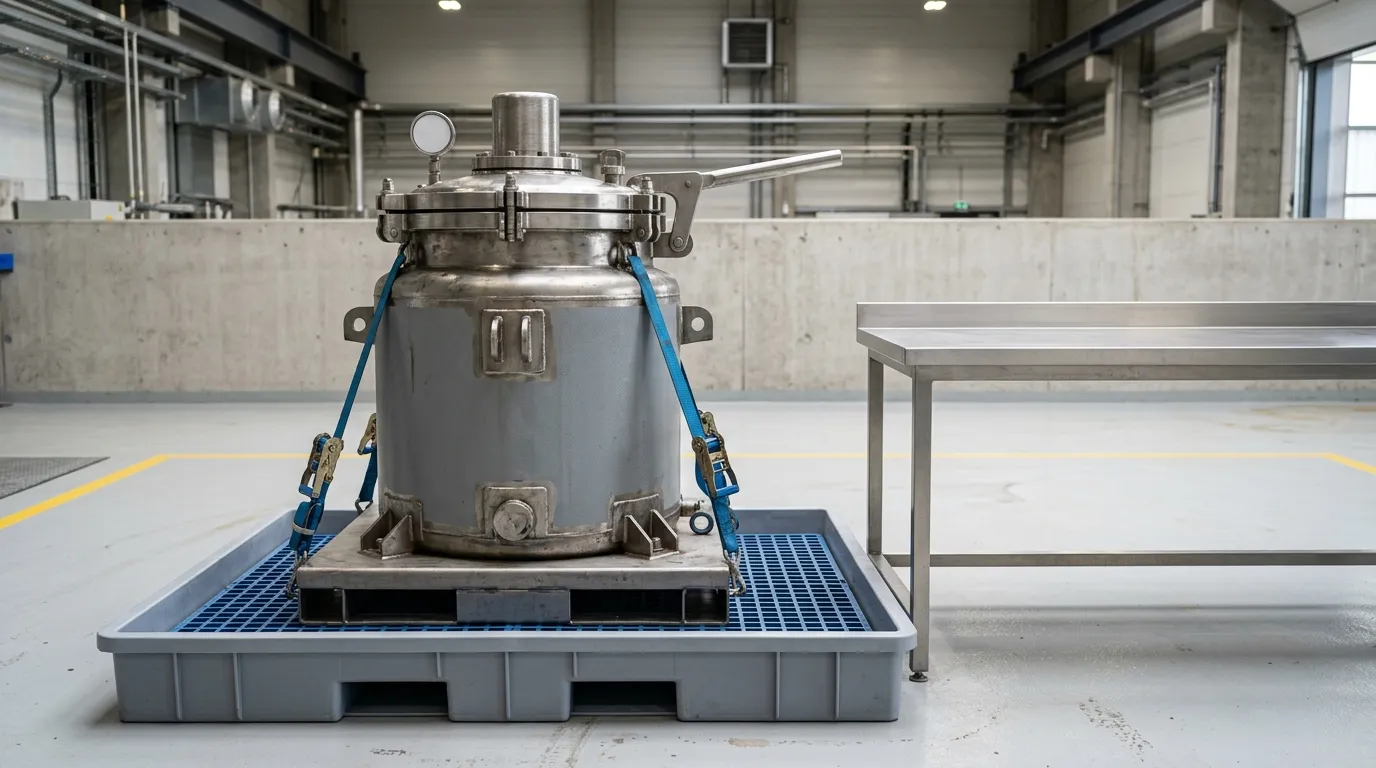
A UN number is only one part of a dangerous-goods entry. Transport documents may also require the proper shipping name, primary hazard class, subsidiary risk, packing group, and other mode-specific information.
Primary hazard class
The inspected references commonly identify acetic acid as a Class 8 corrosive substance. This is the primary hazard classification shown for the relevant UN entries in the cited safety references.
Subsidiary risk
For glacial or higher-concentration acetic acid, NOAA and the ICSC reference also present information associated with Class 3 flammable-liquid risk. This does not mean that every acetic-acid solution has the same subsidiary risk. The applicable concentration and regulatory framework must remain attached to the statement.
Packing group
Packing group information should not be treated as universal across all versions of UN 2789 and UN 2790.
The broad ICSC reference presents packing groups II–III for its acetic-acid transport information. By contrast, the German Federal Institute for Materials Research and Testing (BAM) ADR 2025 entry inspected for a UN 2790 concentration band above 10% and below 50% displays Class 8 and Packing Group III. Secondary US-oriented references may display more than one packing-group entry depending on concentration and applicable provisions.
This difference is why the following fields should be reviewed separately:
| Transport field | What it identifies |
|---|---|
| UN number | The regulated transport identity |
| Proper shipping name | The formal shipping description |
| Primary class | The main hazard class |
| Subsidiary risk | An additional hazard where applicable |
| Packing group | The assigned danger category where applicable |
| Special provision or exception | A rule that may modify the normal requirements |
A document showing “UN 2790” is therefore not necessarily complete by itself. The class, packing group, and other required fields still need to be confirmed for the shipment.
Why the Exact Answer Can Change by Transport Mode or Jurisdiction
The broad statement that UN 2790 covers acetic-acid solutions from 10% to 80% is useful for orientation, but it should not be treated as a universal table for every transport system.
Different regulatory frameworks can subdivide the concentration range or apply different packing-group and exemption provisions. For example, the ADR 2025 reference inspected for UN 2790 displays a concentration band above 10% and below 50%, with Class 8 and Packing Group III. It also identifies an ADR special provision concerning solutions containing not more than 10% pure acid by mass.
That ADR-specific treatment should not be extended automatically to sea, air, or another national implementation. The relevant rule set depends on the shipment.
A useful way to interpret the available evidence is:
| Evidence layer | Appropriate use |
|---|---|
| Broad safety references such as ICSC or NOAA | Explain the general difference between UN 2789 and UN 2790 |
| ADR or another national/modal regulation | Determine how that framework subdivides concentrations and applies provisions |
| Current product SDS | Confirm the classification stated for the actual supplied product |
| Current governing regulation | Make the final transport determination |
The BAM ADR reference can be consulted for the ADR-specific entry, but it should be read together with the current ADR text and the product documentation: BAM ADR UN 2790 reference.
The concentration boundaries should therefore be treated as follows:
- More than 80% by mass: Broadly associated with UN 2789 in the inspected NOAA and ICSC references.
- 10% to 80% by mass: Broadly associated with UN 2790 in the ICSC reference.
- Above 10% to below 50%: Displayed as a specific UN 2790 ADR band in the inspected BAM entry.
- Not more than 10%: May be addressed by a special provision in ADR, but that does not establish a universal exemption for all transport modes and jurisdictions.
When a product is close to 10%, 50%, or 80%, the classification should be checked particularly carefully. Rounding a concentration, changing the basis from mass to volume, or relying on a different regulatory framework can produce an incorrect entry.
A Practical Classification Check Before Shipment

For QA, procurement, and logistics teams, the following sequence provides a controlled preliminary check:
- Confirm the exact product form.
Establish whether the shipment is glacial or high-concentration acetic acid, or an aqueous acetic-acid solution.
- Confirm the concentration basis.
Check whether the concentration is stated by mass and whether it is a minimum, maximum, typical, or batch-specific result.
- Review the current SDS.
Examine the transport-information section for the actual product, including the UN number, proper shipping name, hazard class, subsidiary risk, and packing group where applicable.
- Identify the transport mode and jurisdictions.
The applicable rules may differ for road, sea, air, and national transport systems. The origin, destination, and transit countries may also matter.
- Compare the SDS entry with the applicable regulation.
Do not assume that an online table, old SDS, or supplier catalog description takes precedence over the current governing rule.
- Check boundary conditions and special provisions.
Pay particular attention when the concentration is near a classification threshold or when an exception or special provision appears relevant.
- Resolve discrepancies before shipment approval.
If the product specification, SDS, and transport document do not agree, escalate the issue to the responsible dangerous-goods or compliance function rather than selecting the less restrictive entry.
The roles of different product documents should also remain separate. An SDS is the key document for the product’s stated hazard and transport information. A technical data sheet may describe specification or application properties, while a certificate of analysis reports a particular batch or lot. For a document-role comparison, see COA vs SDS vs TDS.
A COA should not automatically be treated as a universal transport approval, and a catalog listing should not replace the current SDS for the product being shipped.
What This Comparison Does Not Determine
The UN 2789 versus UN 2790 comparison provides classification basics. It does not, by itself, determine:
- Approved packaging or packaging instructions.
- Quantity limits or transport-unit requirements.
- Marking, labeling, or placarding requirements.
- Route restrictions, tunnel restrictions, or carrier requirements.
- Complete sea or air transport compliance.
- Whether a specific product is exempt under a particular jurisdiction.
- Food, feed, pharmaceutical, drinking-water, or other application suitability.
- The transport classification of a specific Vanchor product without its current product documentation.
Detailed storage and handling considerations belong to a separate safety context; see acetic acid storage handling.
The safest working distinction is therefore:
UN 2789 is broadly associated with glacial or more than 80% acetic acid by mass, while UN 2790 is broadly associated with acetic-acid solutions in the 10–80% range. The final classification must be confirmed for the exact product, concentration basis, transport mode, and jurisdiction.
When a shipment is being prepared, use the current SDS and the applicable current transport regulation as the controlling references.


Contact Us
Related Posts
Индивидуальные упаковочные решения от поставщика безводного ацетата натрия в Китае
2026-09-23
Тенденции применения безводного ацетата натрия для специального химического производства
2026-09-23
Безводный ацетат натрия для дубления кожи: улучшает равномерность окрашивания
2026-09-22
Formic Acid 85% for Animal Feed Preservation: Moisture and Storage Stability Guide
2026-09-21


